
Reduced-offset and zero-offset stems are nothing new, but there does seem to be a new wave of them. If you want a comprehensive list of what’s on the market, well then, look (and reach) no further.
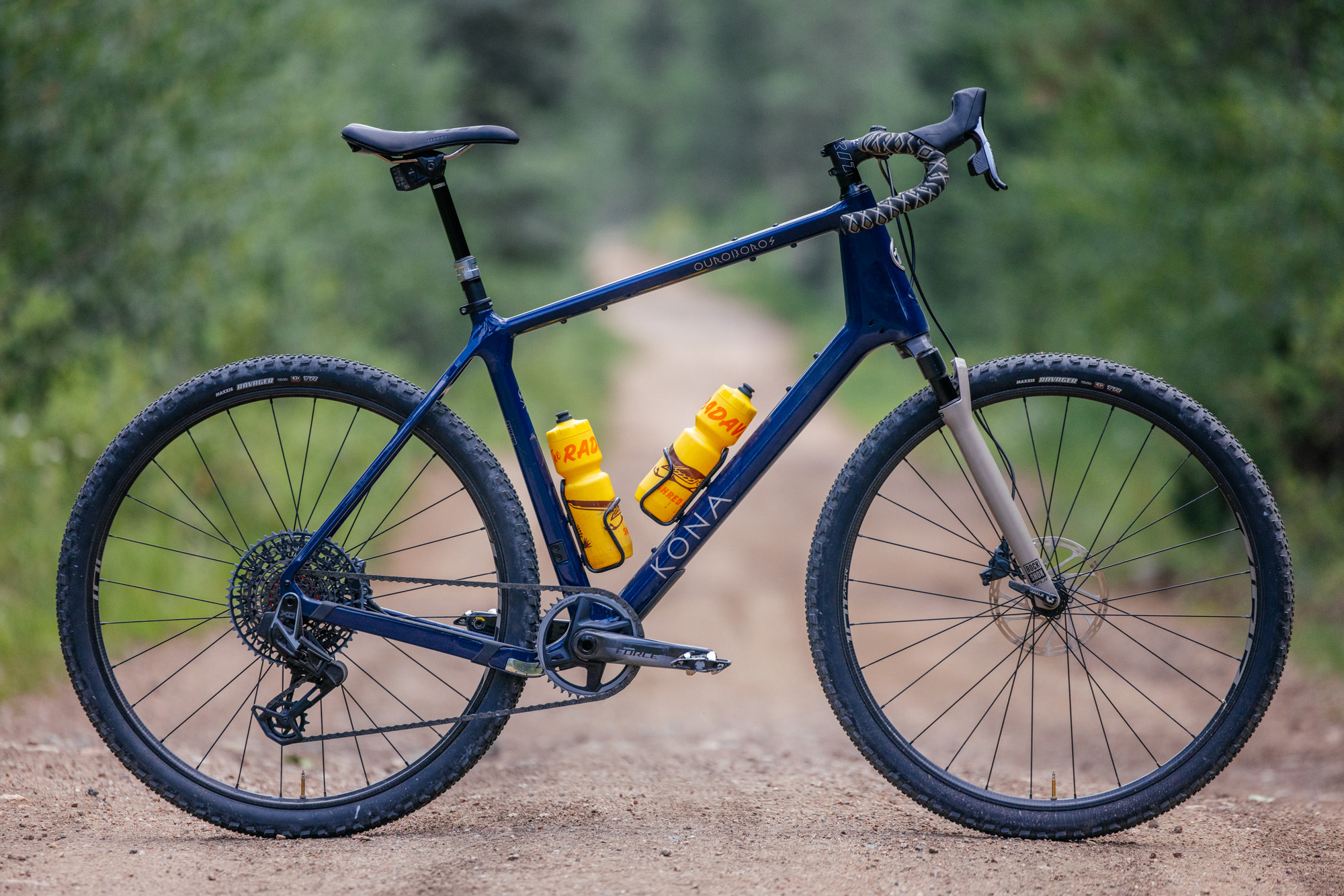
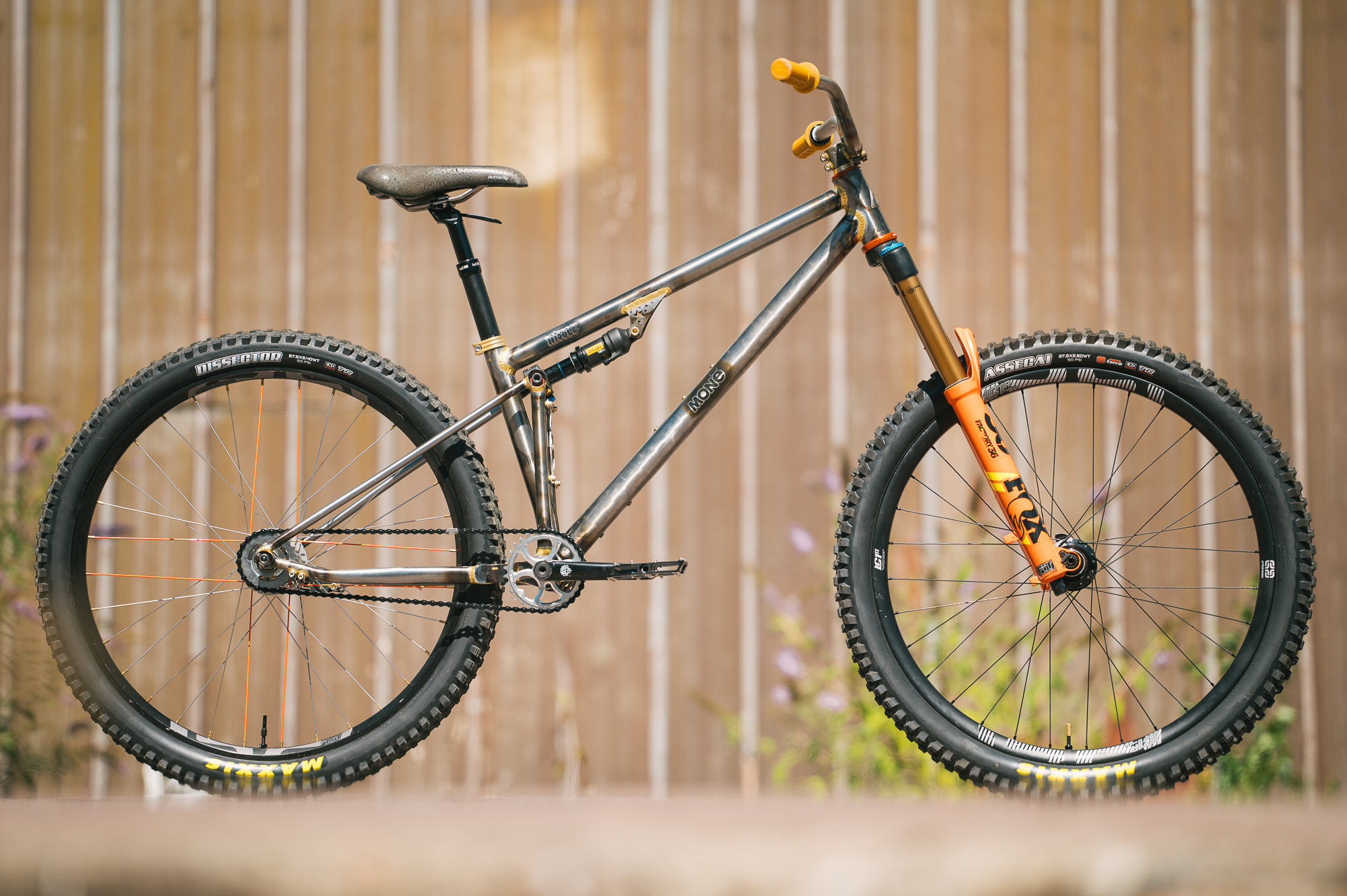
Photos: John Watson, Spencer Harding, and Trek Bikes
We hope people never stop coming up with weird new bike shapes. There’s no telling what might someday revolutionize the entire industry’s approach to frame geometry, or what might at least answer a few scattered prayers. Reduced-offset and zero-offset stems are probably closer to the latter category, at least for now.
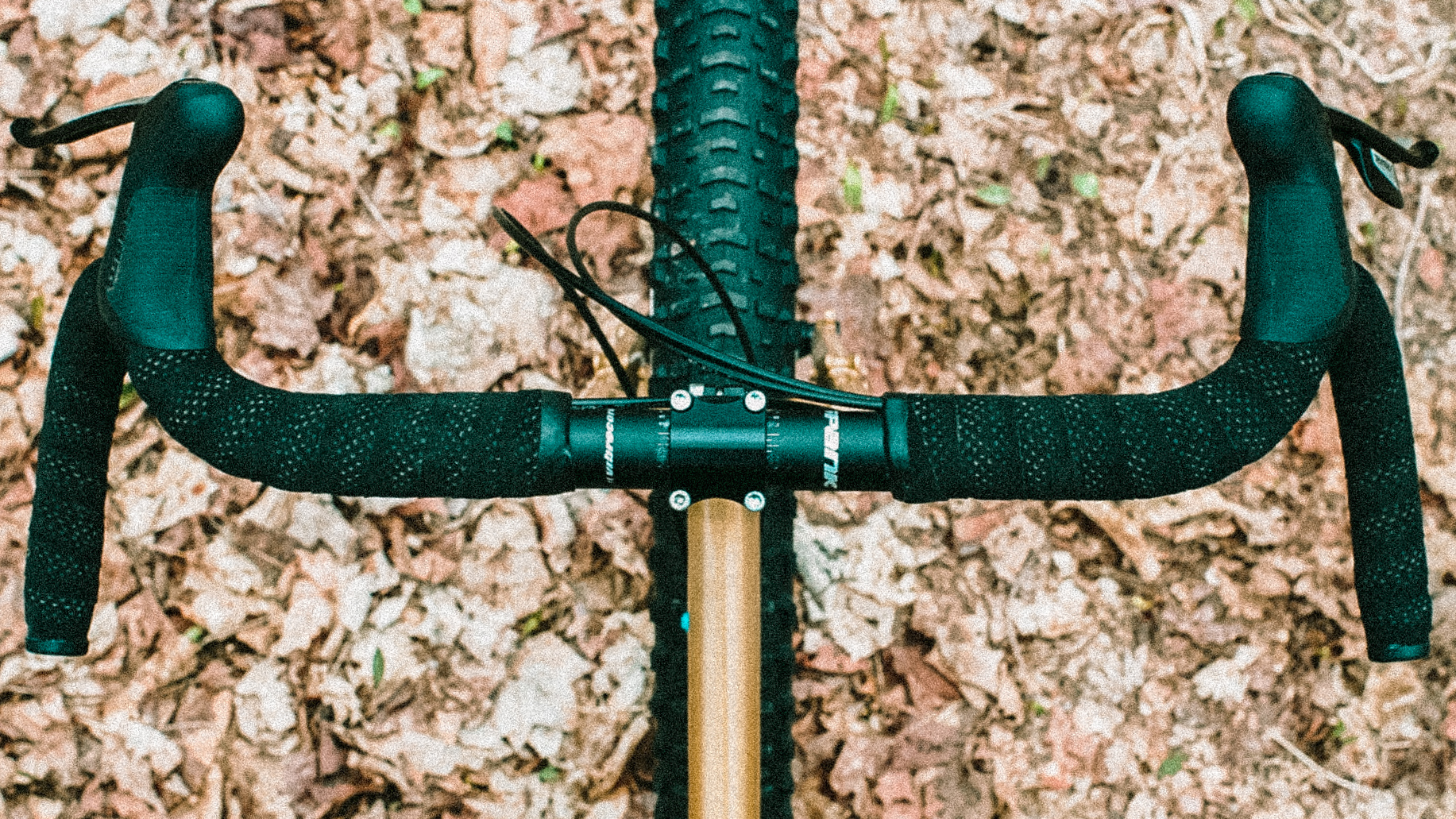
Photo: Discord
What is a reduced-offset or zero-offset stem?
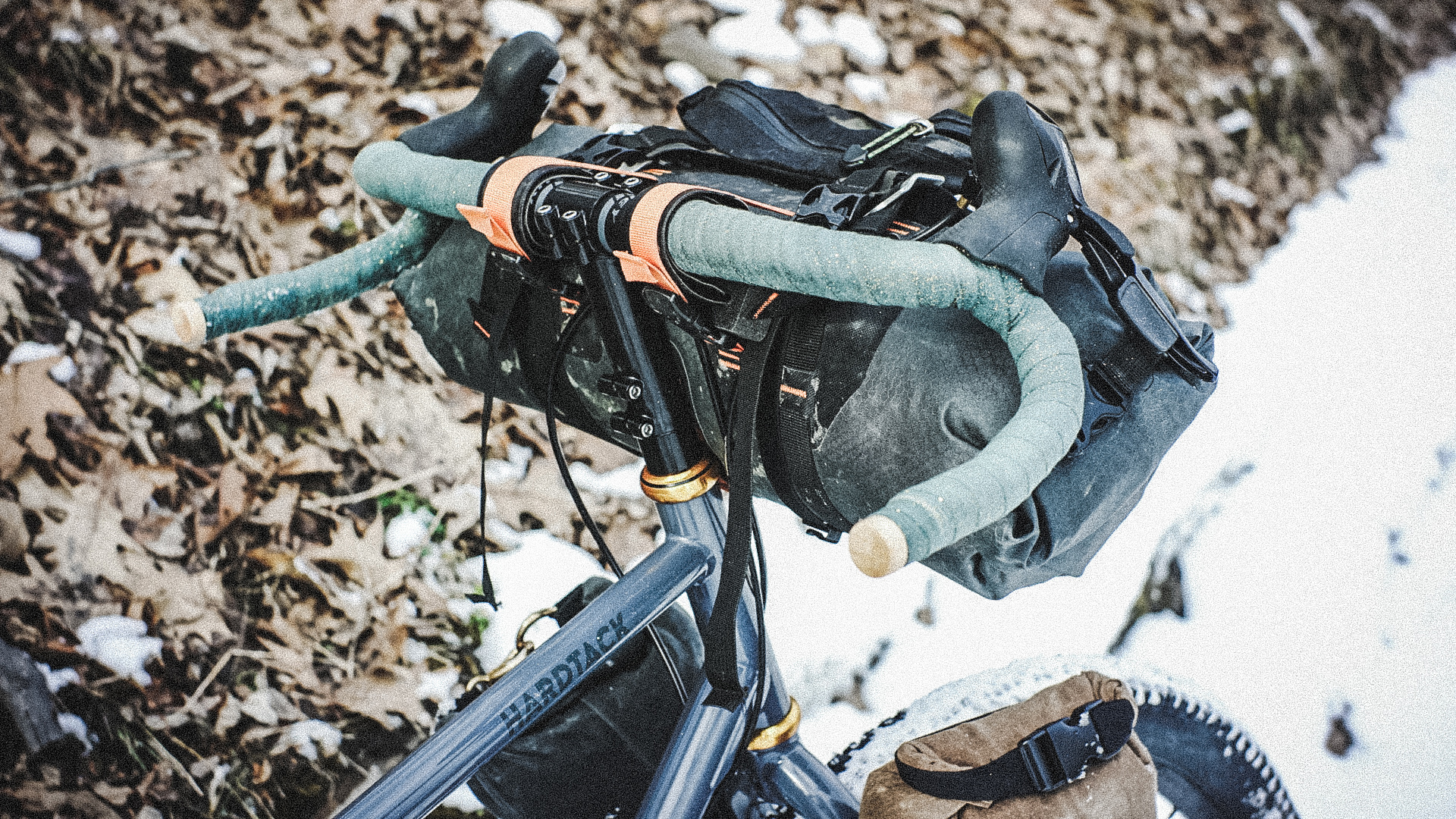
“Zero-offset stem” is the term we found most commonly used to describe a stem that positions the center of the handlebars directly above the steerer tube. And then there are “reduced-offset stems” that also put the handlebar above the steerer tube, but the handlebar only partially overlaps it instead of being center-on-center.
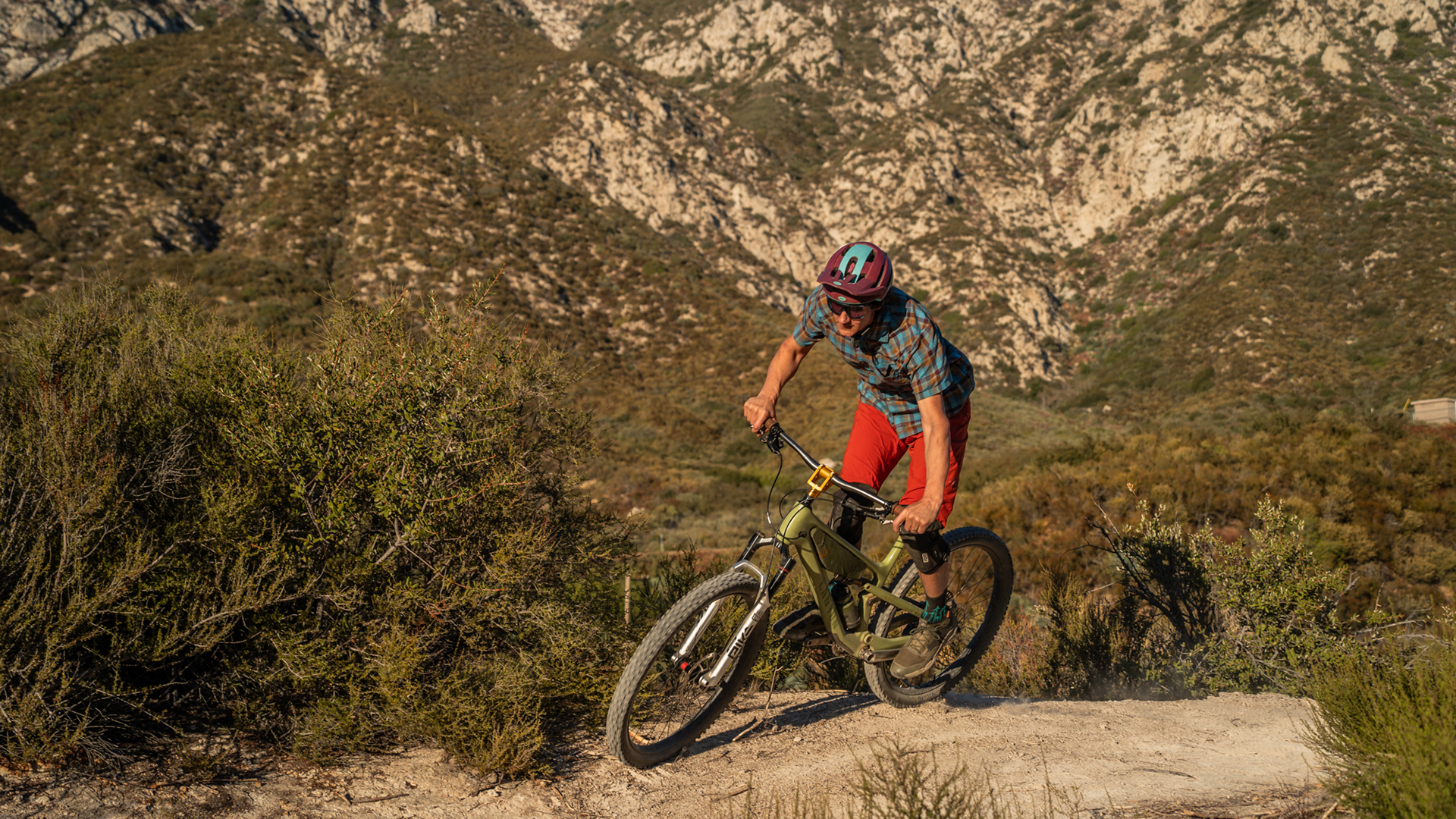
Photos: Discord and Anni Speckheuer
What are the advantages and disadvantages?
This could (and probably should) be an article on its own. There are so many factors and so many philosophies that it’s hard to know where to start. The most obvious topic would be fit. Bringing the handlebars up and back will, of course, put you more upright. It can also ease the burden of steering a loaded front end. As for its more dynamic effects, a reduced-offset stem will change how your body weight interacts with your front tire’s contact patch. While descending, it’s generally safer to keep your center of mass reasonably far behind that contact patch. This is arguably the main reason why “gravity-oriented” bikes benefit from slacker head-tube angles. A reduced-offset stem can offer something similar, but there are a lot of factors at play there.
That brings us to the disadvantages. Virtually every bike is designed with a traditional handlebar and stem in mind. Simply bolting a reduced-offset or zero-offset stem onto your current bike will not unlock the concept’s full potential unless your bike was holistically made for it. You’ll likely compromise your weight distribution and sacrifice high-intensity climbing performance. Peter Verdone just published a blog about front-end geometry. And true to form, it’s both enlightening and inflammatory. It’s a good read for anyone considering making a big change to their cockpit setup.
And these stems will make a big change. But we know you know that. You wouldn’t be here if you hadn’t thought this through. We also know that you know a handlebar with enough sweep can bring you back at least as far as these stems. And that also could be an article on its own, but this ain’t it. We simply want to provide a living resource for comparing stats on the small but growing number of reduced-offset and zero-offset stems on the market. We’ll keep it updated as new options enter (and exit) the fray. So, let’s get started.
Photos: Crust
Crust SST
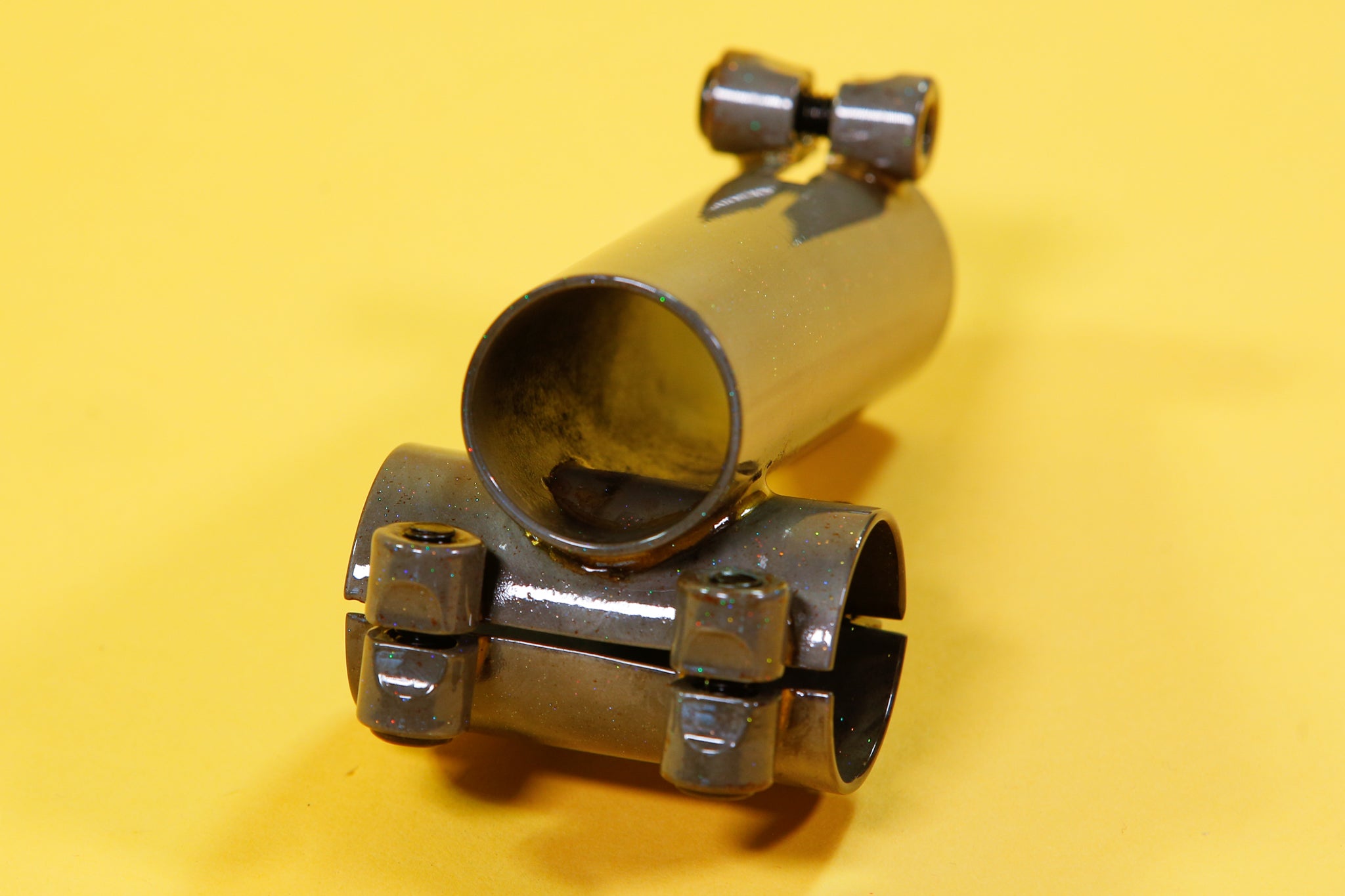
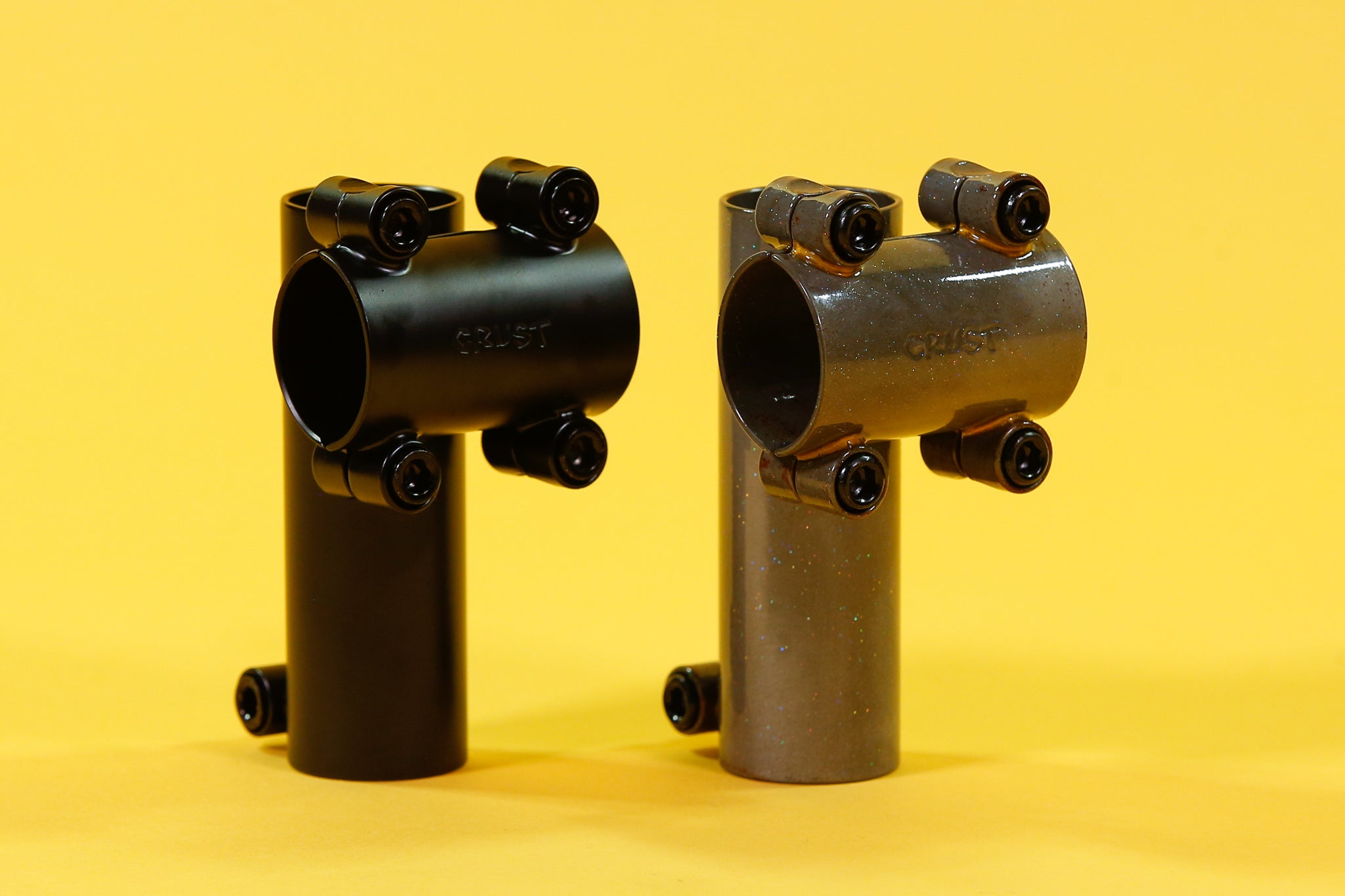
We’re listing these in order of longest-offset to shortest-offset. So, let’s start with the 30mm Crust SST stem. That’s only 2 mm shorter than the shortest traditional stem we could find, but it still counts. Also, it’s definitely “reduced” because the handlebar clamp overlaps with the steerer-tube clamp. That’s made possible thanks to the generous 80 mm rise. And if you want more rise (and have enough steerer tube), Crust includes a matching steel 25mm headset spacer and an extra long headset-preload bolt.
This Chromoly stem is TIG welded in Taiwan and has a pleasantly industrial look, especially in the semi-clear rainbow flake colorway. It doesn’t play well with carbon steerer tubes, and isn’t rated for mountain biking, but is a great way to get you just a little closer and a lot higher on your next road tour, gravel grind, or beach cruise.
Crust SST Quick Hits
- Length (center-to-center, horizontal): 30 mm
- Rise (bottom of steerer clamp to center of handlebar): 80 mm
- Minimum insertion: 50 mm
- Maximum insertion: 60 mm
- Handlebar clamp diameter: 31.8 mm
- Weight: 256 g
- Intended Use: Road, gravel, and touring
- Misc: Includes matching 25mm steel spacer (28g)
- Price: $127
See more at Crust
Photos: Intend
Intend Grace DD
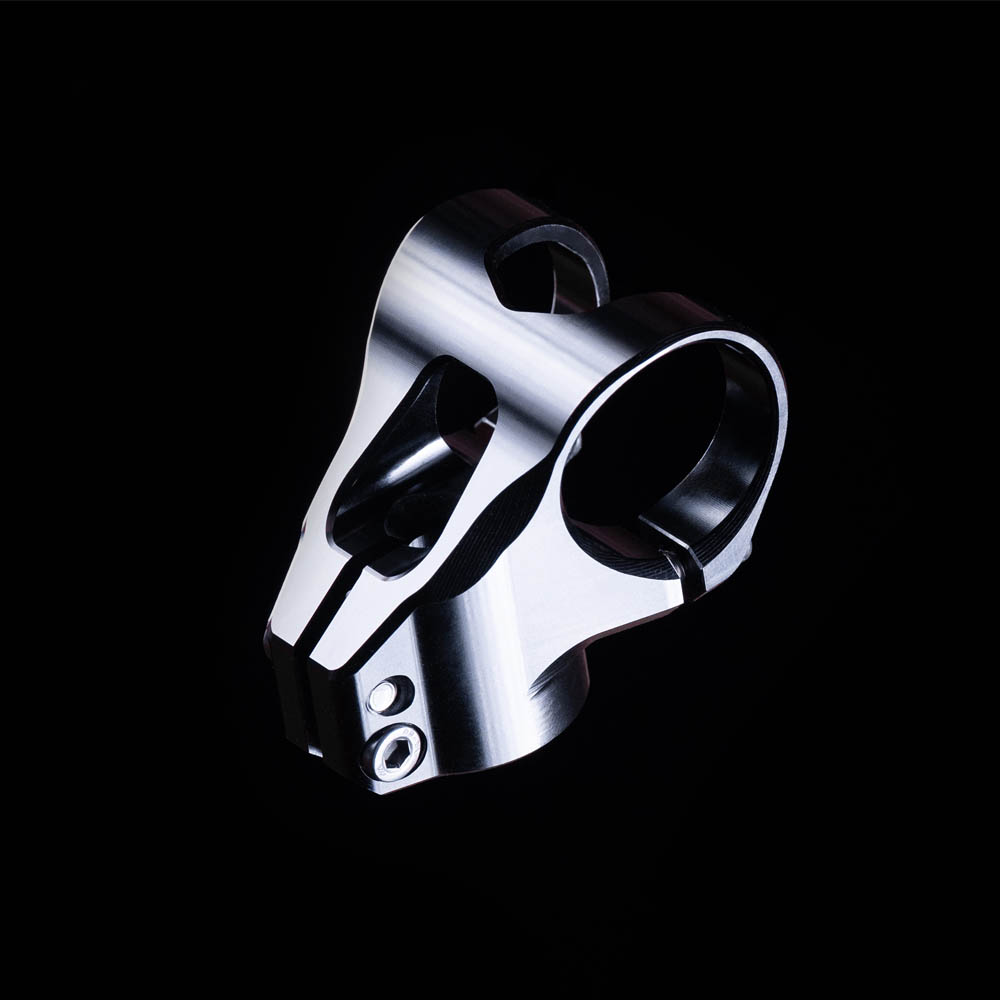
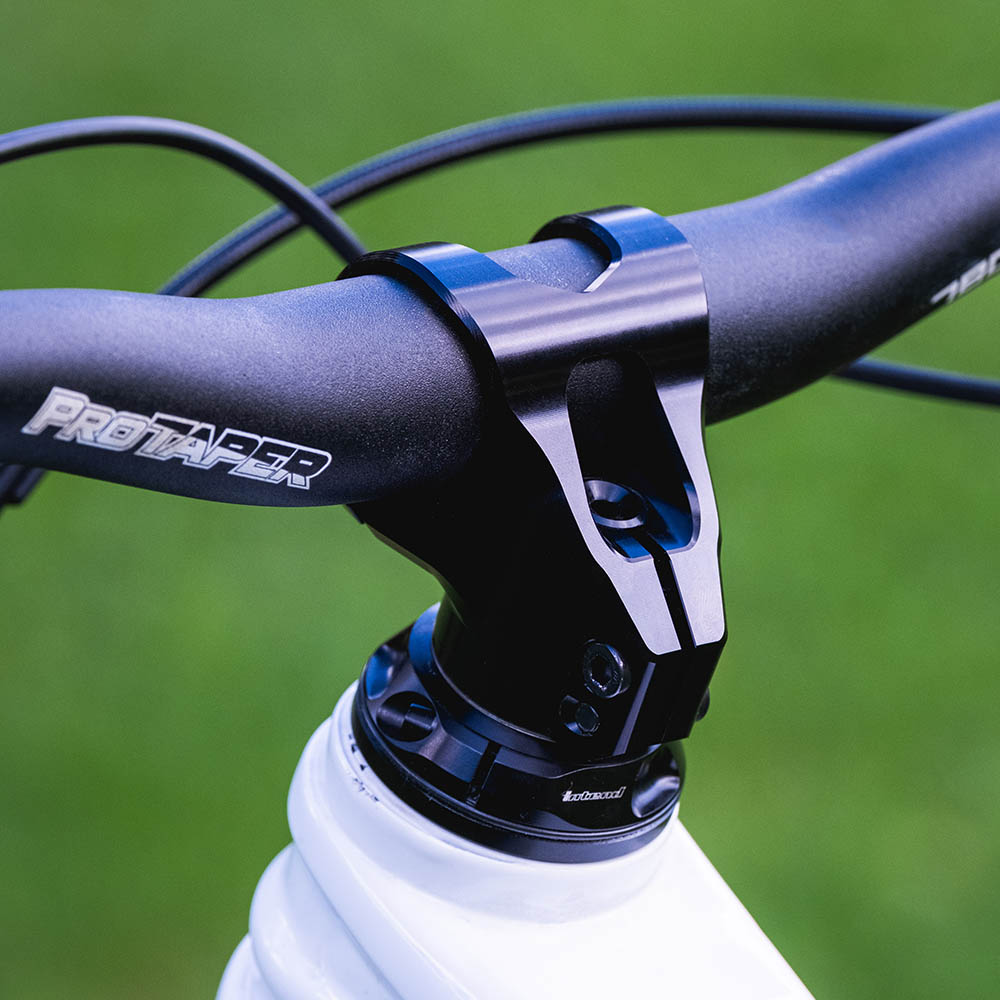
Made in Freiburg, Germany, the Intend Grace DD is the most “conservative” stem on this list. Its 25mm length is only a few mm shorter than you can get with a traditional stem. But it also adds 38mm of rise and only requires 18mm of steerer tube. It’s a sleek option for those who want to increase their stack height without swapping handlebars, but have run out of room.
The Grace DD uses a two-bolt clamp and includes a little wooden shoehorn to help open it up as you install your bar. But Intend warns that any bar with more than a 20mm rise will likely have bends too sharp to make it through. That’s the trade-off you make for such a clean, light stem. It’s just 90 grams, and yet is still strong enough to be rated for use on gravity bikes.
Intend Grace DD Stem Quick Hits
- Length (center-to-center, horizontal): 25 mm
- Rise (bottom of steerer clamp to center of handlebar): 38 mm
- Minimum insertion: 18 mm
- Maximum insertion: 25 mm
- Handlebar clamp diameter: 31.8 mm
- Weight: 90 g
- Intended Use: Gravity MTB
- Misc: Two-bolt clamp limits handlebar rise to 20 mm
- Price: €139.00
See more at Intend
Photos: Rulezman
Rulezman HC-V3.1
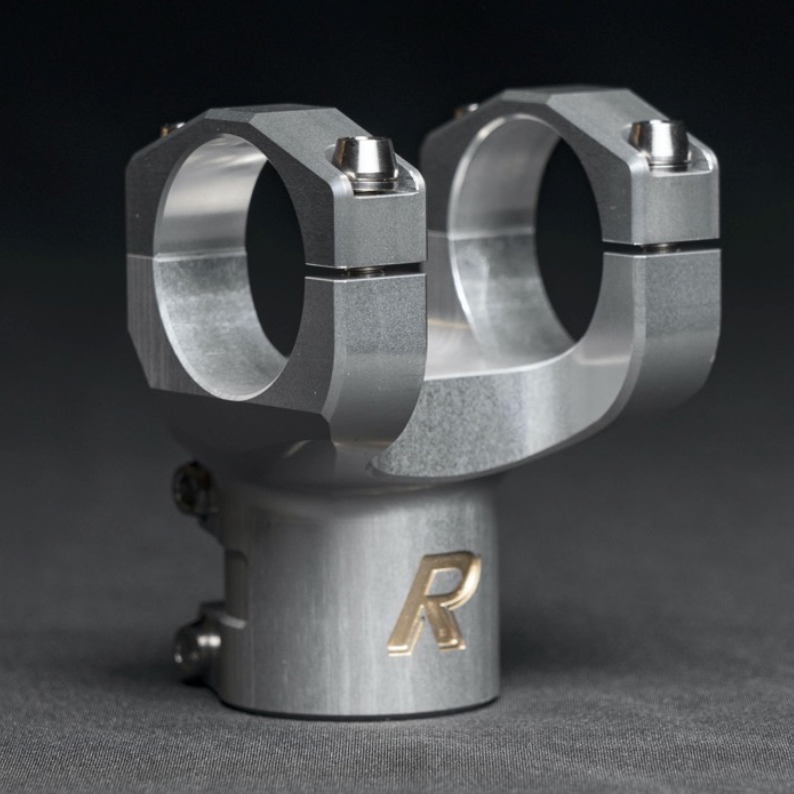
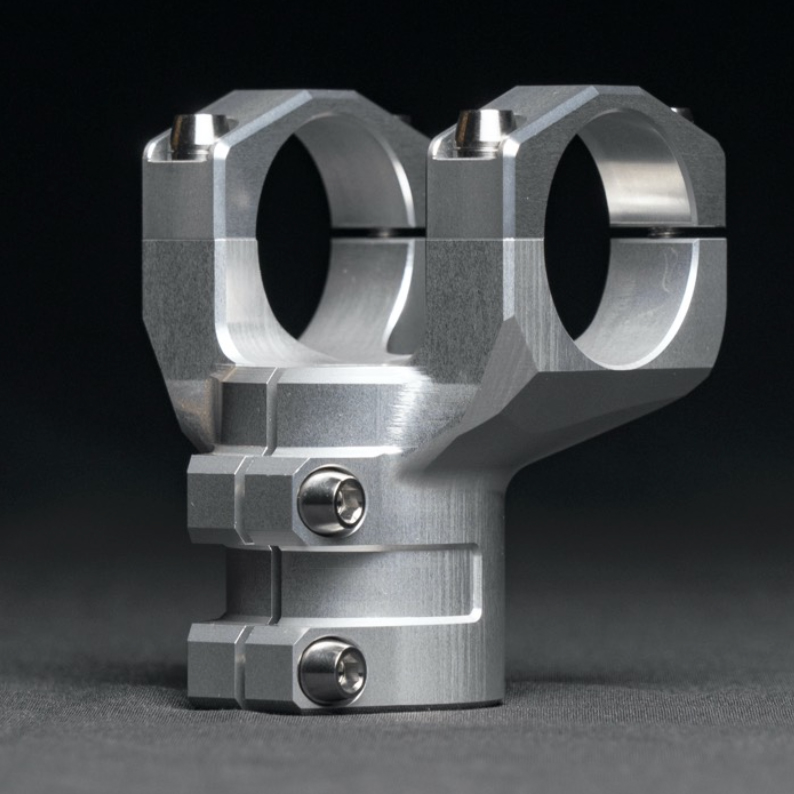
These are made in very limited runs and are very expensive, though not the most expensive on this list. Rulezman is a one-man show run by Dave Cerutti, who specializes in suspension tuning in Savona, Italy. He introduced the HC-V3hd stem in 2023 with the goal of putting the rider’s hands in line with the steering axis when using a handlebar with a traditional backsweep. That meant a 15mm length for his enduro stem, and 18mm for his crown-mounted DH stem.
Rulezman takes a more burly approach to the concept than Intend. The steerer-tube insertion depth is deeper, the handlebar clamp is wider, and the weight is higher. But it’s certified up to DH, which tracks. Cerutti originally made only 150 of the first production stem, V3.0. But he’s in V3.1 at time of publishing this list. He’s still taking orders, though only by email, it seems.
Rulezman HC-V3.1 Quick Hits
Length (center-to-center, horizontal): 15 mm
Rise (bottom of steerer clamp to center of handlebar, vertical): 56 mm
Minimum insertion: 37 mm
Maximum insertion: 39 mm
Handlebar clamp diameter: 31.8 mm
Weight: 147 g
Intended Use: Gravity MTB
Misc: Made in limited quantities
Price: €286.00
See more at Rulezman
Photos: Aerozine
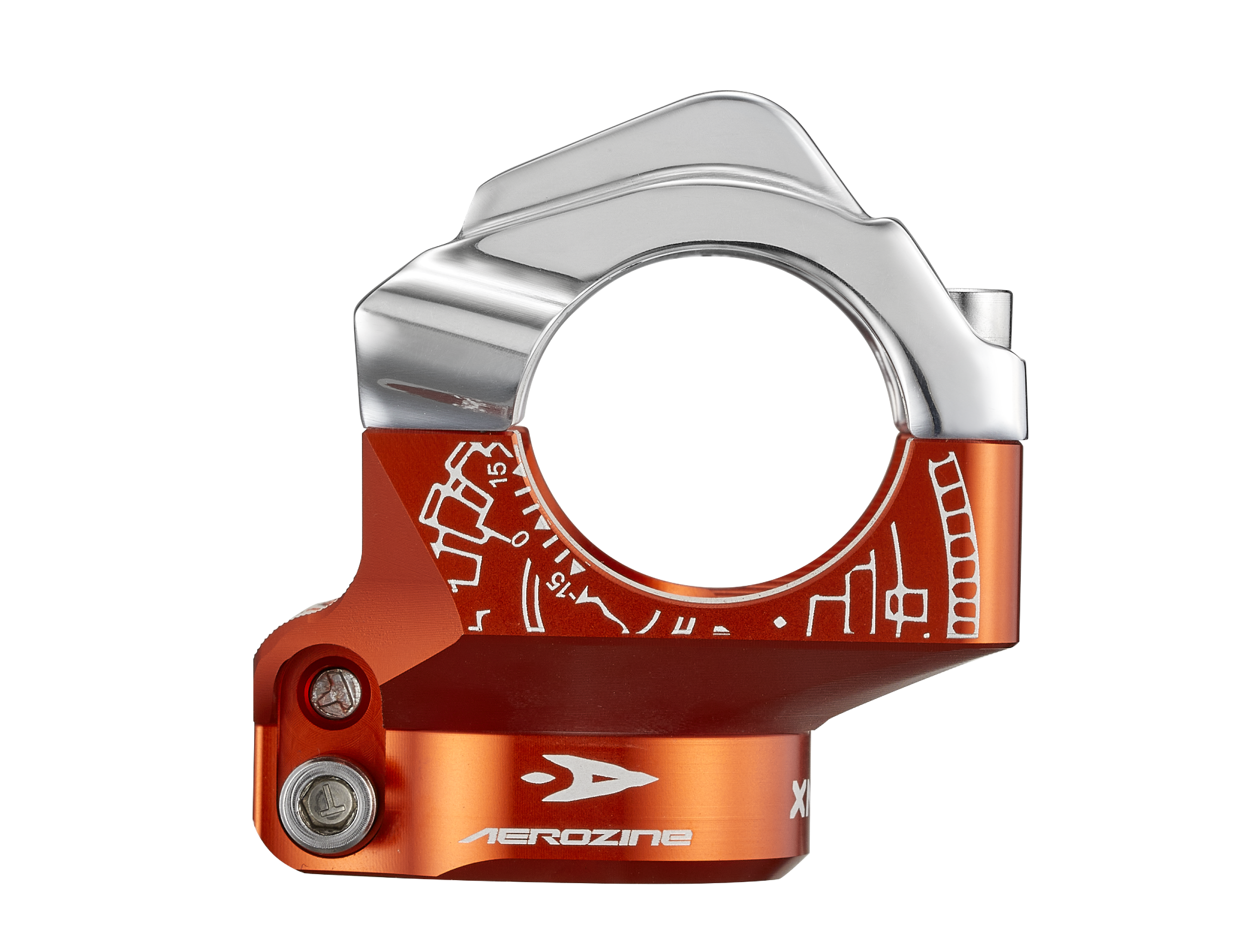
Aerozine XNC 10
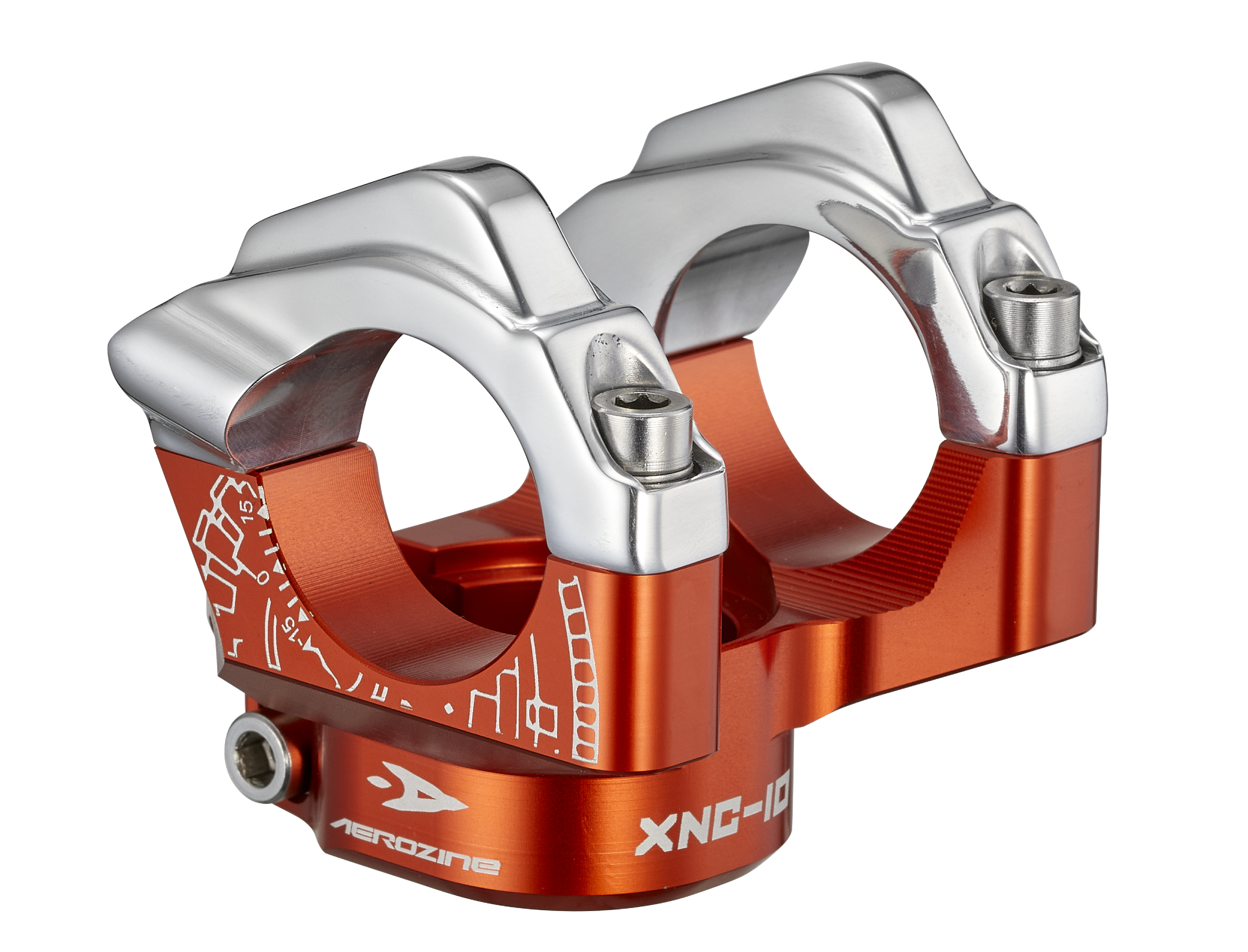
We can’t help but be a little skeptical about the XNC 10 stem. And not because of the awkwardly translated text on the Aerozine website. We have heard (anecdotally, and through second-hand sources) about two instances where this stem’s short 20mm clamp height didn’t provide enough force to keep from twisting. But both these complaints were from aggressive mountain bikers, so maybe it could be an option for more casual applications.
The stem itself is relatively light. And that short clamp height could actually be a positive for those without much steerer tube to work with. It could be a good option for light-duty riders looking to shorten their cockpit, or even to put drop bars on a bike intended for flat bars. If you’ve ever used one of these, tell us about your experience. It’s unique and affordable, and would be nice if it worked.
Aerozine XNC 10 Quick Hits
- Length (center-to-center, horizontal): 10 mm
- Rise (bottom of steerer clamp to center of handlebar, vertical): 39 mm (35mm version)
- Minimum insertion: 20 mm
- Maximum insertion: 20 mm
- Handlebar clamp diameter: 31.8 mm (35 mm coming soon)
- Weight: 128 g (35mm version)
- Intended Use: Light-duty MTB
- Misc: Some consumers have complained the steerer tube clamp does not hold tightly enough
- Price: $98.00
See more at Aerozine
Photos: Creature
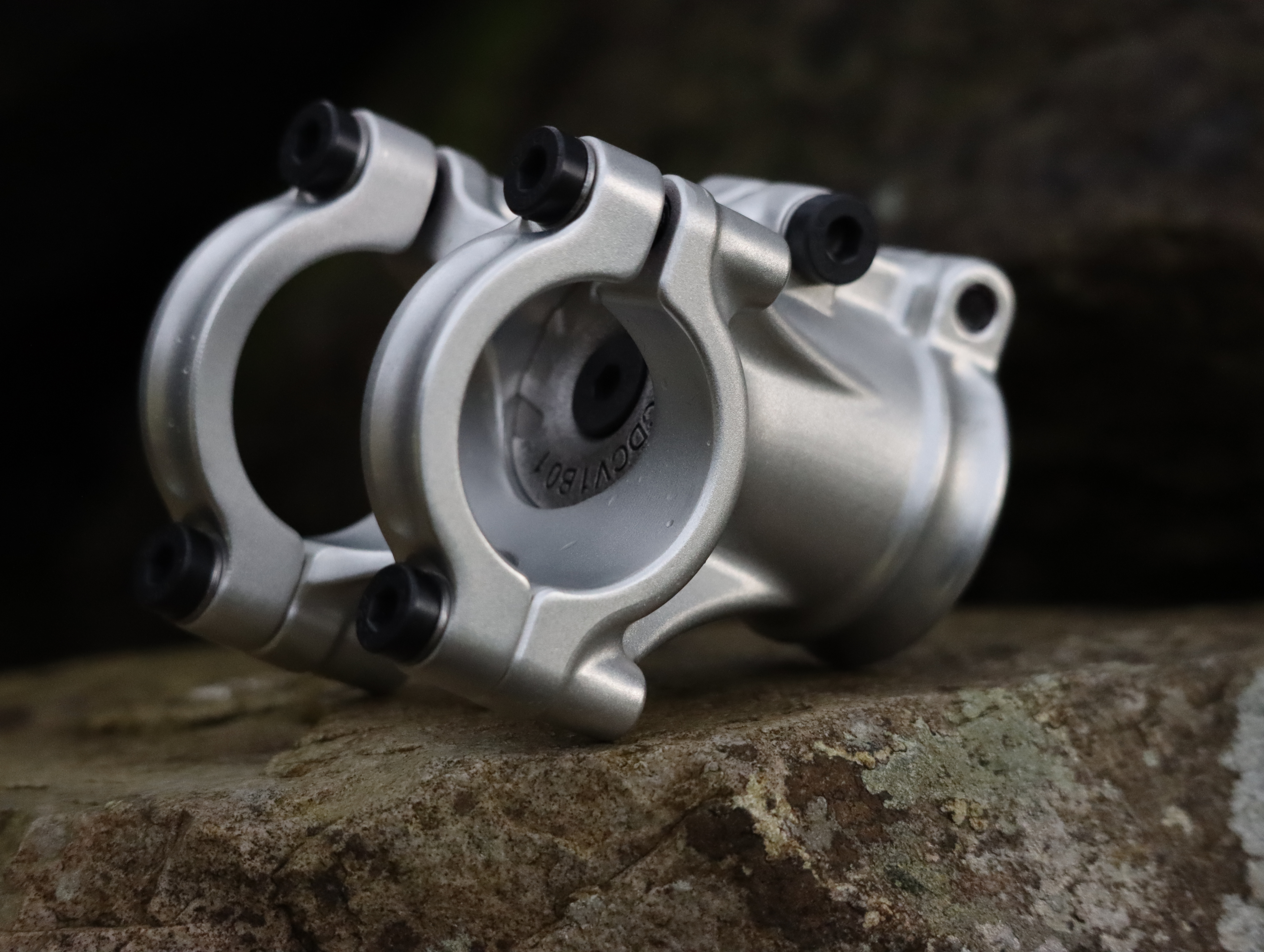
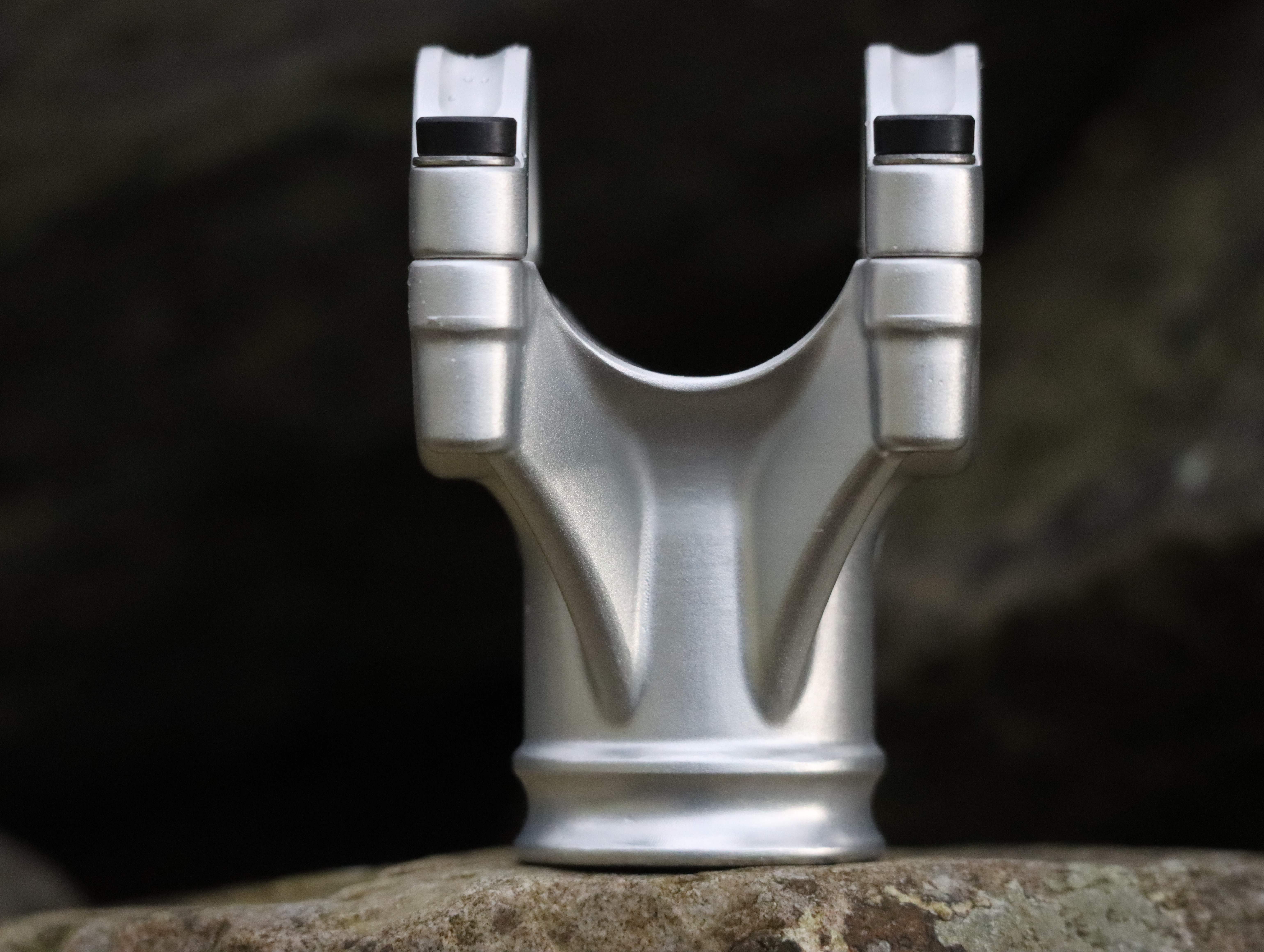
Creature De-Reacher
This is a small Welsh manufacturer of steel full-suspension and drop-bar mountain bikes, including plenty of custom geometry. They also do odds and ends like 3D-printed framebuilding elements and a front triangle for a Banshee Spitfire. And they make this beautifully organic 10mm-long stem. CNC’d and shot-peened for a classic look, the De-Reacher is as close as you can get to zero offset without going fully vertical.
At the time of publishing, Creature is not selling to US or Canada due to tariffs, but that may change. Though this brilliantly worded statement on Creature’s website explains why they’re not worried about taking over the world: You probably don’t need this stem. Buying this won’t make you a better rider, and you will almost certainly have to cut your fork steerer down to even get it on your bike! We’re not saying don’t buy our product, we’re just saying think about it okay? It’s a lot of money for pretty marginal gains and a slightly over-engineered lump of aluminum. I mean, look at it: did we really have to machine off every sharp angle, and have it shot-peened just to reduce fatigue? Probably not. But here it is, and here you are interested in this very fancy stem.
Creature De-Reacher Quick Hits
- Length (center-to-center, horizontal): 10 mm
- Rise (bottom of steerer clamp to center of handlebar, vertical): 60 mm
- Minimum insertion: 37 mm
- Maximum insertion: 37 mm
- Handlebar clamp diameter: 31.8 mm
- Weight: 185 g
- Intended Use: Gravity MTB
- Misc: Not exporting to US or Canada at time of publishing due to tariffs
- Price: £229.50
See more at Creature
Photos: Discord
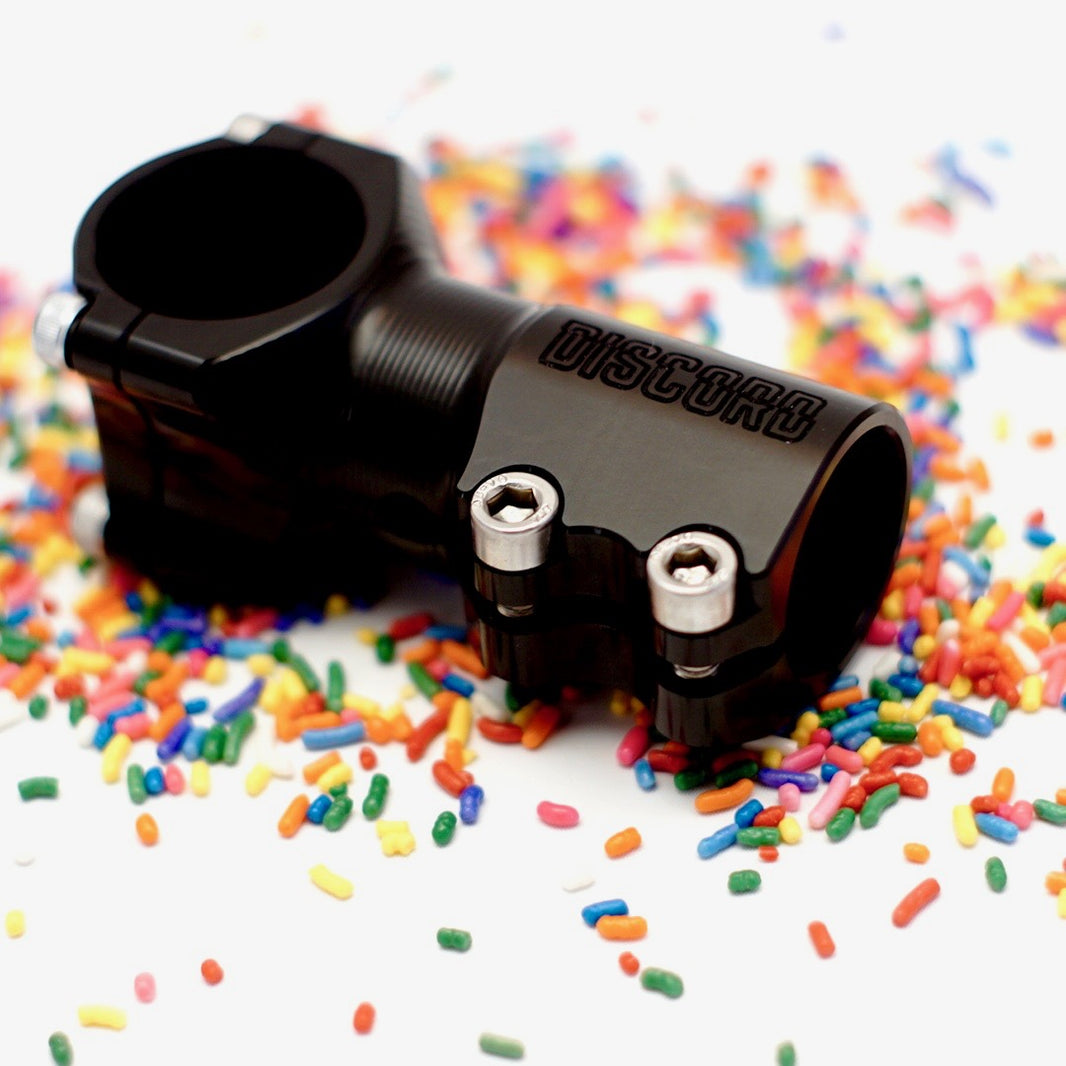
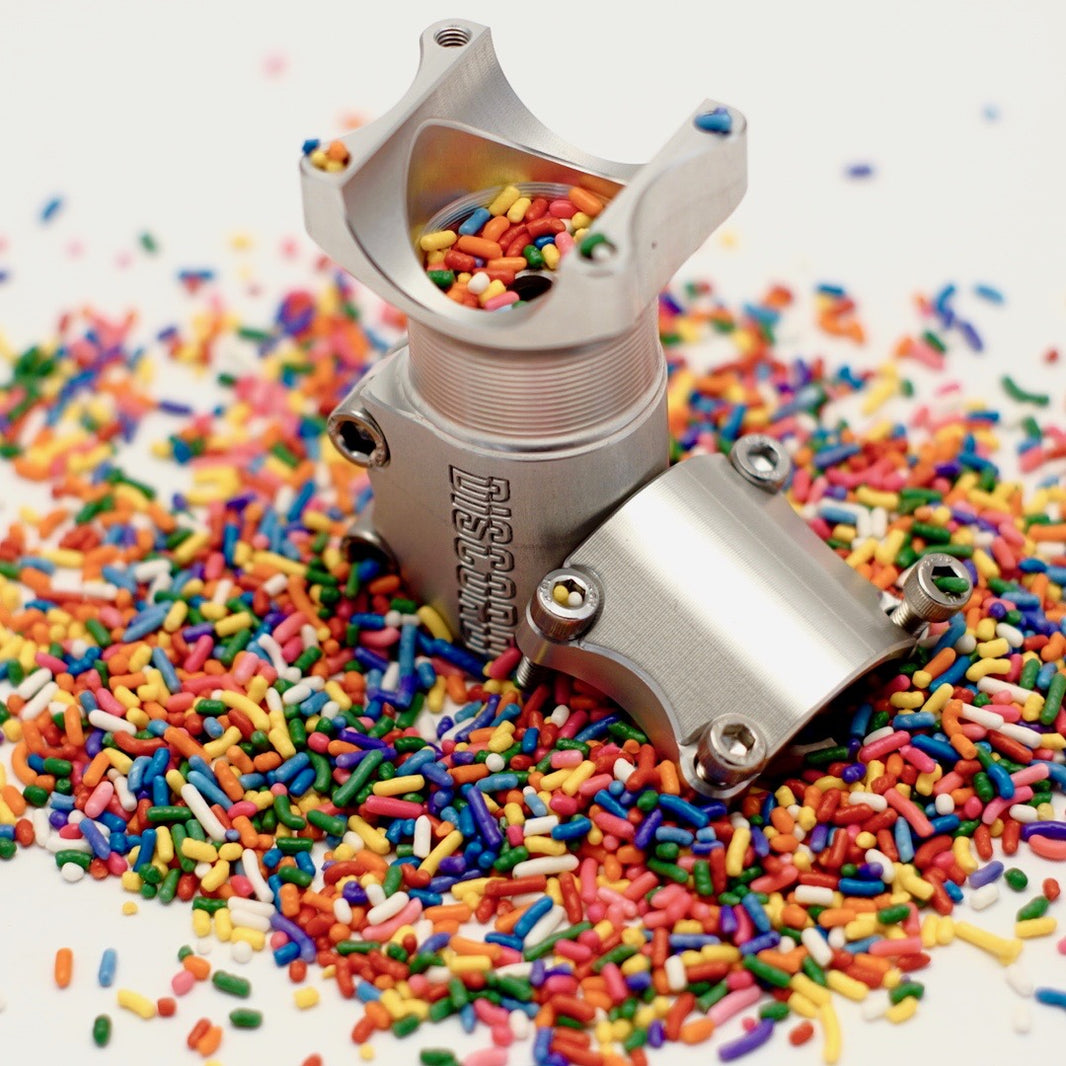
Discord Creemee
We keep saying “zero-offset” to please the SEO gods, but there are only a few on this list. Discord makes two of them, including the aluminum Creemee. It’s A member of the Analog and Tanglefoot Cycles family of western Vermont. Discord has its aluminum stems made by a small manufacturer in Maine.
Quite unlike the shreddy mountain-bike stems listed above, the Creemee is a mild-mannered touring affair. All the imagery around this stem involves drop bars. While there’s technically no reason you can’t run this on a mountain bike, Discord stems are not meant to be ridden aggressively. Light trail and XC-level intensity are fine, though they don’t recommend running big 800mm bars. They also forbid running it on carbon steerer tubes or carbon bars. And “albatross-style” swept-back bars might slip due to their increased leverage, especially if you’re using shims. But it’s clean, simple, and truly zero-offset.
Discord Creemee Quick Hits
- Length (center-to-center, horizontal): 0 mm
- Rise (bottom of steerer clamp to center of handlebar, vertical): 80 mm
- Minimum insertion: 47 mm
- Maximum insertion: 50 mm
- Handlebar clamp diameter: 31.8 mm
- Weight: 142 g
- Intended Use: Touring and light-duty / XC mountain
- Misc: Not for use with carbon bars or steerer tubes
- Price: $165
See more Discord at Tanglefoot and Analog
Photos: Discord
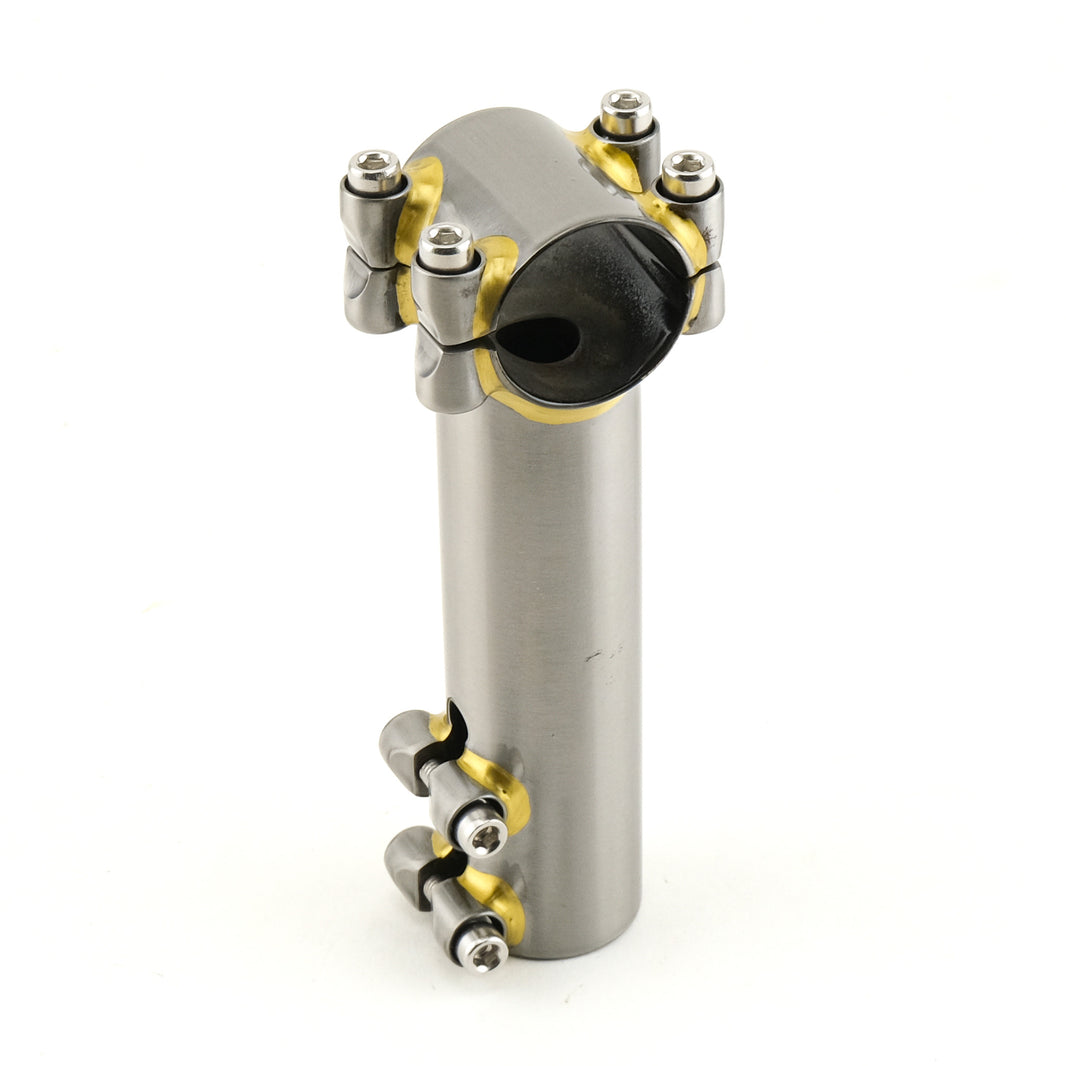
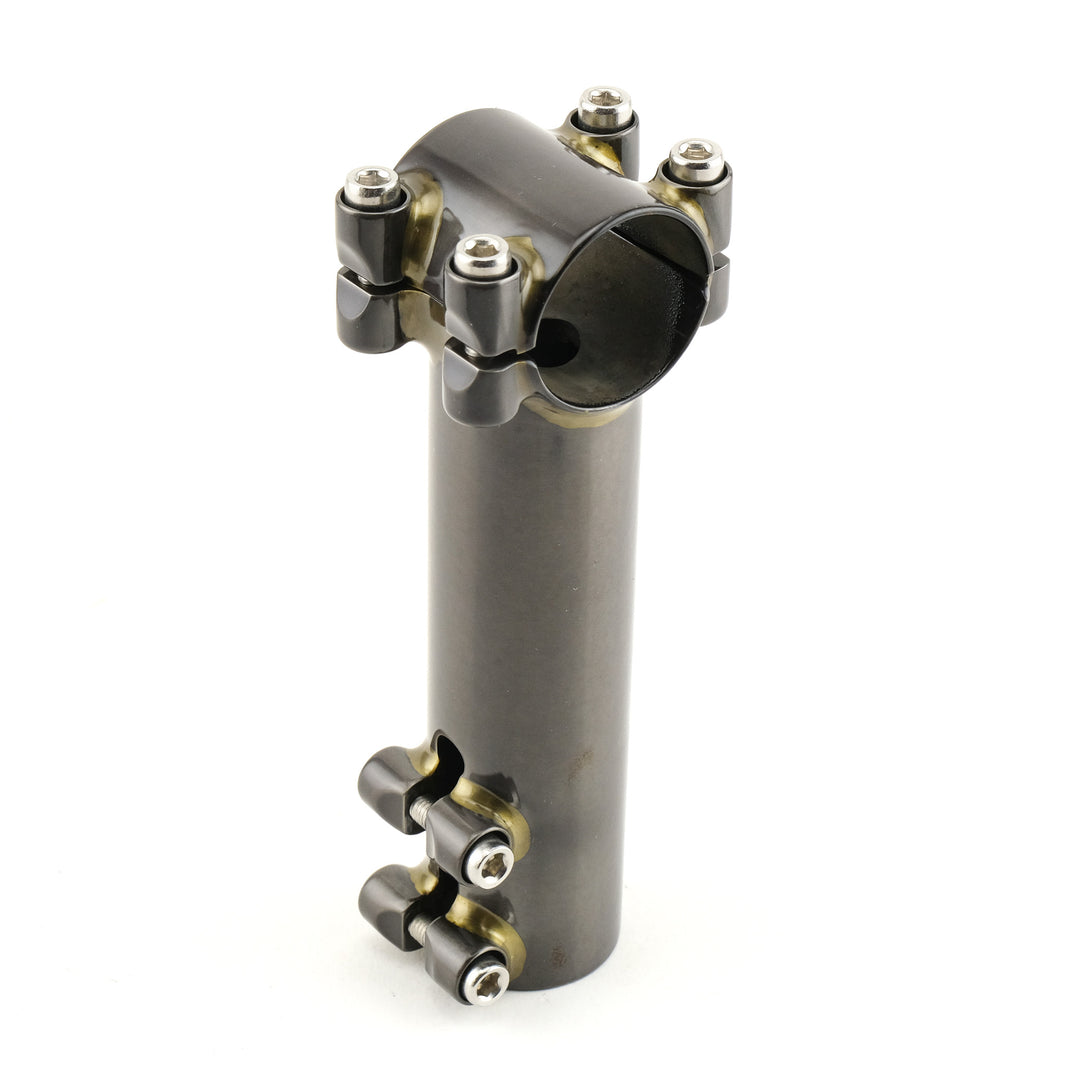
Discord Creemee Chromo
The idea here is to make loaded touring less fatiguing. Zero-offset stems make it more natural to turn a front wheel that’s flanked by heavy panniers. And the height, of course, makes the whole experience more comfortable. You can get a similar body position and hand-to-front-wheel relationship with the aforementioned albatross-style bars, but then you’re left with one position. Pairing a drop bar with the Discord Creemee Chromo aims to offer the best of both worlds.
These brazed chromoloy stems are made in Taiwan and are covered in ultra-durable Cerakote instead of paint or traditional powdercoating. They’re built to last, though, like the alloy Creemee, they weren’t meant for aggressive mountain biking. Nor were they meant for carbon bars or steerer tubes, but that wouldn’t suit their vibe anyway.
Discord Creemee Chromo Quick Hits
- Length (center-to-center, horizontal): 0 mm
- Rise (bottom of steerer clamp to center of handlebar, vertical): 125 mm
- Minimum insertion: 50 mm
- Maximum insertion: 80 mm
- Handlebar clamp diameter: 31.8 mm
- Weight: 272 g
- Intended Use: Touring and light-duty / XC mountain
- Misc: Not for use with carbon bars or steerer tubes
- Price: $195
See more at Tanglefoot and Analog
Photos: Nullvorbau
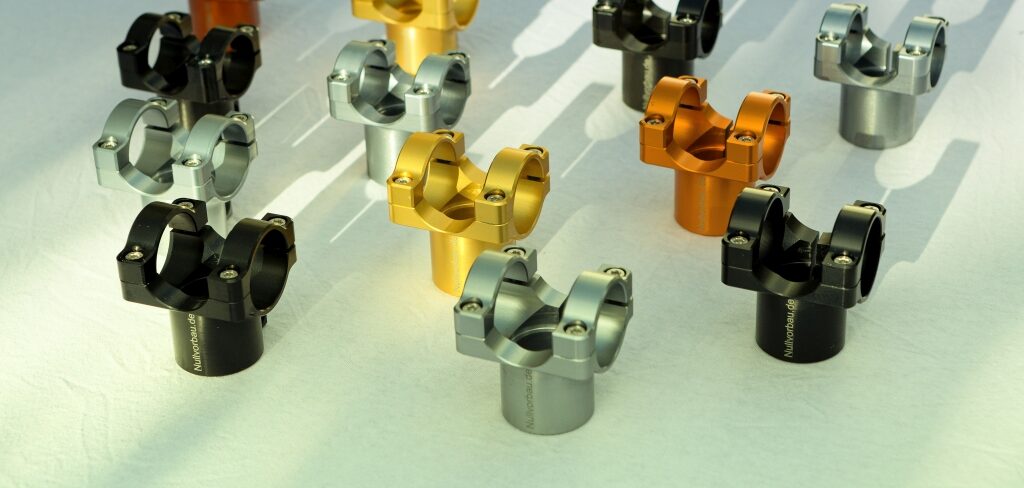
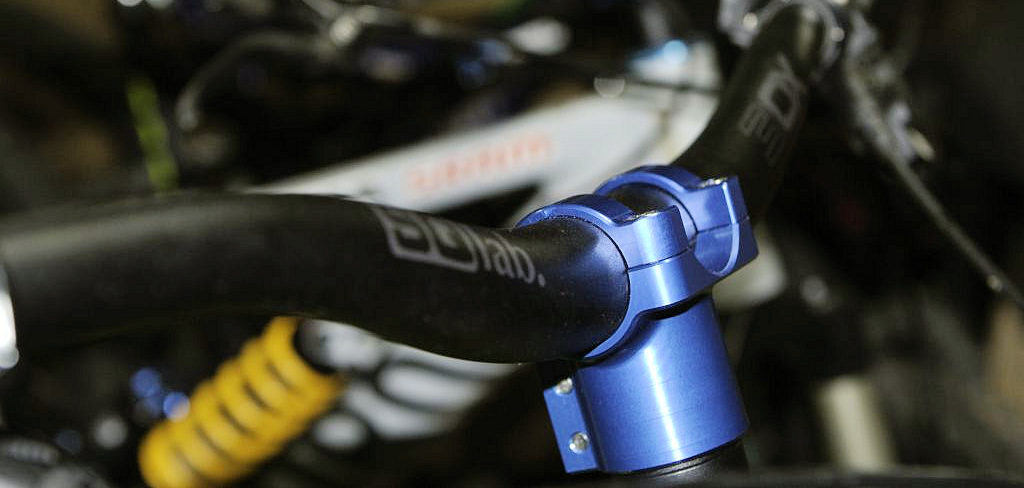
Nullvorbau Zero Stem
This is a small German manufacturer. In fact, we needed Google Translate to read their website. Thankfully, there wasn’t a whole lot to translate. What’s important is that Nullvorbau seems to take a more mountain-oriented approach than Discord does with their zero-offset stems. And they recommend pairing their stems with frames that are one size larger than you’d normally ride, provided you can fit your desired dropper post. They fulfill orders only by email, but you should be fine writing them in English. There’s always Google Translate
Nullvorbau Zero Stem Quick Hits
- Length (center-to-center, horizontal): 0 mm
- Rise (bottom of steerer clamp to center of handlebar, vertical): 43mm (estimated)
- Minimum insertion: 28mm
- Maximum insertion: 30 mm
- Handlebar clamp diameter: 31.8 mm or 35 mm
- Weight: 140 g
- Intended Use: Mountain
- Misc: We’re not sure if they ship outside Germany
- Price: £160
See more at Nullvorbau
Photos: Travis Engel
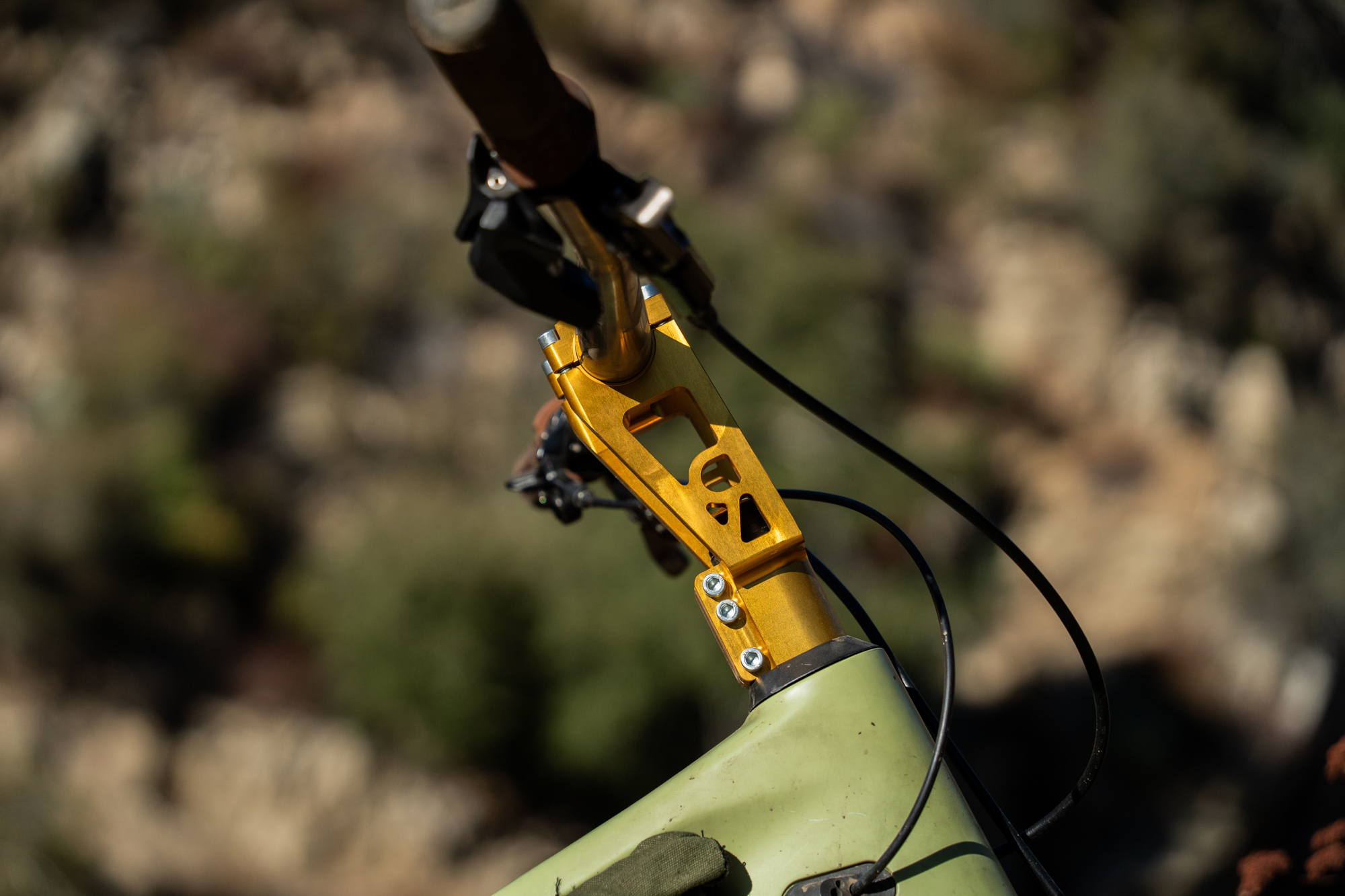
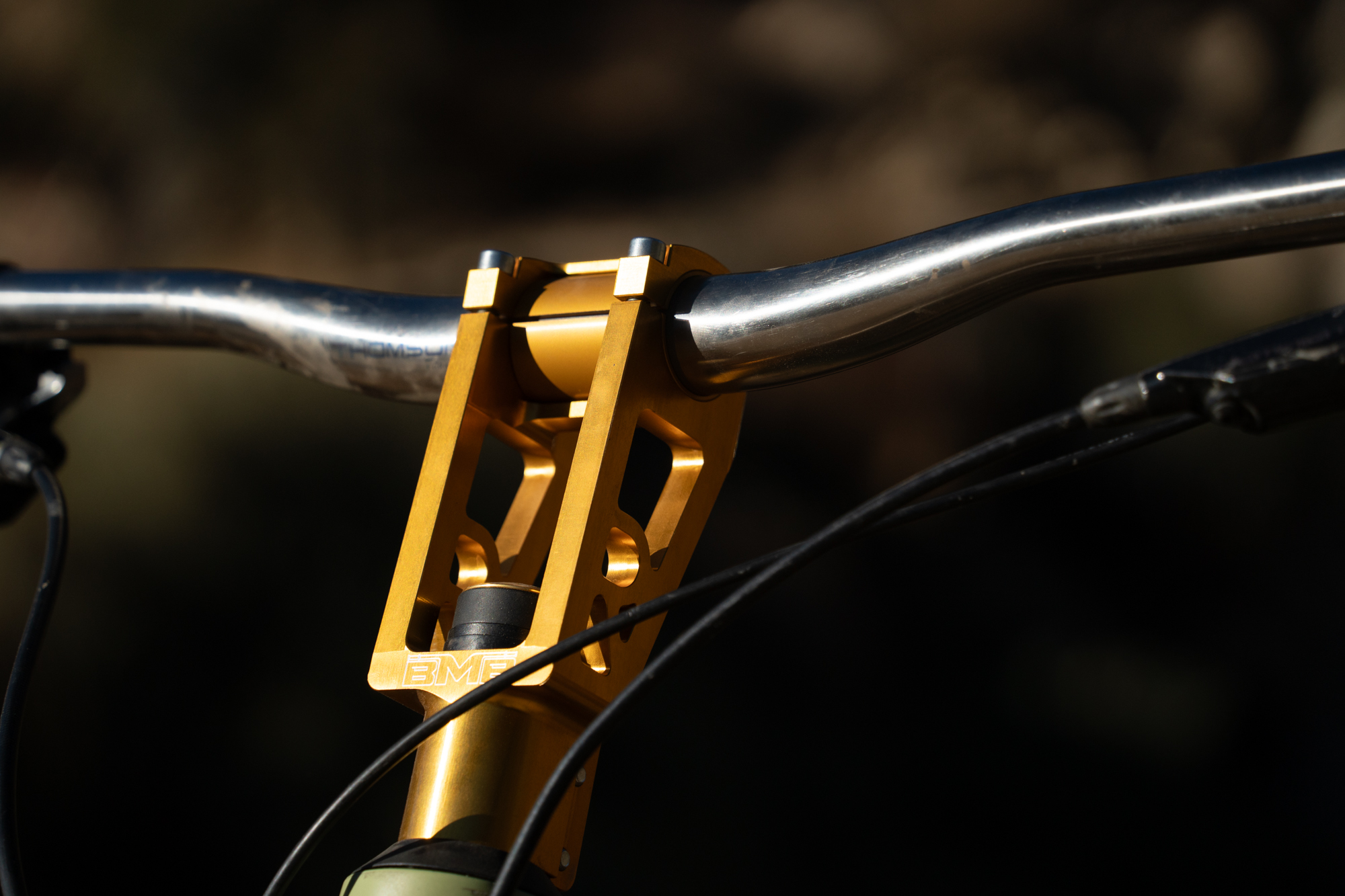
Be More Bikes Raised Reverse Gen 1
Brainchild of mad scientist Bronson Moore, these stems are intended to put the center of the bars behind the steering axis. Travis reviewed the Gen 1 stem and found it a bit much for his personal taste, but he saw there’s something to it. The idea is to make it easier to lean the bike harder in turns, increasing traction and control while reducing upper body fatigue and allowing for a more neutral body position. It was originally conceived for enduro racers.
Unlike the other mountain-bike stems on this list, your steerer tube can extend several centimeters out of the top of the Raised Reverse clamp if you don’t want to cut it or run the stem at max height. You can also run the stem with its 15mm offset facing forward. Of course, this all comes at a cost, with stems going for $500 at the time of publishing. But they’re also sold out at the time of publishing, so people are buying them. And Bronson says he’s working on something new.
Be More Bikes Raised Reverse Gen 1 Quick Hits
- Length (center-to-center, horizontal): -15 mm or +15 mm
- Rise (bottom of steerer clamp to center of handlebar, vertical): 150 mm
- Minimum insertion: 45 mm
- Maximum insertion: 125 mm
- Handlebar clamp diameter: 31.8 mm or 35 mm
- Weight: 393 g
- Intended Use: Gravity MTB
- Misc: Compatible with 35mm bars via included shims
- Price: $500
See more at Be More Bikes
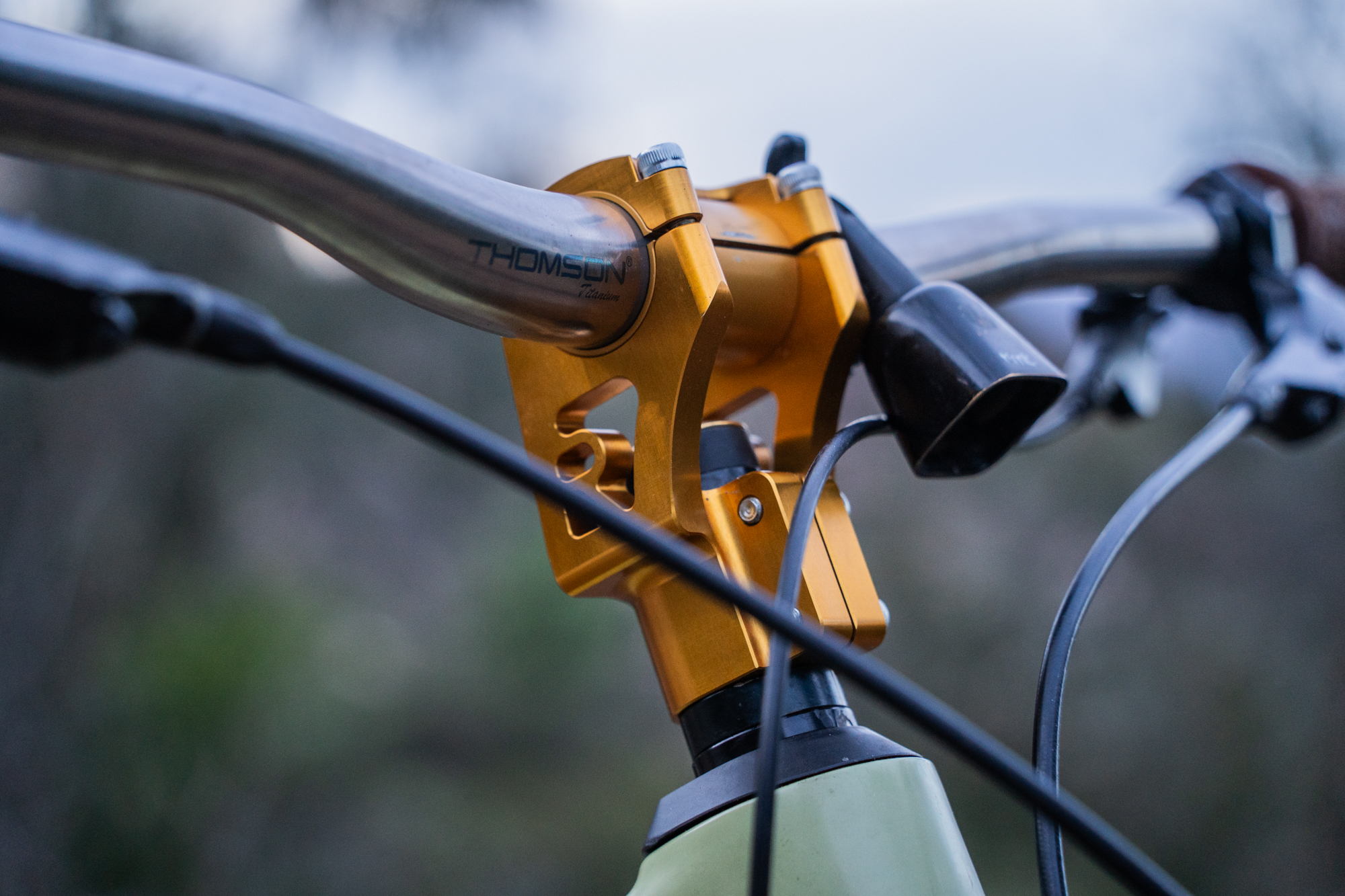
Photos: Travis Engel
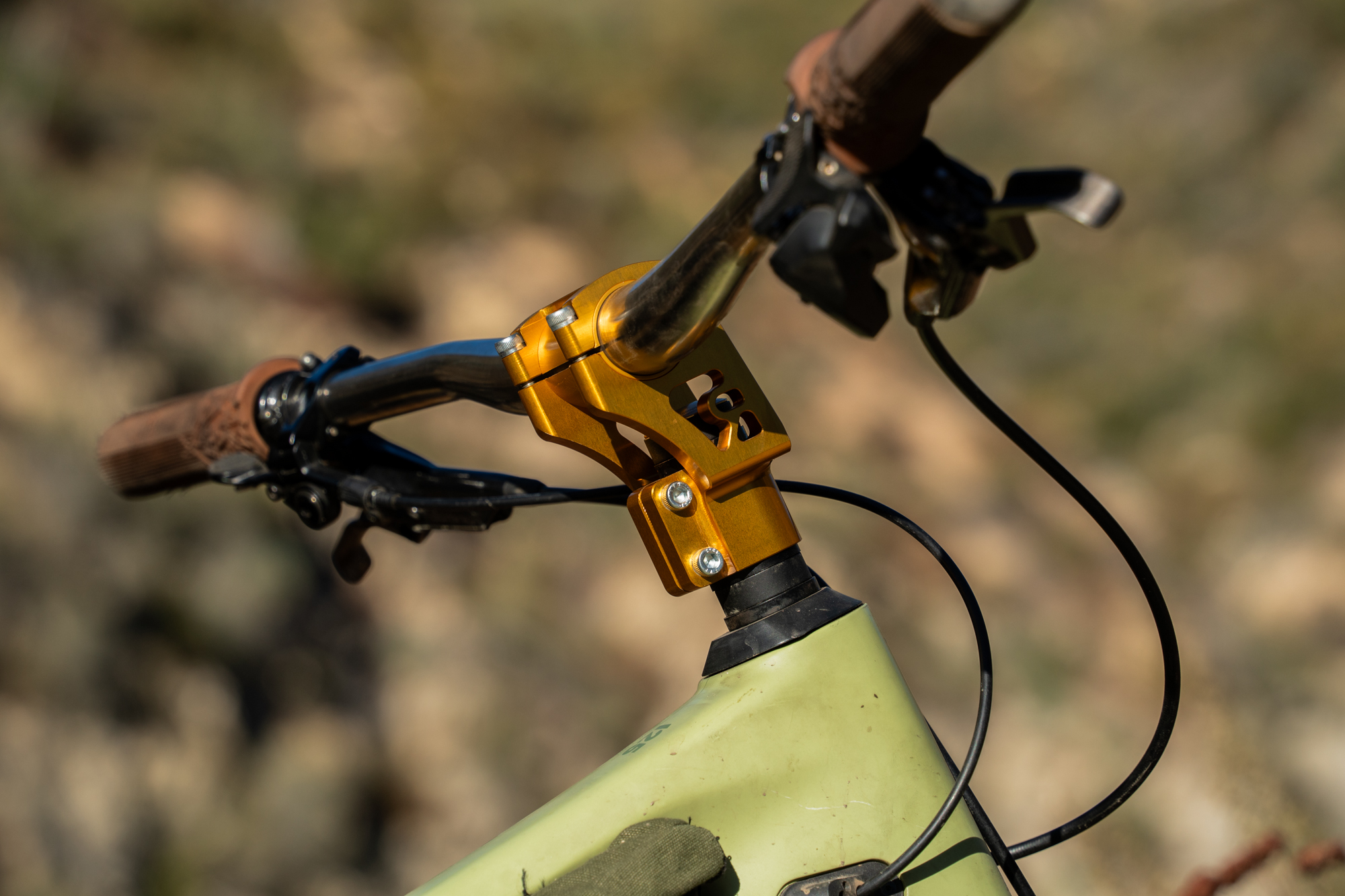
Be More Bikes Raised Reverse Gen 2
The 90mm Gen 2 Raised Reverse stem isn’t necessarily intended for those not ready to commit to the concept. It’s intended for shorter riders, or bikes with particularly tall stack heights. And because it features the same pass-through steerer tube, it offers freedom to go especially low, even ultimately matching the geometry of the Rulezman, depending on your steerer-tube length.
The Gen 2 has a slightly shorter clamp height, but the same -15 or +15 mm offset. And that +15 mm configuration is what Travis got along with best during his time on the Raised Reverse stems. Though still pricy, the Gen 2 uses a little less aluminum and a little less machine time, putting it at $400. That said, it is also out of stock at the time of publishing, but will come back as-is.
Be More Bikes Raised Reverse Gen 2 Quick Hits
- Length (center-to-center, horizontal): -15 mm or +15 mm
- Rise (bottom of steerer clamp to center of handlebar, vertical): 90 mm
- Minimum insertion: 35 mm
- Maximum insertion: 65 mm
- Handlebar clamp diameter: 31.8 mm or 35 mm
- Weight: 272 g
- Intended Use: Gravity MTB
- Misc: Compatible with 35mm bars via included shims
- Price: $400
See more at Be More Bikes