






I see a wood bike and I want it painted black. After spending years aboard carbon superbikes and titanium soulmates, Petor Georgallou tried a Twmpa Cycles gravel bike and was surprised to experience the ride quality of a wooden bicycle. This is a story about falling in and out of love, and how a matte-black paint job is a surefire way to rekindle the spark. Take it away, Petor…
Three Years, Three Bikes
Three years ago, it was a very good year. In quick succession, I was able to ride some of the best riding bikes I’ve ever ridden. It wasn’t just that they were good or very good; they were each game-changingly good. So good that they each, in some way, changed my mind about how riding a bike could and should feel.
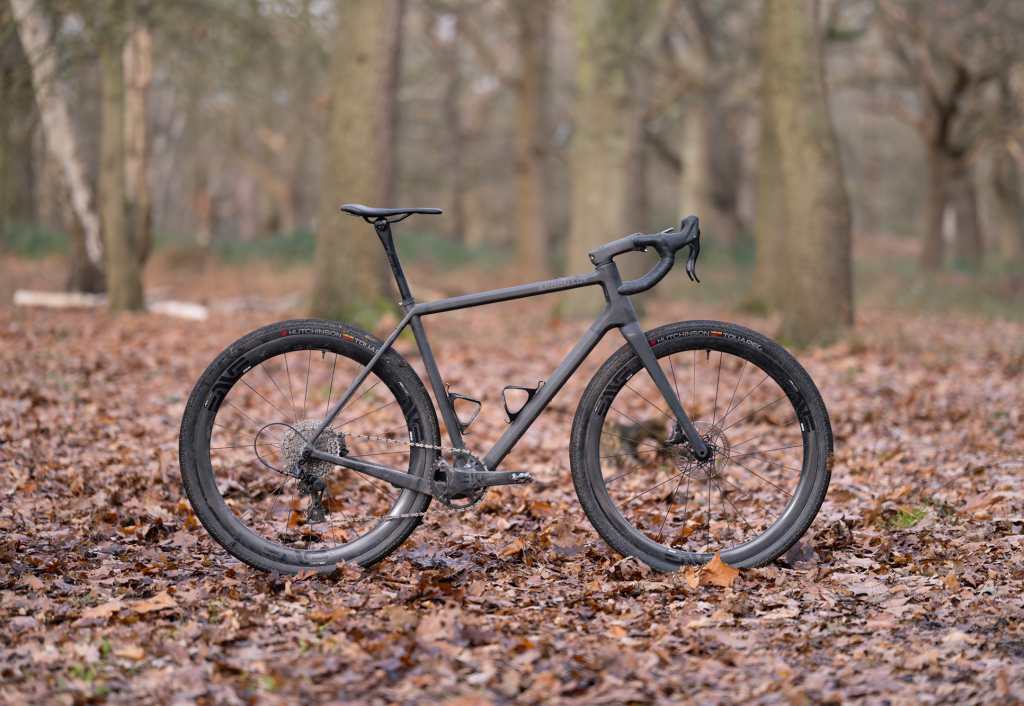
It started with the Argonaut GR3, which I assumed wouldn’t be the sort of bike that I like riding. However, I wasn’t just pleasantly surprised; it totally changed my mind about the sort of bikes I like riding. I LOVED that bike. It was super light and super fast, with an almost too-short back end and a reasonably long front centre, but with baseball-bat-sized chainstays for power transfer, with the edge taken off by comfortable and familiar-feeling flex through the rest of the frame. That made it both a lovely, comfortable bike to ride over long distances, and also made the whole thing feel super sure-footed riding over terrain more suited to a mountain bike.
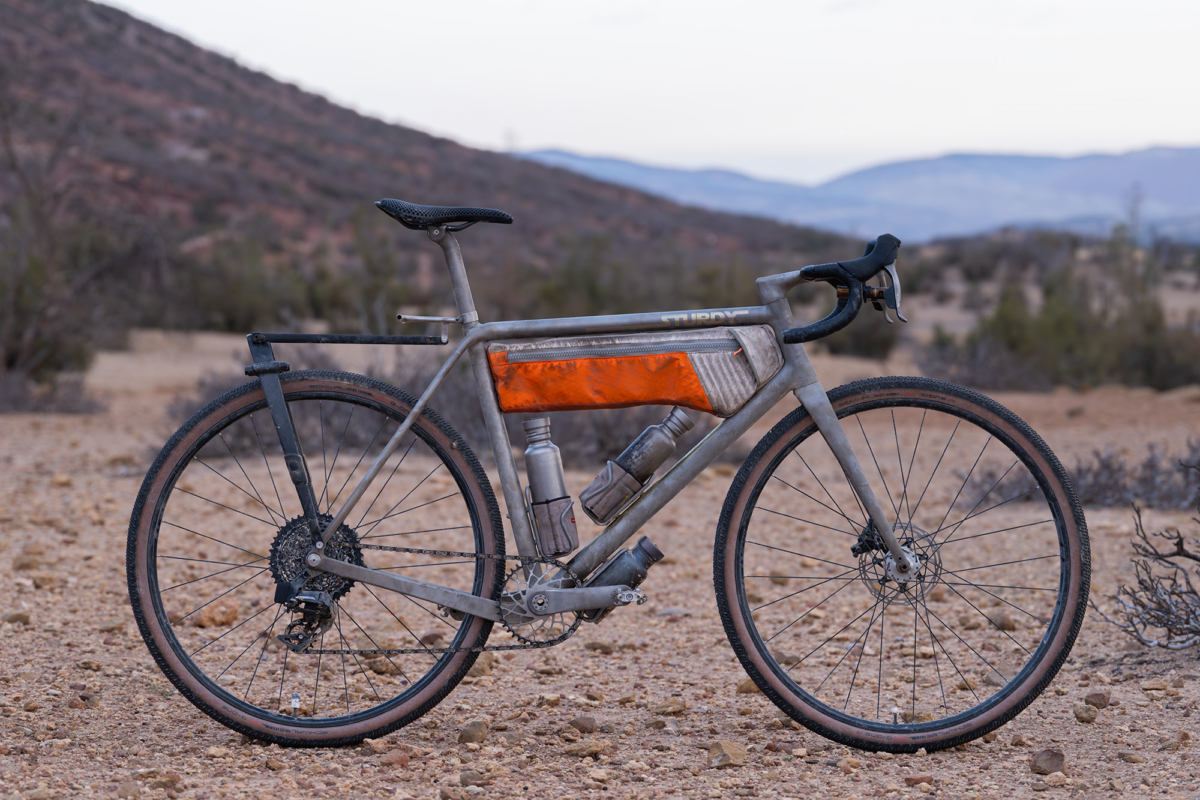
After that was my personal Sturdy Cilla, which I sold almost all of the bikes I’d ever made for myself during my career as a frame builder – as well as a lot of my framebuilding tools – to buy. I was skeptical as to whether or not I could ever be as enamored with another bike as I was with the GR3. In hindsight, the GR3 was like a one-night stand. It was fast and fun and wild and surprising. I think back to the possibility of what could have been, had I ended up with a GR3. What would my life look like today?
My Sturdy Cilla is an 11. It’s the best bike ever. My forever bike, like a marriage. Although I didn’t have the immediate connection with it that I had with the GR3, with a couple of tweaks, over time it became the bike that I connected with like no other bike before or since. The Sturdy is a very special bike, and when I reviewed it I did my best to play it cool, because it’s hard not to hold it to a different standard than other bikes. It’s very expensive (although not compared to top-end mainstream road and gravel bikes from major manufacturers), so it should be much better than most bikes – and it is.
After that, I reviewed the Twmpa – a wooden bike, made by a furniture maker in Wales. While the GR3 felt unbelievably sure-footed yet nimble off-road, and the Sturdy feels solid, reliable, and simple, like a Leica… the Twmpa is like a magic carpet.
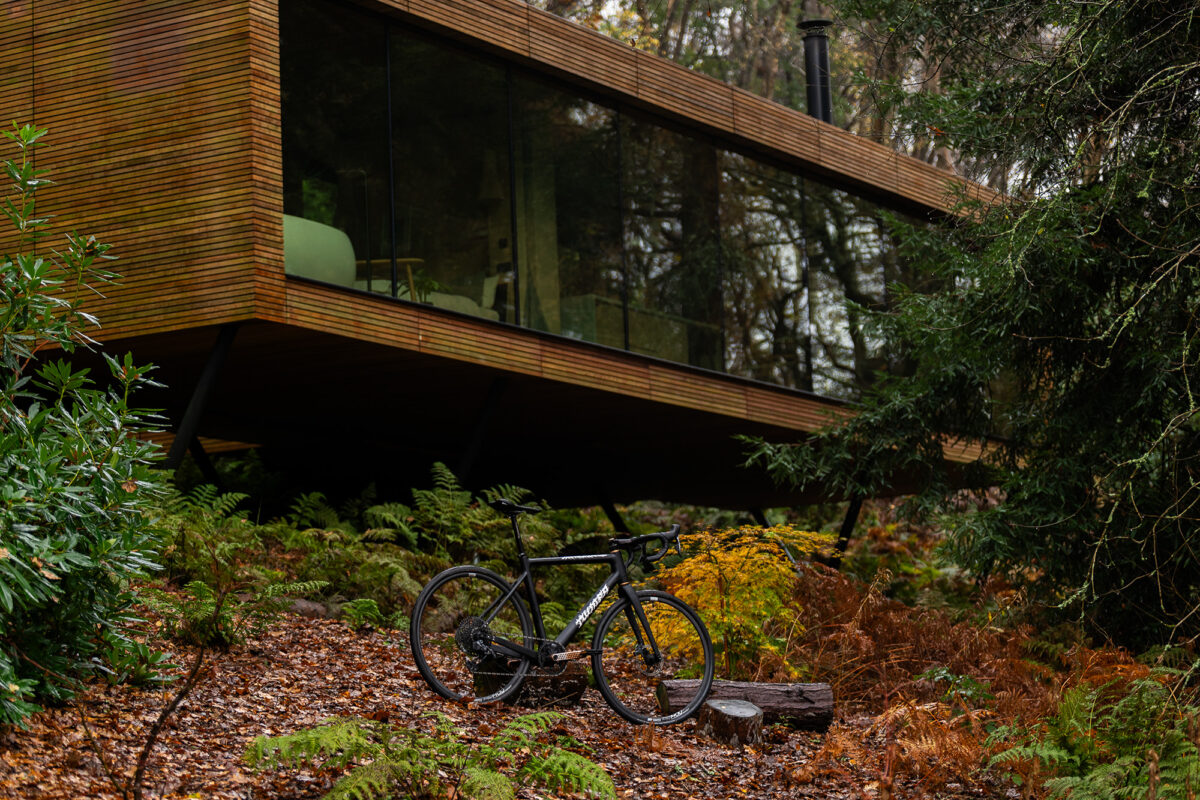
A Magic Carpet Made of Wood
I didn’t trust the Twmpa off-road to start with, although it has passed ISO testing as a gravel bike, and I don’t generally ride in a way that breaks frames. After a while, I learned to trust it on increasingly challenging terrain, and on longer and longer rides. The ride quality is completely unique; however, the bike that I reviewed was a demo bike that had been ridden by press and customers and anyone else my size that wanted to try out a wooden bike. I got the demo bike to review and assumed it would go to someone else after, so I rode it as it was, without changing anything, and increasingly had a nice time doing so.
When something is new or different, it takes a minute to get used to it, just as much as it takes time to get used to the idea of it. On paper, wood is a very good material to make a bicycle frame from, but it took actually riding it for a long time to be okay with bunny-hopping off a curb into traffic at speed, or bumping down a set of steps, or sprinting out of the saddle without imagining it shattering to splinters like kindling.
The frame that I reviewed was flawed in a number of ways, and due a redesign to add rear-end stiffness and clearance for modern gravel tires. Andy Dix of Twmpa Cycles had taken three years of feedback on board and was bringing two iterations of the design to market: a more nimble “all-road” bike and a more capable and racier “gravel” bike. So the dented and slightly battered original demo bike was coming to the end of its life.
Through an elaborate series of swaps, I ended up with the ex-demo Twmpa, and for a while, I treated it kind of badly. It became the bike I rode when I was worried my Sturdy might get stolen or damaged. I wore the tires out, and because I had other bikes to ride and to review, the Twmpa was sidelined at my parents’ house when the rear tire finally failed.
At some point, Schwalbe had kindly sent me some tires for a different bike that ended up not fitting, for various reasons, but I was allowed to keep them. So when I next visited my parents, I fitted the tires (38mm tubeless Schwalbe Pro One) and rode into London for a meeting. Somehow, fitting massive road tires and treating it as an “all-road” bike rather than an older-geometry-and-clearance “gravel” bike just clicked, and I fell in love with it.
Ride Qualities
It’s a super flexy frame, but in a completely different way to the way a metal bike would flex. It doesn’t feel slow or draggy, or like it’s absorbing all the energy I put in. If anything, it feels closer to a carbon fiber frame than a metal frame, but – absurd as it sounds – somehow warmer.
It’s a very difficult ride quality to pinpoint as a purely material sensation, because while I’ve ridden probably hundreds of different carbon bikes and likely thousands of metal bikes, I’ve only ridden a handful of wooden bikes, and a handful of bamboo bikes (which feel very different). It’s almost unbelievably smooth, so looking at a speedometer is often kind of surprising, because I tend to be going a little faster than I feel like I’m going.
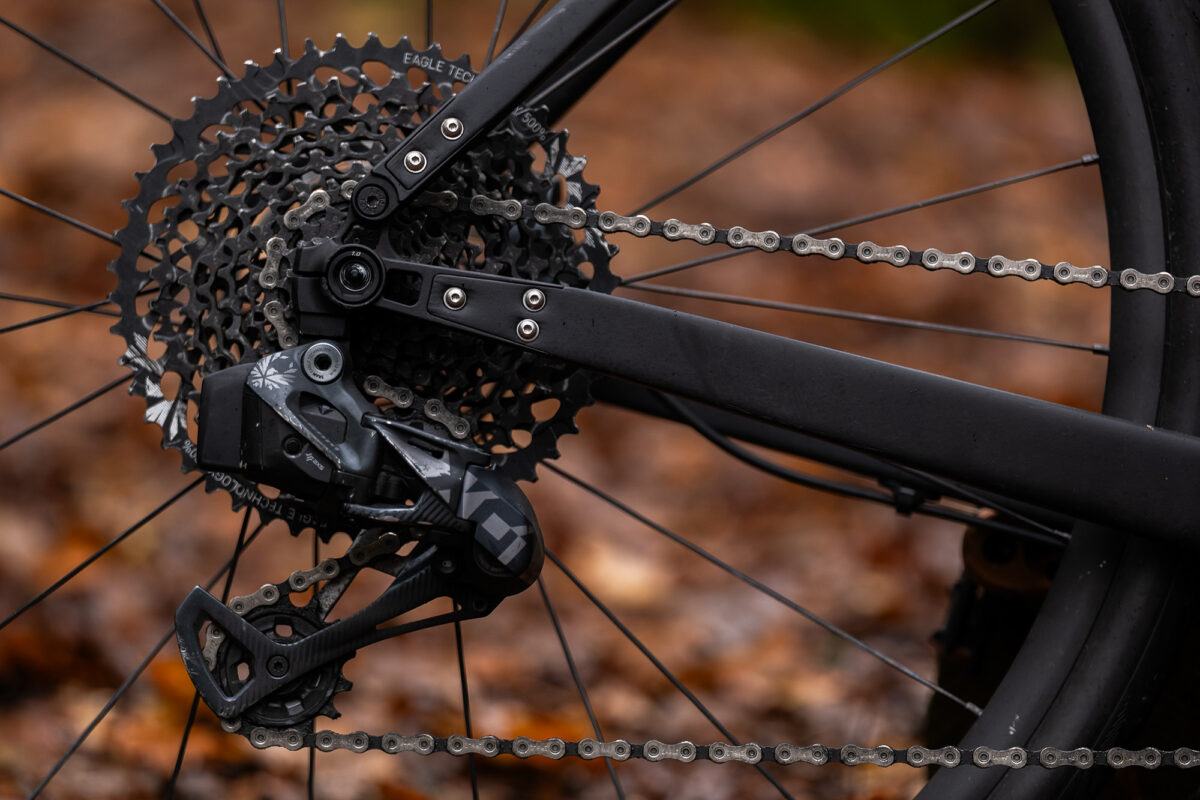
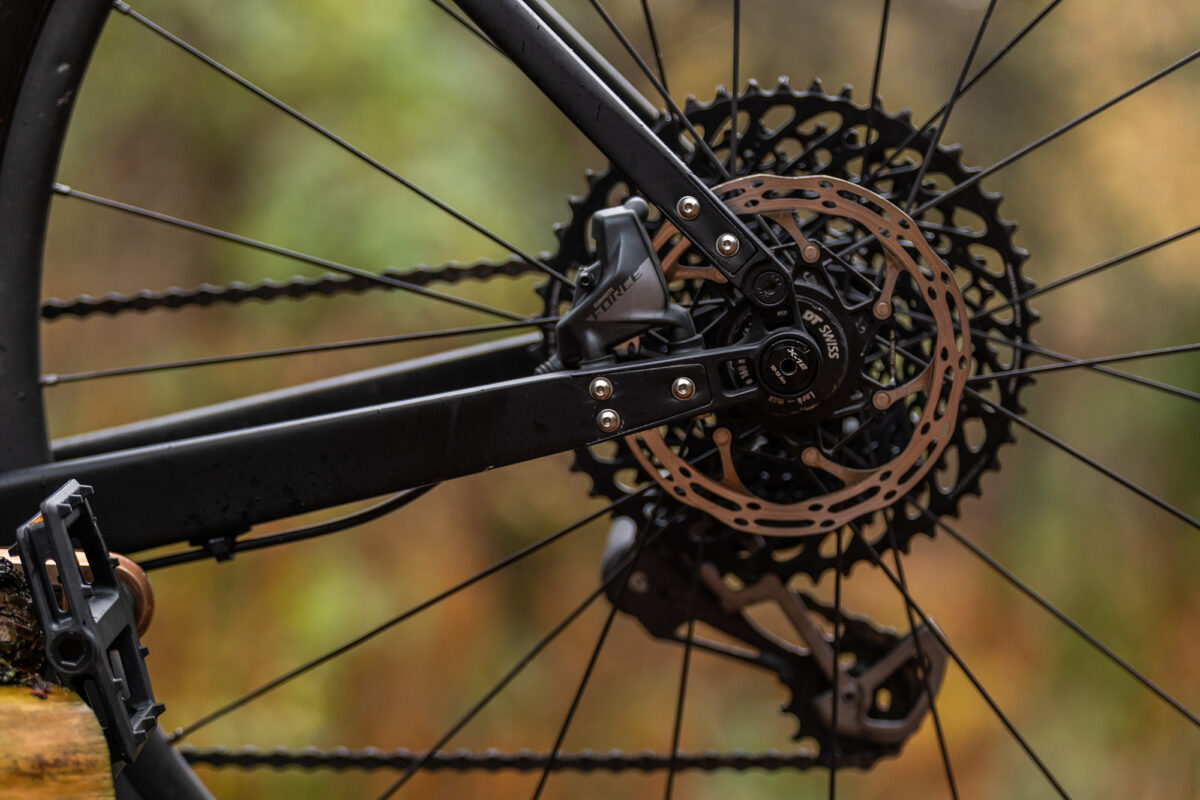
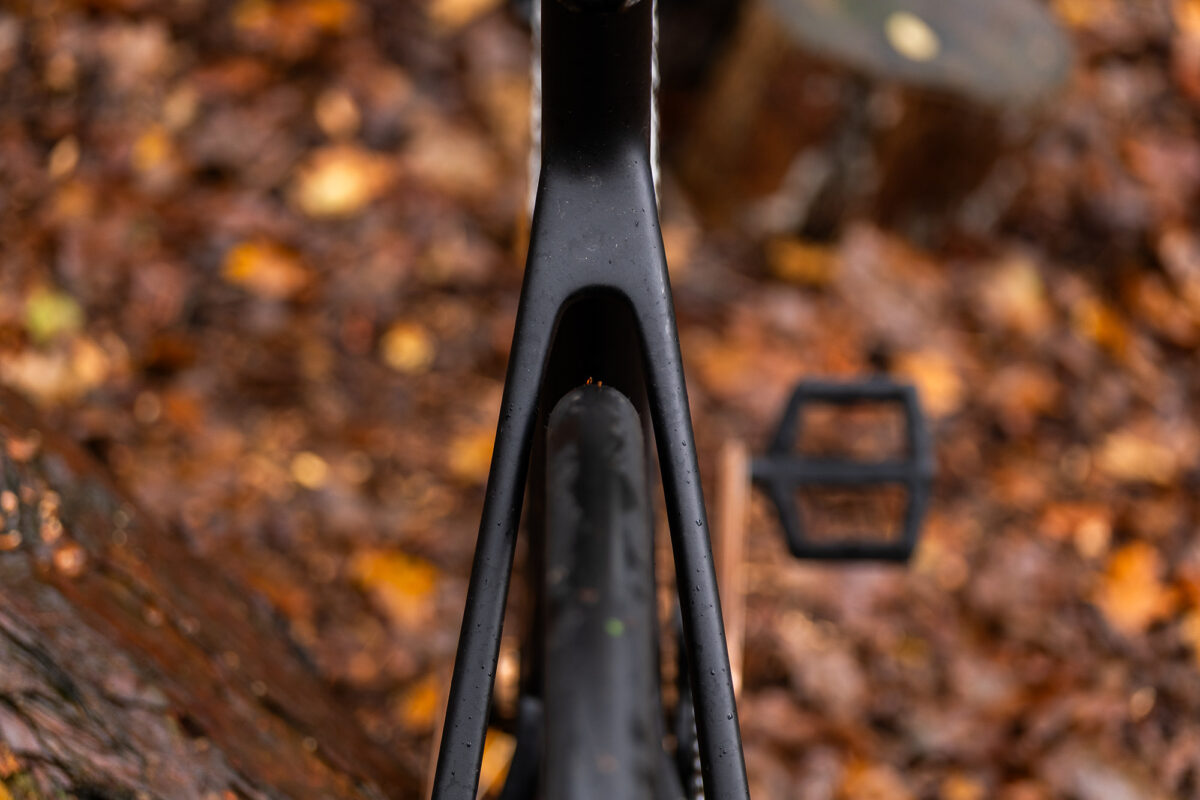
The one persistent drawback – the thing that was keeping me from riding the bike over other bikes – was the way that it looked. On one level, the clear finish showcased the mind-boggling feats of intricate joinery that had made bits of tree into a bicycle frame, and I’ve always been a fan of materials looking like what they are, but it just wasn’t for me. Something about it seemed too obvious, like I couldn’t take it seriously as a bike because it was too clearly made out of wood.
It made me feel like a middle-aged surf dad, like I was inviting people to be impressed by the joinery – normal people, not engineers and nerds. While it lived in their garage, my parents were really impressed by it, which annoyed me because it is an incredible bike, but they were appreciating it too much and on the wrong level. It screamed, “Look at me! I’m made of wood!” rather than quietly being a super high-end, high-performance, mile-eating machine silently irritating my parents by living rent-free in their garage.
So, in spite of loving riding it, I felt uneasy riding a wooden bike because it attracted too much of the wrong sort of attention.
A New Finish, A Fresh Start
When I originally reviewed the bike, I said that if I owned a wooden bike I’d have it hydro-dipped in Realtree to camouflage the real tree. But actually owning the bike, that somehow felt too garish, and now that it had become my go-to “road” bike, Realtree didn’t feel as relevant as when I was using it as a gravel bike.
I’d joked with Andy at Twmpa – or maybe threatened him – with just painting it black so that it looks like a cheap and poorly made catalogue carbon bike, but with amazing and surprising ride quality.
The year that I reviewed the Argonaut GR3, which might have been 2022, I attended a “heavy metal logo drawing workshop” at The Crab Museum, which is, as it sounds, a local museum of crabs. The class was taught by Christophe Szpajdel, aka the “Lord of the Logos,” who has designed thousands of heavy metal logos for the most diverse roster of clients, including every heavy metal band, Rihanna, the Crab Museum, Metallica, and that Nicolas Cage film Mandy.
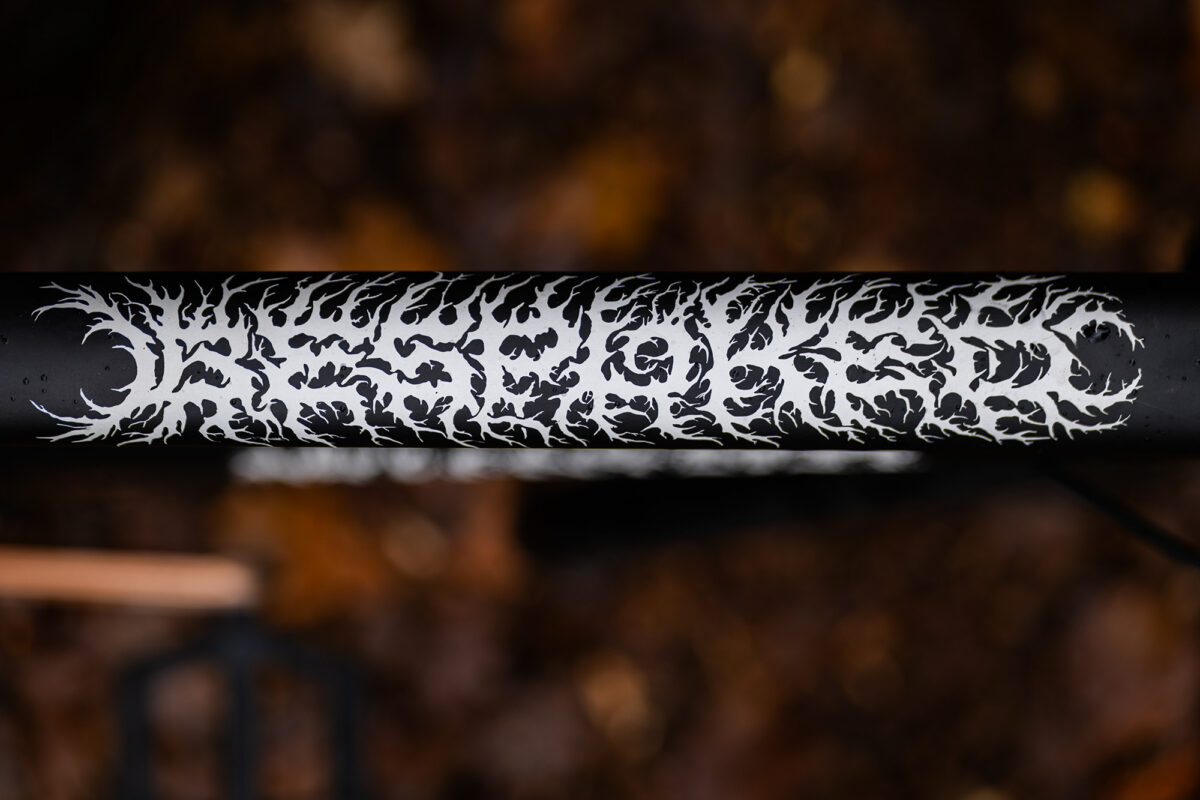
Having learned during the class that I both suck at – and can spend way too much time on – designing heavy metal logos, I commissioned Christophe to design a logo for Bespoked. Christophe’s a pretty strange guy, by which I mean that after he had talked at me about the decline of centipedes for two hours during a late-night design meeting, I realized that he is my people.
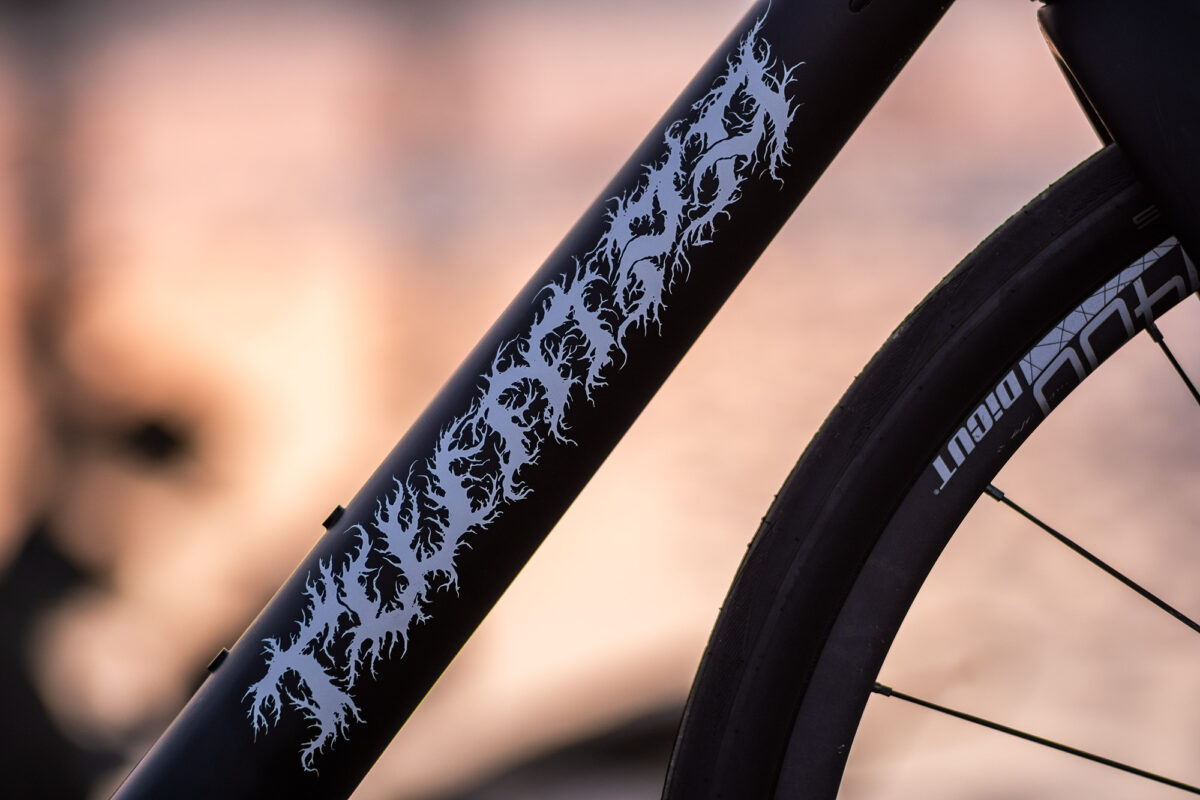
He studied agriculture as a student and, all the while drawing logos for heavy metal, punk, and hardcore bands, gained a degree in forestry engineering. I spoke to him a lot more than I expected when I commissioned the Bespoked logo, because he’s just a really interesting guy who leads a thoroughly alternative life, travelling the world drawing metal logos and teaching. I enjoyed listening to his stories and ideas as much as he enjoyed telling them.
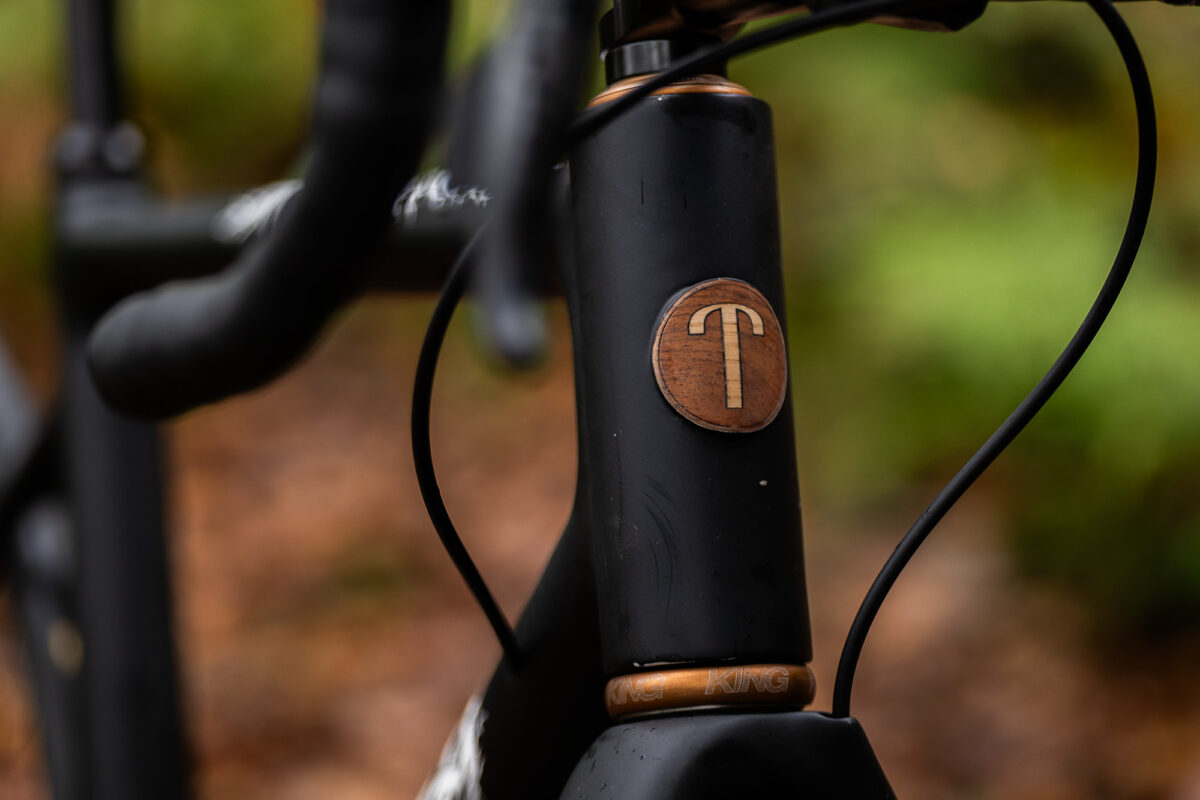
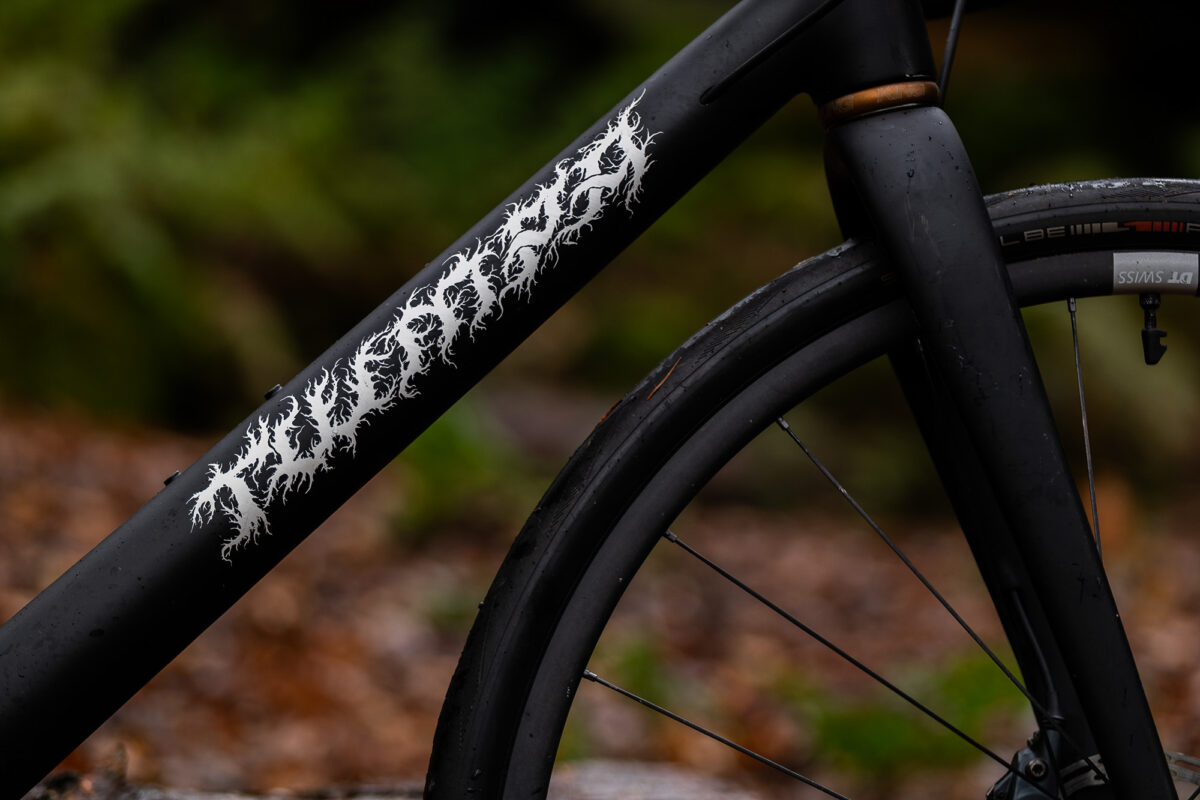
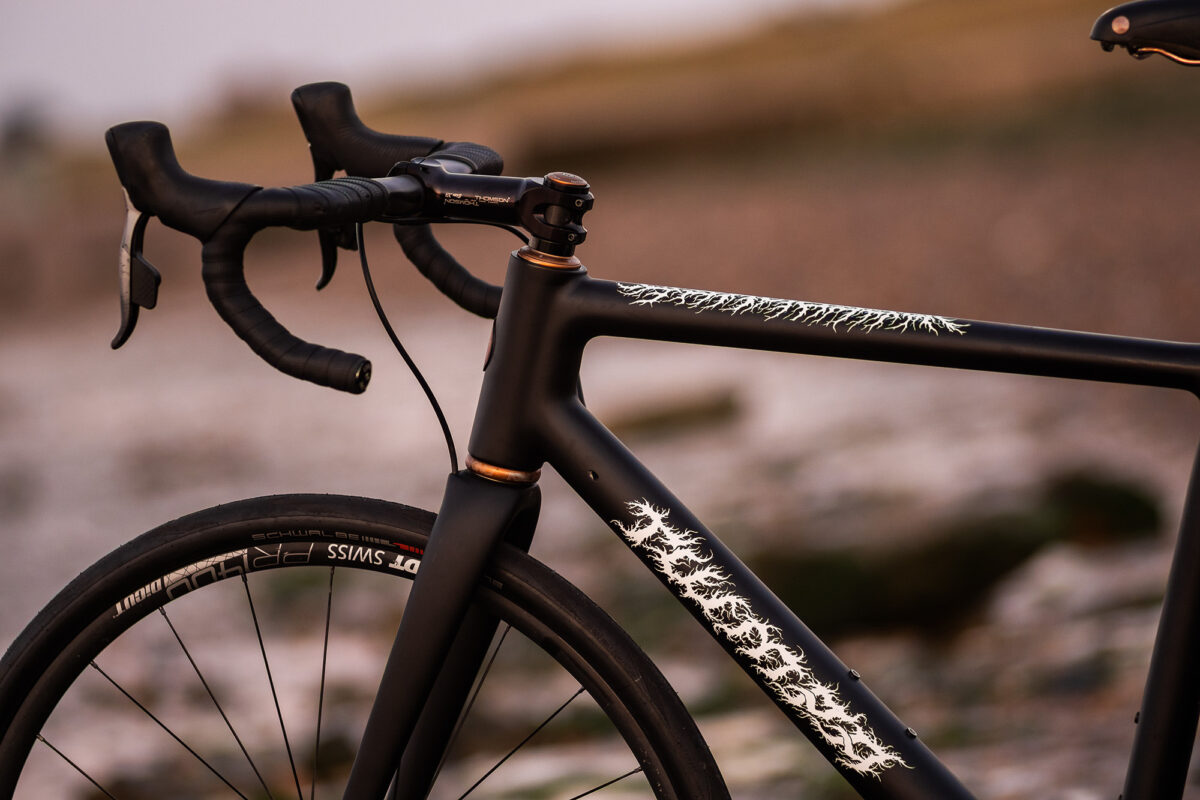
I really enjoyed the process of Christophe designing the Bespoked metal logos, and I really didn’t like the Twmpa downtube logo. Christophe is a keen cyclist (although his riding centers on travel around cities on the cheapest rideable bike he can get his hands on, with the knowledge that it will be stolen), but also has an intimate knowledge of forests and trees. If I was going to squeeze all the enjoyment out of the Twmpa that I possibly could, it needed a new downtube logo, and Christophe was undoubtedly the guy. He designed the alternative downtube metal logo for one-time use on my personal bike around the silhouettes of ash trees in the winter.
Like a Sheep in Wolf’s Clothing
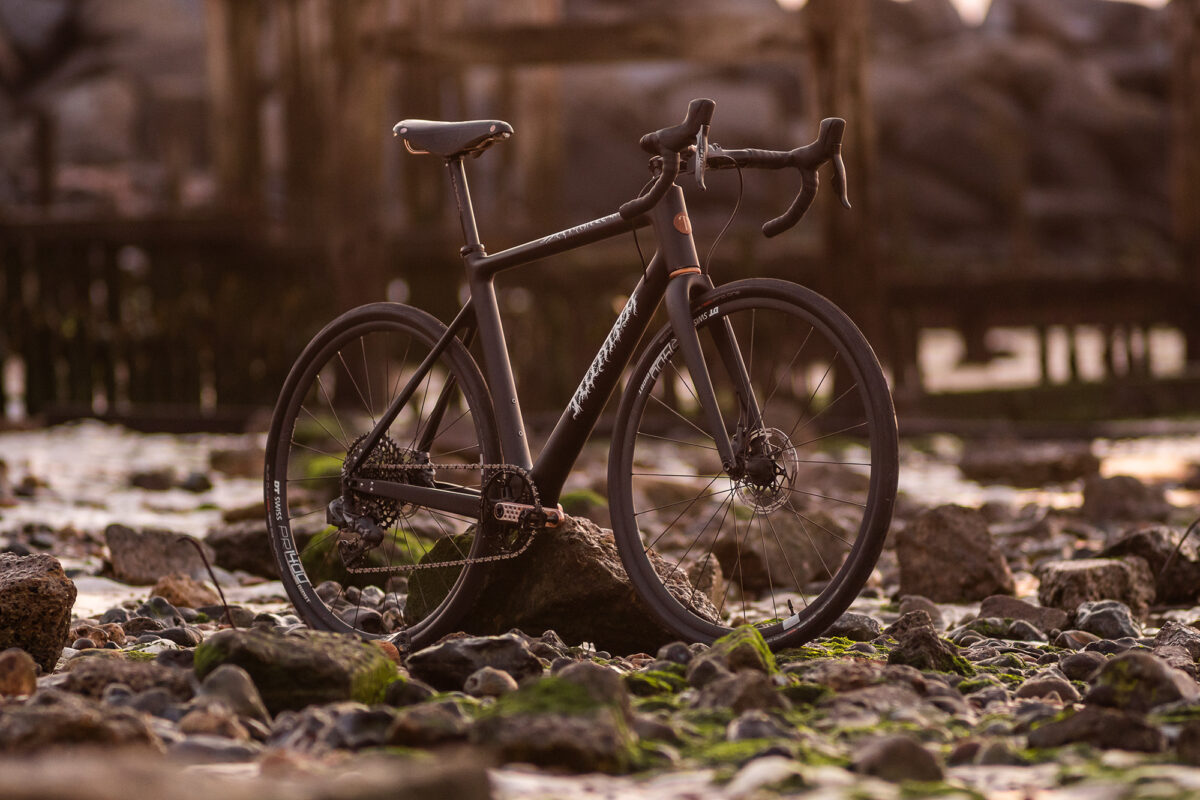
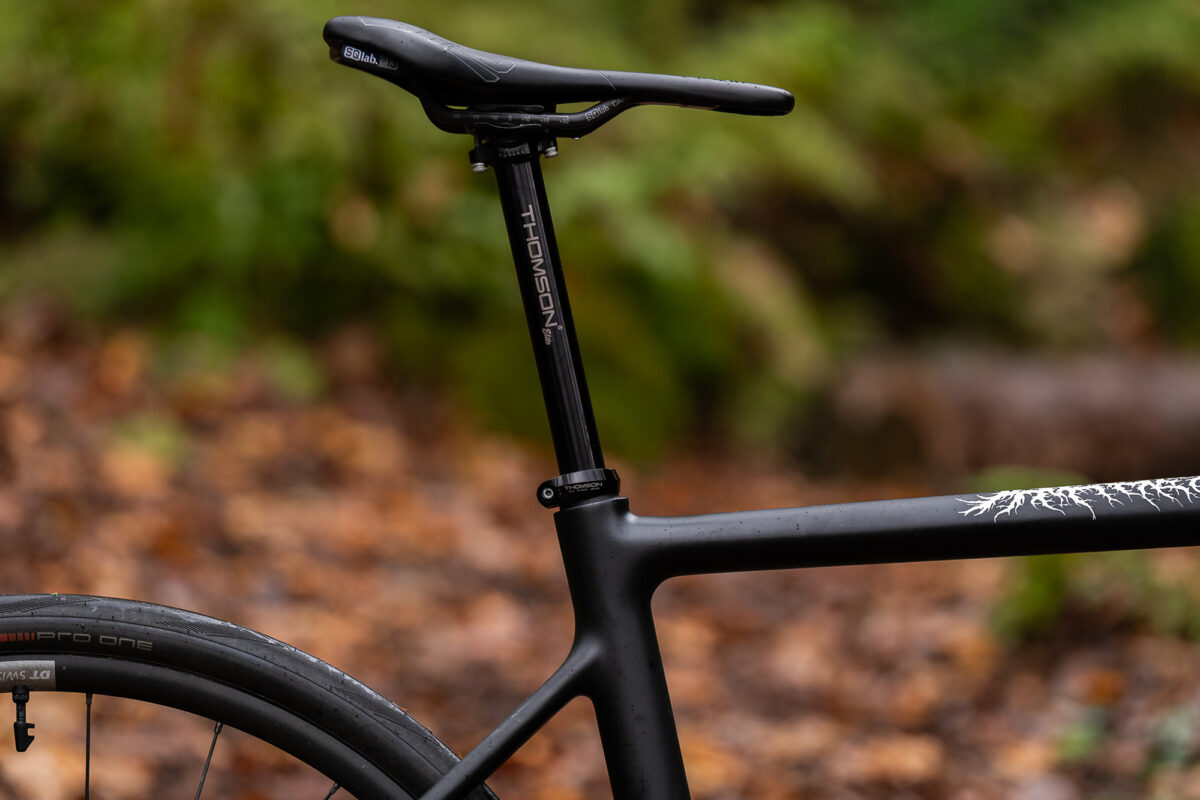
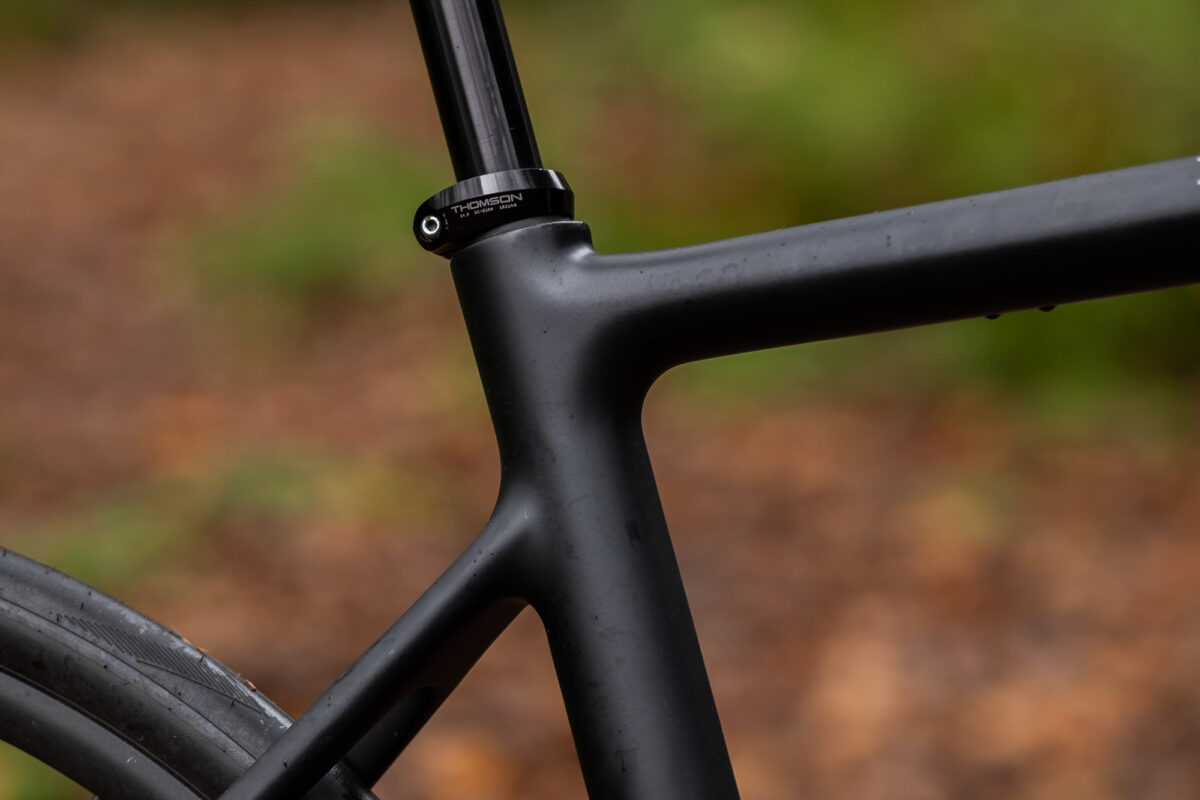
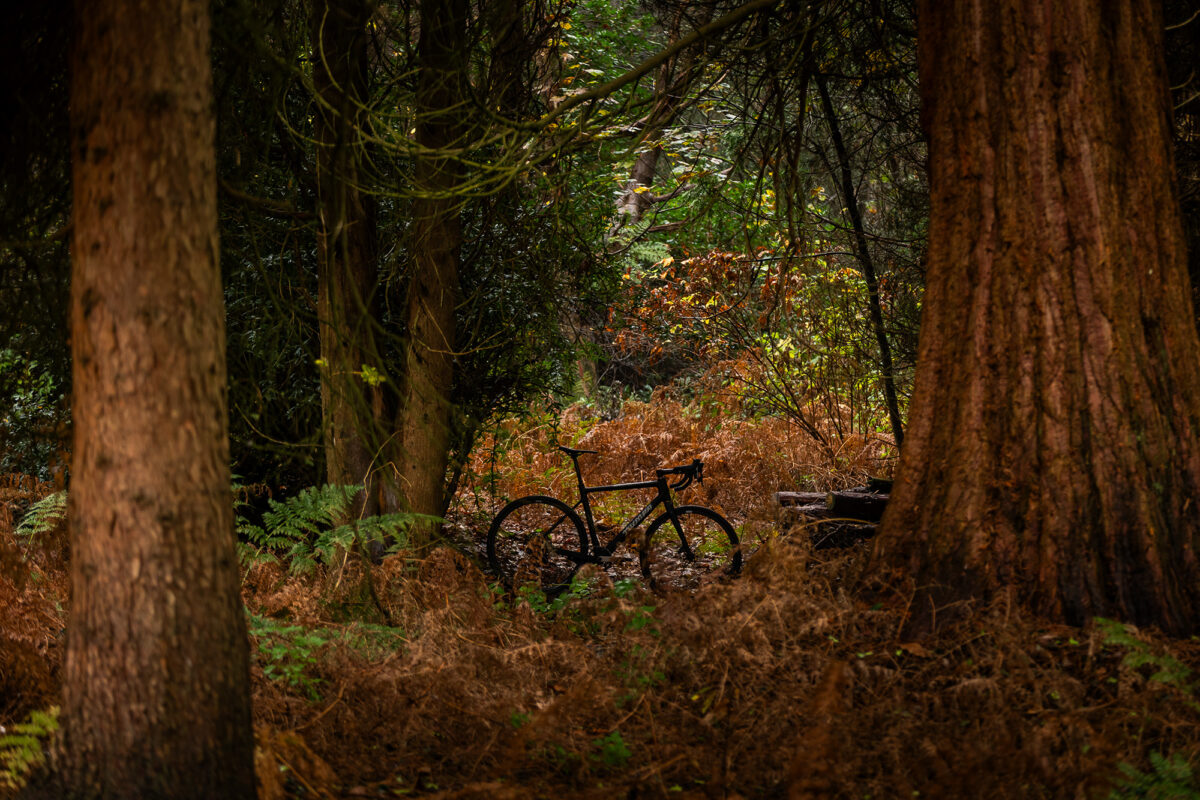
I re-imagined the Twmpa as a road bike. I had the abused DT Swiss hubs and Chris King headset and bottom bracket serviced, while the frameset went to mythical painter Jack Kingston, with the logo and carte blanche to do anything as long as it came back matte black. There’s magic in getting a bike painted, especially by Jack. I hadn’t imagined how much of a difference the new finish would make in the way I feel about the bike and my relationship to it.
The bike was rebuilt for me while I was away somewhere doing something, at Niel’s Wheels in Molesey, with SQlab road bars, fresh bar tape, and basically no other changes. It just looks hard, which is funny, because ultimately a lot of my enjoyment of the bike comes from how soft it is. It’s like a sheep in wolf’s clothing.
It’s become the bike that I ride the most, because ultimately it’s the bike that suits the kind of riding I’m doing the most at the moment: detached solo road miles at night-time, staring into a pool of illuminated tarmac ahead of me, listening to music.
It has too much trail for a road bike, and I’d appreciate a slightly lower bottom bracket, since I run 165 cranks and don’t really use the bike off-road, but somehow it still just feels amazing, like a fresh set of legs and a tailwind.
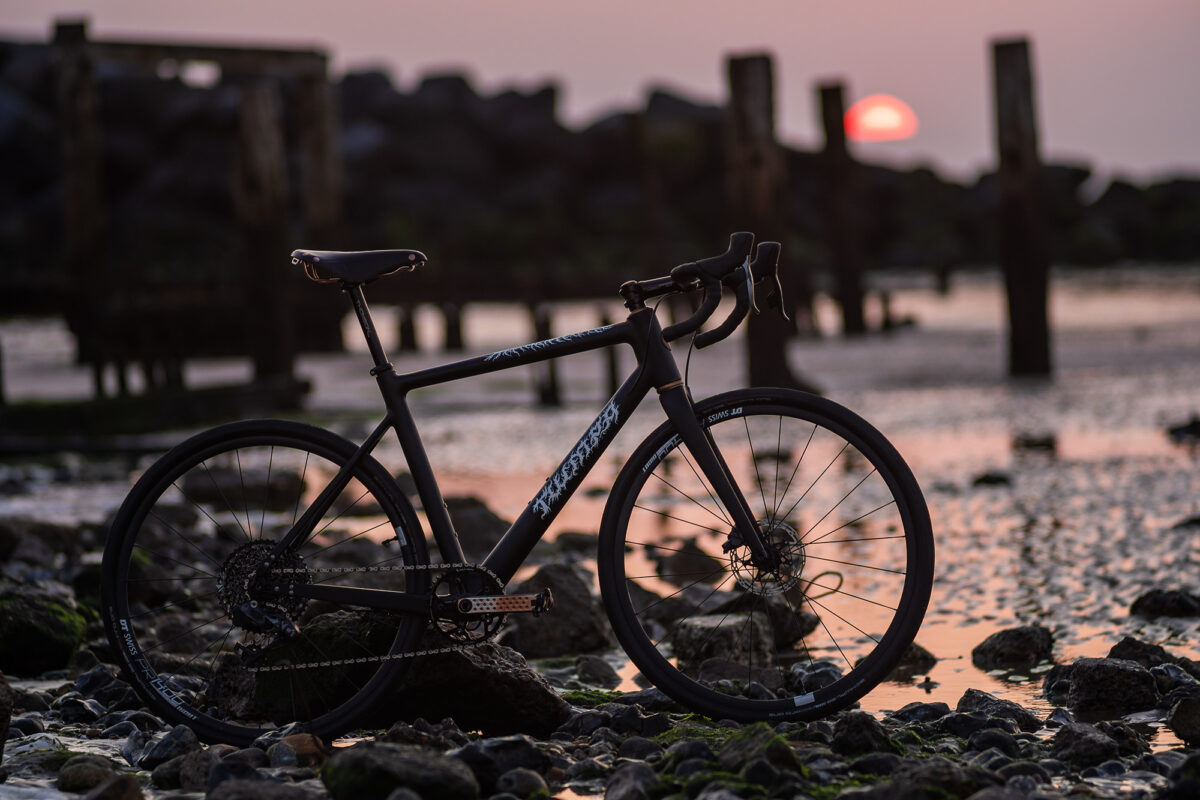
There seem to be more and more wooden bike makers popping up, which is great. I hope some of them start making bikes that ride exceptionally well without feeling the need to shout about their woodenness. Wood really is very good, but now that there’s virtually nothing telling anyone that the Twmpa I’m riding is made from anything unusual, I can just enjoy the way it feels without having to talk to every friendly stranger I meet about how wood is good. Wood isn’t just good – it’s better.
See more at Twmpa Cycles.