







In an age of persistent burn bans and wildfire risk, the tradition of the campfire is at risk of dying out. But not wanting to give up on his primordial instincts, Paul Kalifatidi has turned to the Howl R1 campfire to bring a comfortable warmth to the campsite. Read on for a review that even a neanderthal would love.
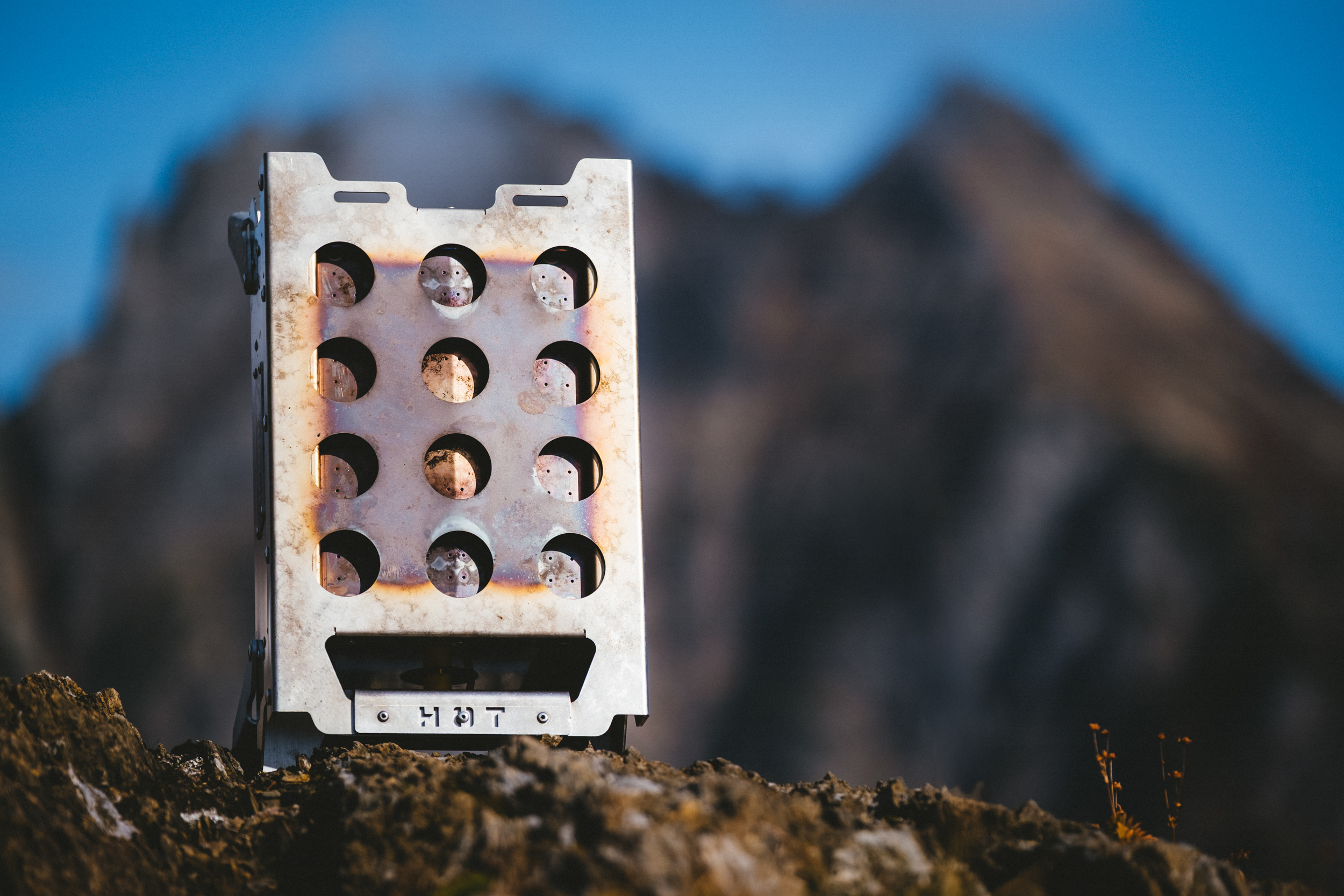
For the past two million years, humans have been using fire to warm our toes, thaw our fingers, cook our food, and stave off the ghosts, ghouls, and goblins. Scientists believe that humans learned the skills to tame fire one to two million years ago. No matter how many millennia we’ve had to practice, the control of fire still isn’t instinctual, and many forest fires are started by irresponsible humans. I have had to adapt to burn bans since moving to the PNW from the Midwest.
For a large chunk of the year, these bans dictate that my toes and finger tips be warmed with careful consideration. Or, sometimes, not at all. After a few cold nights where the ghosts, ghouls, and goblins crept into my campsite, I wanted to try a propane fire. The Howl R1 has been the perfect solution for providing warmth and light to keep me company at night. I’ve been using it for the last six months on road trips, camping outside of Bellingham, and outside my front door. Follow along for my experience with the Howl R1, I did my best to make this taming-of-fire article caveman compatible.
Howl R1 Quick Hits
- Burn time: 8 hrs. full blast with 20lb tank
- Weight: 10 lbs
- Dimensions, legs in: 13.275 x 8.43 x 6.05 in.
- Operating Temp: 800ºF
- Flame Height: 32 inches nil wind
- Fuel Efficiency: Uses max. 54,000 BTUs per hour
- Made in Colorado, USA
- $374.00
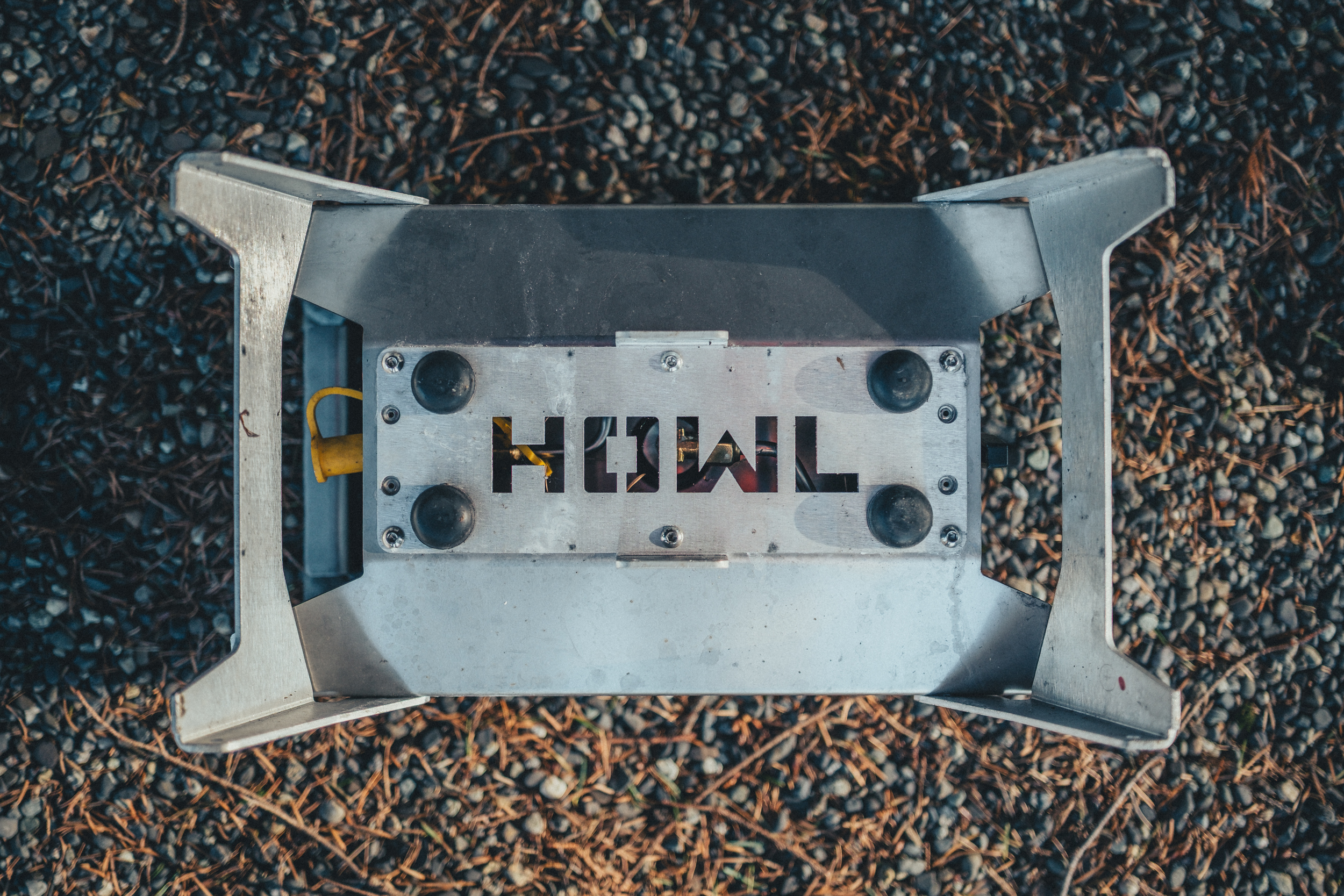
Safety
Land managers implement burn bans when forest fire risk is raised. These burn bans fall into stages; in most jurisdictions, a “stage one” burn ban prohibits wood fires outside of fire pits with strict requirements. Washington’s King County stage one burn band mandates that fires must be built in a non-combustible fire pit, cannot be larger than three feet wide, at least 10 feet from vegetation and 20 feet from overhanging branches, and fires must be doused and cool to the touch before they can be abandoned.
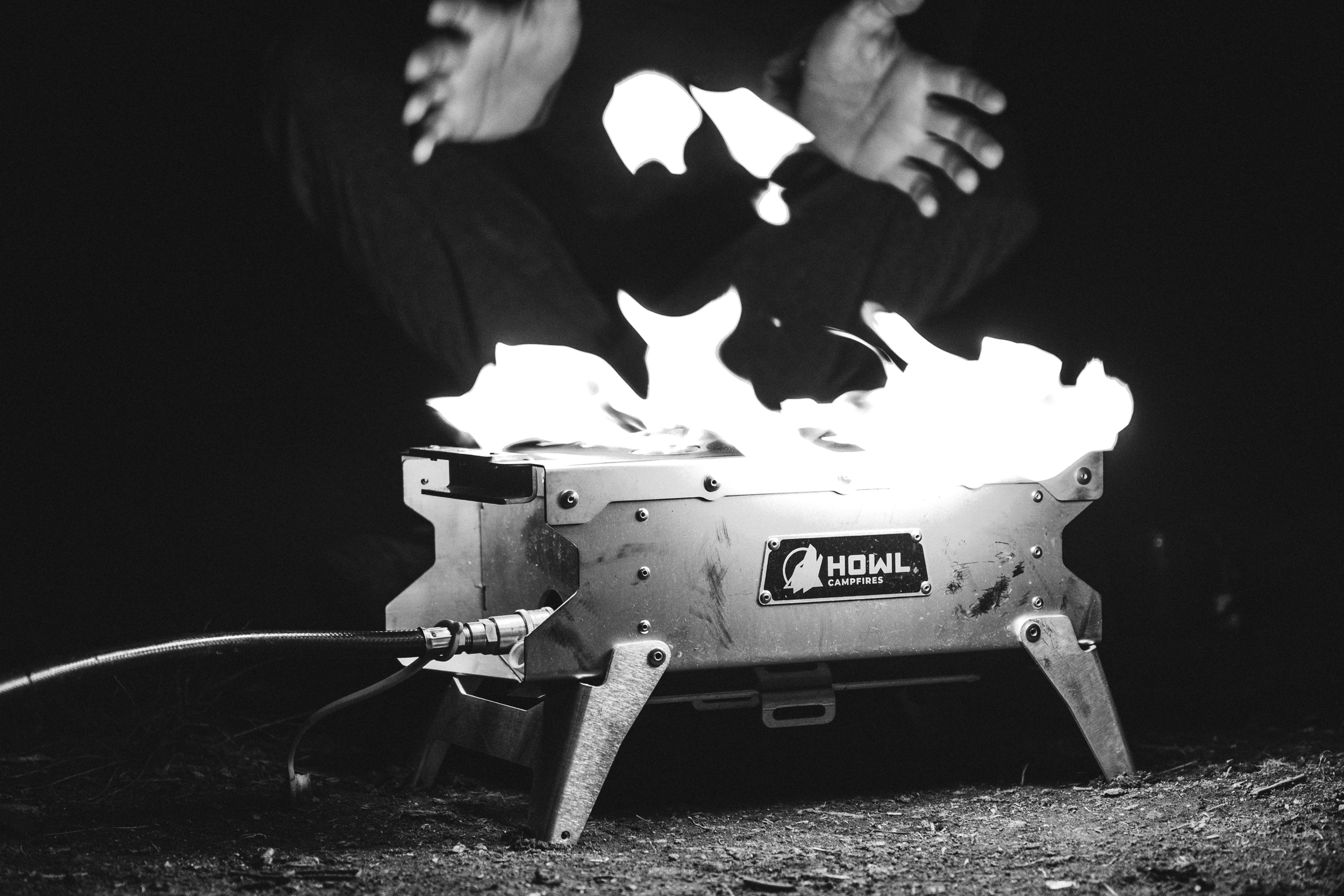
A “stage two” fire ban prohibits all wood fires; however, propane and gas stoves are still allowed. This is where the Howl R1 shines. It does not produce floating embers to ignite a fire far from camp, nor does it leave a pile of smoldering embers on the ground. When the night is over, you don’t need to dump water on it or worry about reignition hours later. With 20 minutes of cooling, the R1 can be handled and packed away. I have come across a few campsites with still-smoking fire pits abandoned by previous camp tenants, and it is scary.
While a PhD dissertation wouldn’t come close to fully discussing the management of forest fires, I do think we all have a responsibility to not light ourselves and our campmates on fire. There’s also the plain and simple principle of leaving no trace. How cool would it be if the burn scars of previous campfires were erased, letting every hiker, biker, and camper think that they’re using a site for the first time? For example, one of the areas I like to stay frequently has these rather scary signs of campfires with zero containment. The Howl R1 leaves just four small divots where the legs rested. I’ve even used it on top of a picnic bench with great success.
Packability and Fuel Efficiency
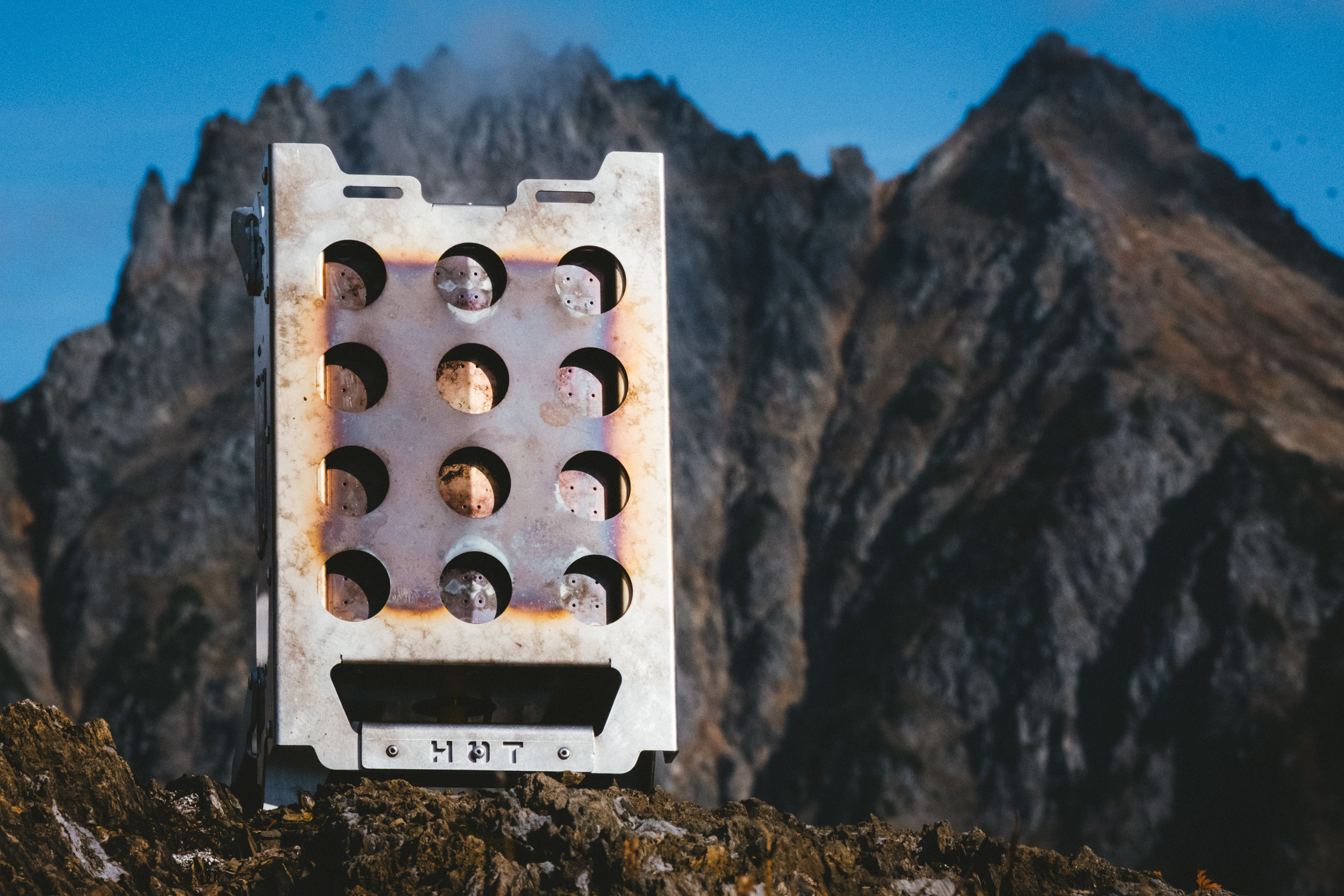
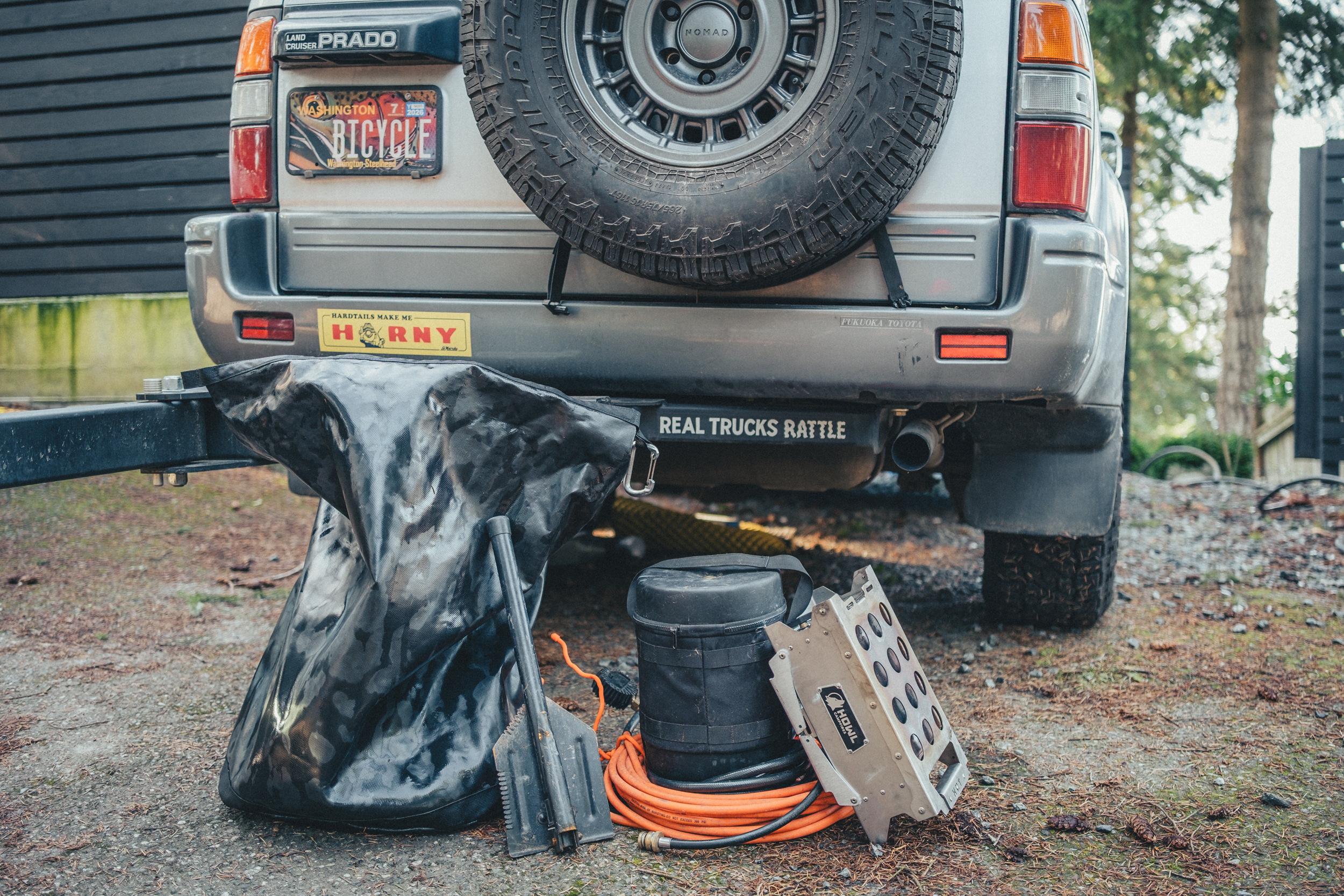
The major selling point of the Howl R1 is its form factor. Given how much heat and flame it puts out, there are no comparable products. The R1 is so small that I even hiked it two miles into a backcountry campsite. There are a few things to note here: the campfire itself is the size of a shoe box and weighs about as much as a French bulldog. It features folding legs and, optionally, can be strapped to a propane tank. Howl also makes a “Rally Mount” for the R1 that allows it to be attached to exteriors or interiors of trucks, vans, roof racks, or anywhere you might mount durable gear to the outside of your rig.
The heavier part of this system is the propane tank. Luckily, this can be tailored to suit your needs. Propane tanks are measured in the weight of propane that they can carry, and I have been using a very small 3.8-pound propane tank. The Howl R1 is quite fuel efficient (8 hours of full blast flame with a 20-pound propane tank), and this 3.8 lb propane tank lasts me one night at 75% flame height or almost a week of road tripping with very low flames.
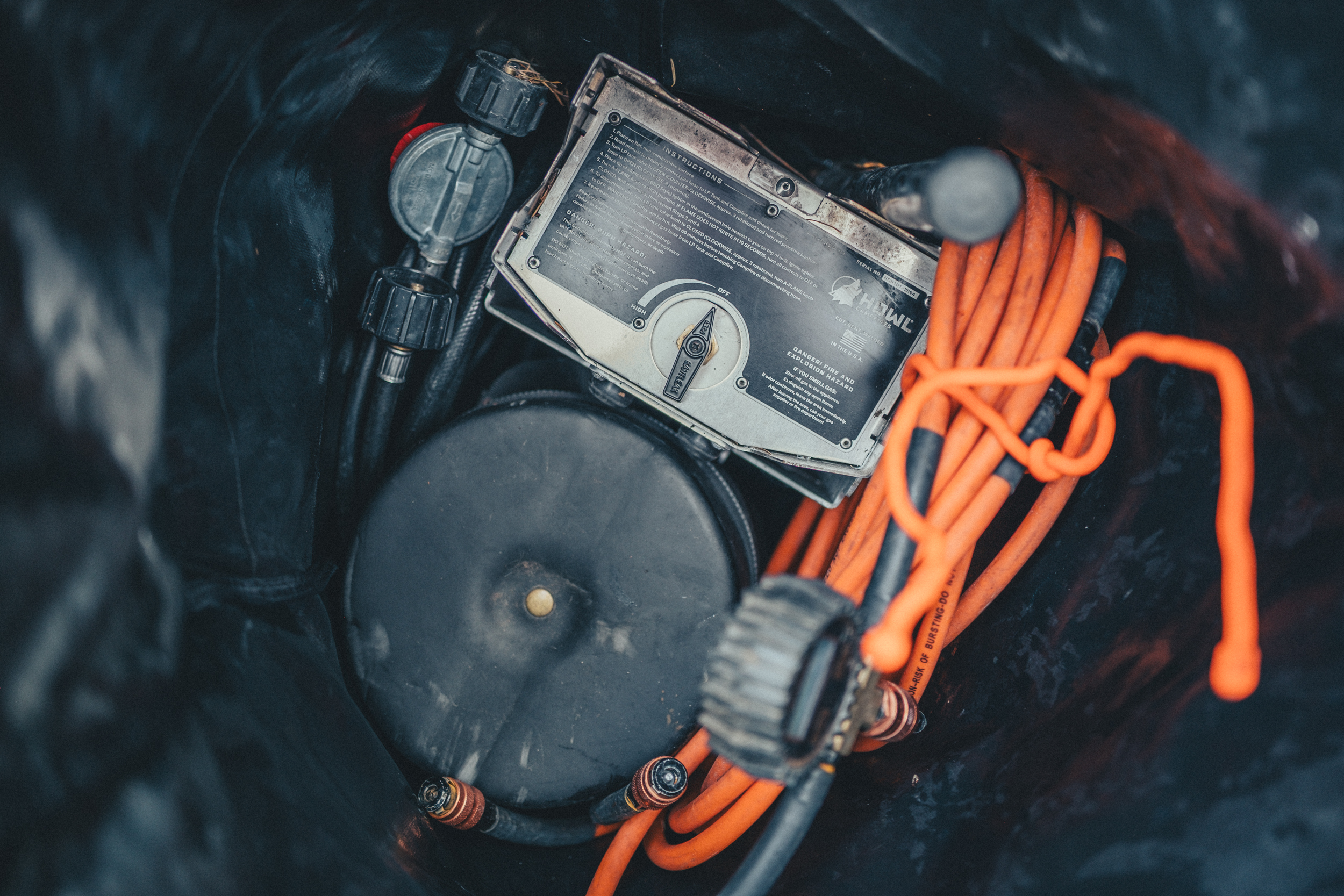
I appreciate the compactness of the Howl R1 and it’s propane tank. On road trips, like my trip to MADE in Portland and then Bend and beyond, I appreciated having all of my dusty and dirty equipment on the outside of my truck. The combined size of the 3.8-pound propane tank and the R1 fits perfectly in my Colfax Design Works tire bag with room to spare for some of my off-road recovery equipment. I’d liken this to two bundles of gas station firewood. If I had a rig like Ossie’s Volvo, space would be less of a constraint.
It’s shocking how fast I can fill up the space inside my little Land Cruiser. I will probably purchase a 10-pound tank for more burn time, especially for those trips where I’m doing lots of cooking on my propane camp stove. I fill my own propane tanks at home, so having a small tank that frequently requires a top-off isn’t a major hindrance. Perhaps I’ll do a Tinker Tantrums article on this process. Side note: propane splitters allow you to run the Howl R1 and a cook stove simultaneously.
And now we begin the part of the article that a caveman might better understand.
Sight
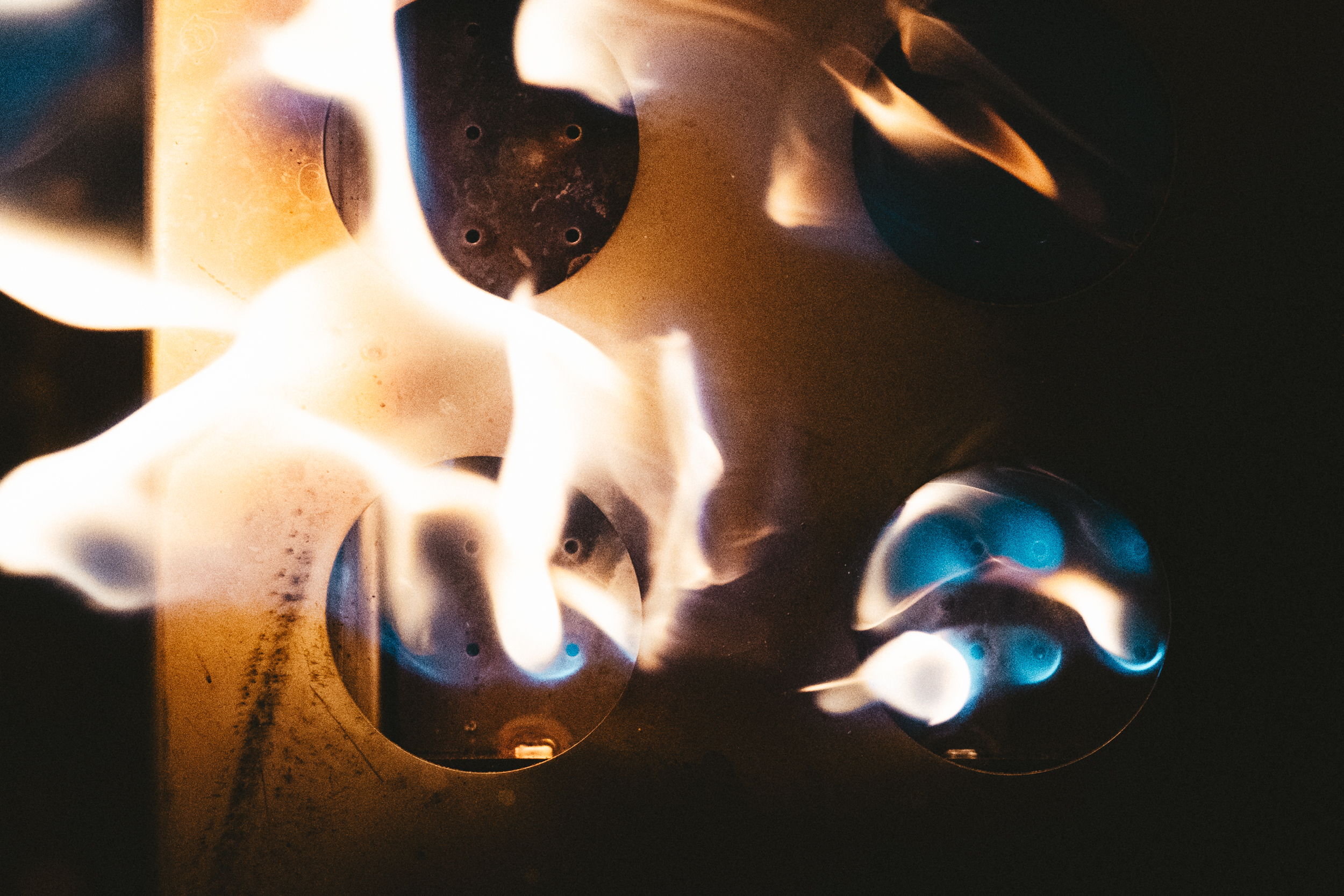
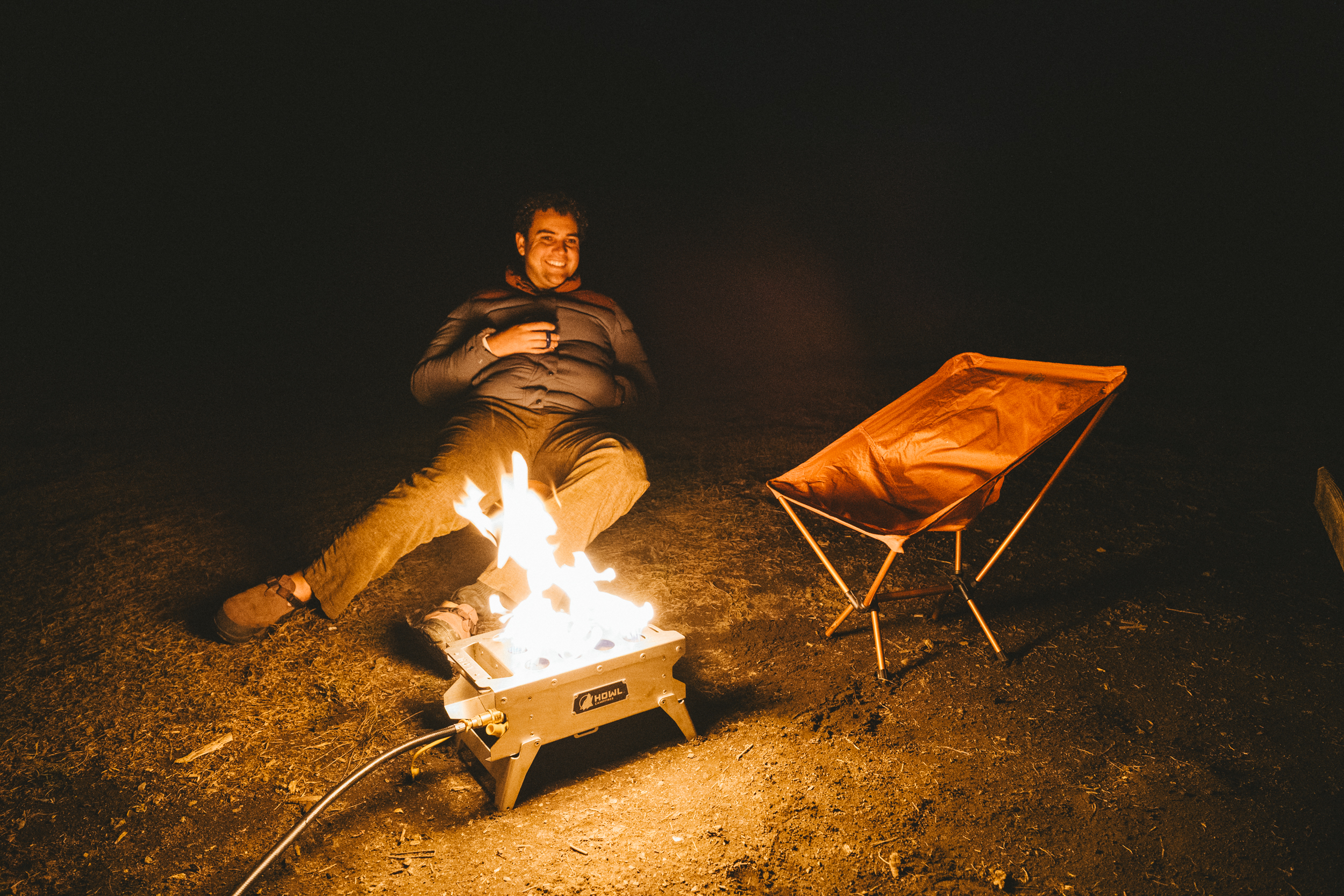
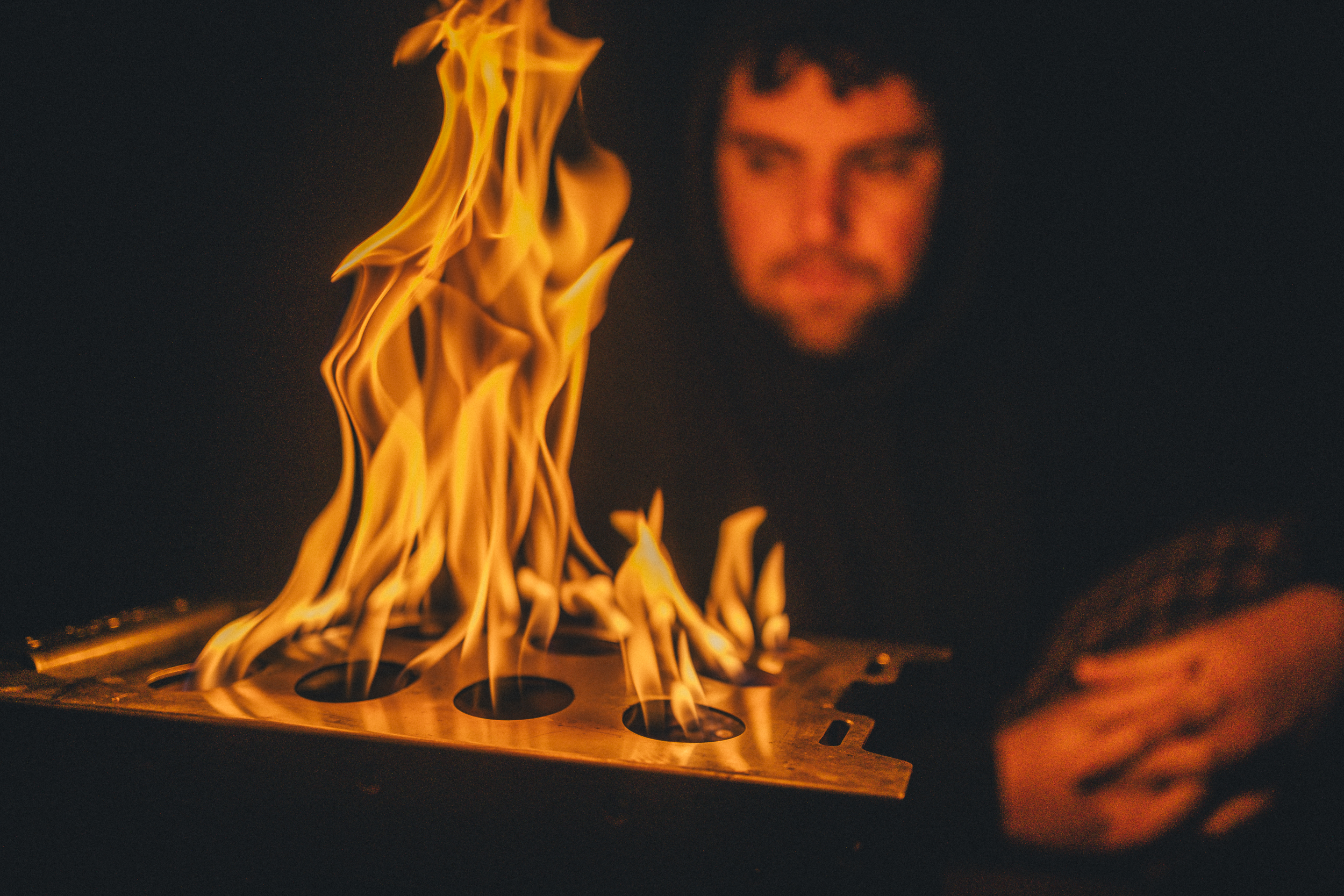
The Howl R1’s flame is bright, tall, and looks the part. Much like a real fire, I spent hours just watching the flames lap across the burner plate. At full blast, the flame grows to 32 inches in height. It’s impressive. Sitting close to the fire is mesmerizing. Even after turning off the flame, the top surface of the burner glows orange and slowly dims into the darkness.
Sound
The sound of a wood fire is tough to replicate. Frankly, impossible. At full blast, it’s quite obvious that a pressurized liquid is being forced through tiny orifices, vaporizing, and igniting. It sounds like leaking gas, as would be expected. Initially, the noise was off-putting, but I grew used to it. At the lower flame levels, where I tended to have the fire, this sound is far quieter and less noticeable. For some snap, crackle, and pop, I recommend a large bowl of evening Rice Krispies. Yum.
Smell
Before being lit, there’s a notable whiff of propane. That might be a con, but no more so than connecting your cooking stove or grill to its fuel source. On the other hand, there is no lingering campfire smell, no stale smoke in the clothes the day after, and no stinging eyes. The Howl is largely smoke-free. If the wind is really blowing, then the fire struggles to burn hot enough, and some smoke appears. While smoke might be largely eliminated, there is still some soot that deposits itself on the burner surface. Except for some easily wipeable soot on the carrying handle, I never had an issue with smoke or soot covering my gear or myself.
Taste
The Howl R1 is not edible. Food cooked over the Howl R1 is edible. I’ve managed to make pancakes, eggs, and s’mores. I have not managed to roast a whole goose, but I invite anyone to do so. Cooking with this campfire is like using the side burner on your home grill. It will cover your cookware in some soot, but this won’t be deposited into your food. Again, the level of soot is easily manageable and no different from a wood fire. I would not recommend roasting hot dogs or other things that might drip oily residue onto the burner, as that might eventually become kind of gross. I took the risk with the marshmallows.
Touch
From an enjoyment perspective, the flame that the Howl R1 produces is hot, warming, and comforting. However, it is not as hot as a well-made wood fire. A well-constructed and well-tended wood campfire can be anywhere between 600 and 2000 degrees Fahrenheit in different parts of the fire. The Howl R1, at maximum output, burns at 800 degrees Fahrenheit. This heat, combined with the predictable and stable flame size, makes it comfortable to sit quite close. If hotter is your desire, or if you truly want that sit far from the campfire and converse with a large group type of setting, Howl makes the R4, which is significantly larger and more expensive. It burns at 1300 degrees Fahrenheit and is a better replication of a proper wood fire. If I had more room in my truck for the larger R4 and its greater volume propane tank, I’d choose it. But the packability of the R1 is truly its selling point and that’s what makes it such an adaptable camp companion.
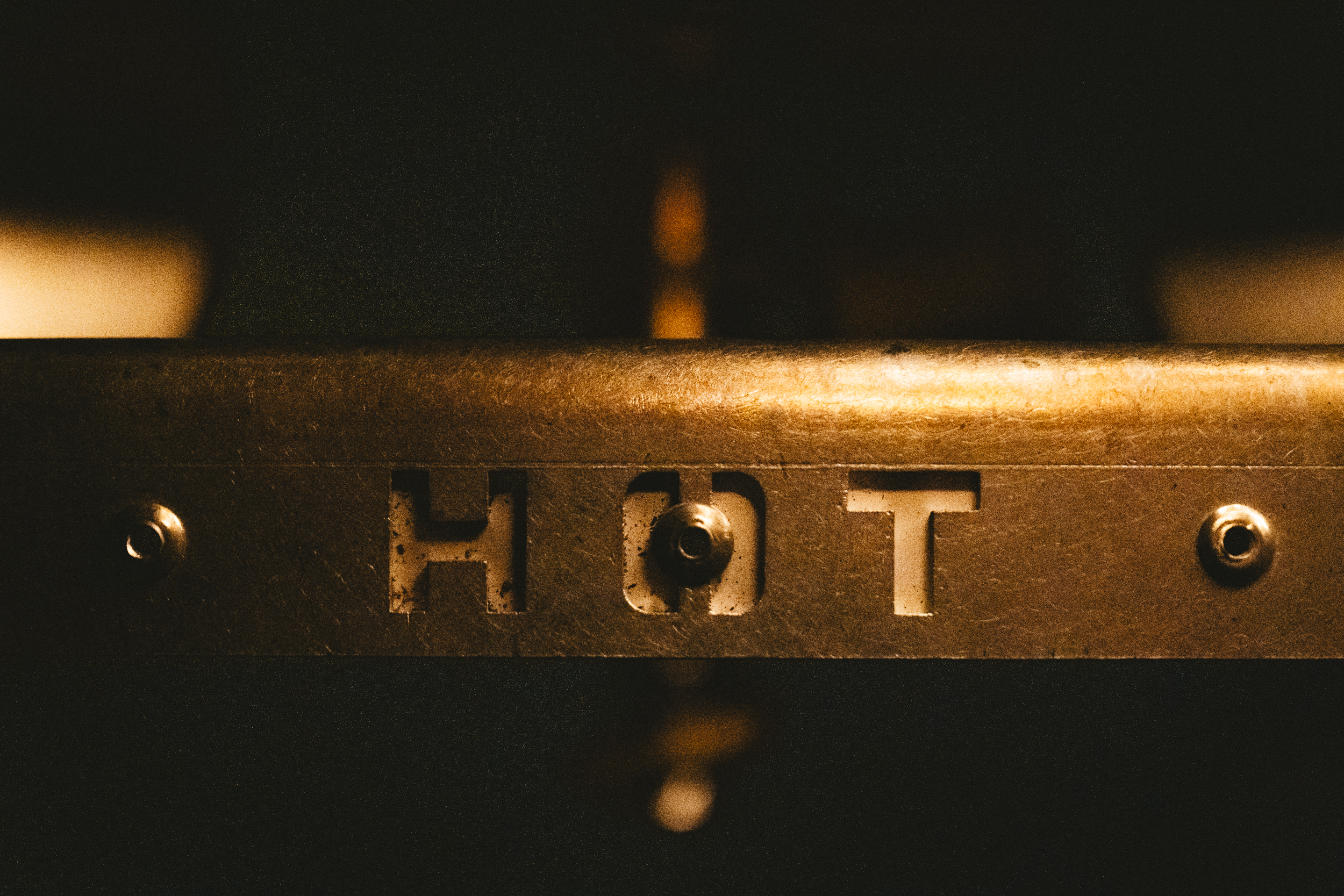
Another aspect that I love about the Howl R1 is the workmanship that is on display. It has a level of craftsmanship that readers of the Radavist will appreciate. It’s small-batch American manufacturing at its finest. The stove is made of laser-cut and bent aluminum that has patinaed beautifully over the past many months. We love the term “beausage” over here, coined by Grant Peterson to decribe an object’s beauty through usage, and the R1 earns its appearance over time.
Cave Man Likes Fire
Part of the reason I decided to try a propane fire was that my caveman brain desired some comfort while hanging out at the campsite. While friends might be lovely companions, nothing staves off the ghouls, goblins, and ghosts quite like some warm flames. The light that the R1 produces illuminates as much of the world as a wood fire does. It’s calming, especially knowing that there are not nearly as many risks as using a wood fire.
TL;DR
Overall, I really love this product. It provides most of the things my prehistoric desires miss when I can’t have a wood fire. It’s packable. It’s adaptable. It’s comforting. It’s safe. It’s warm. It’s bright. Howl makes a stellar product. Caveman approved.
Pros
- Shoebox size makes it easily packable
- Fuel quantity can be tailored to fit the occasion
- Produces a warm, comforting flame disliked by ghosts, ghouls, and goblins
- Safer than a wood fire, can be used even in stage two burn bans
Cons
- Not as hot as a wood fire
- Hissing noise of propane can be annoying
- Costly, but not prohibitively so, especially given it is made in the USA
See the R1 and more products from Howl.