





Late last year, John took delivery of a Cowboy Cookie frameset and assembled the build spec to make for a kit of metal components. After reviewing the Pasta Party in 2020, he’s been closely following Sour Bicycle‘s brand development, particularly its full-suspension bikes. Read on for some killer riding shots from Spencer Harding and John’s thoughts on this Horst link 120/130 mm build and why the Cowboy Cookie from Sour hits an especially sweet spot…
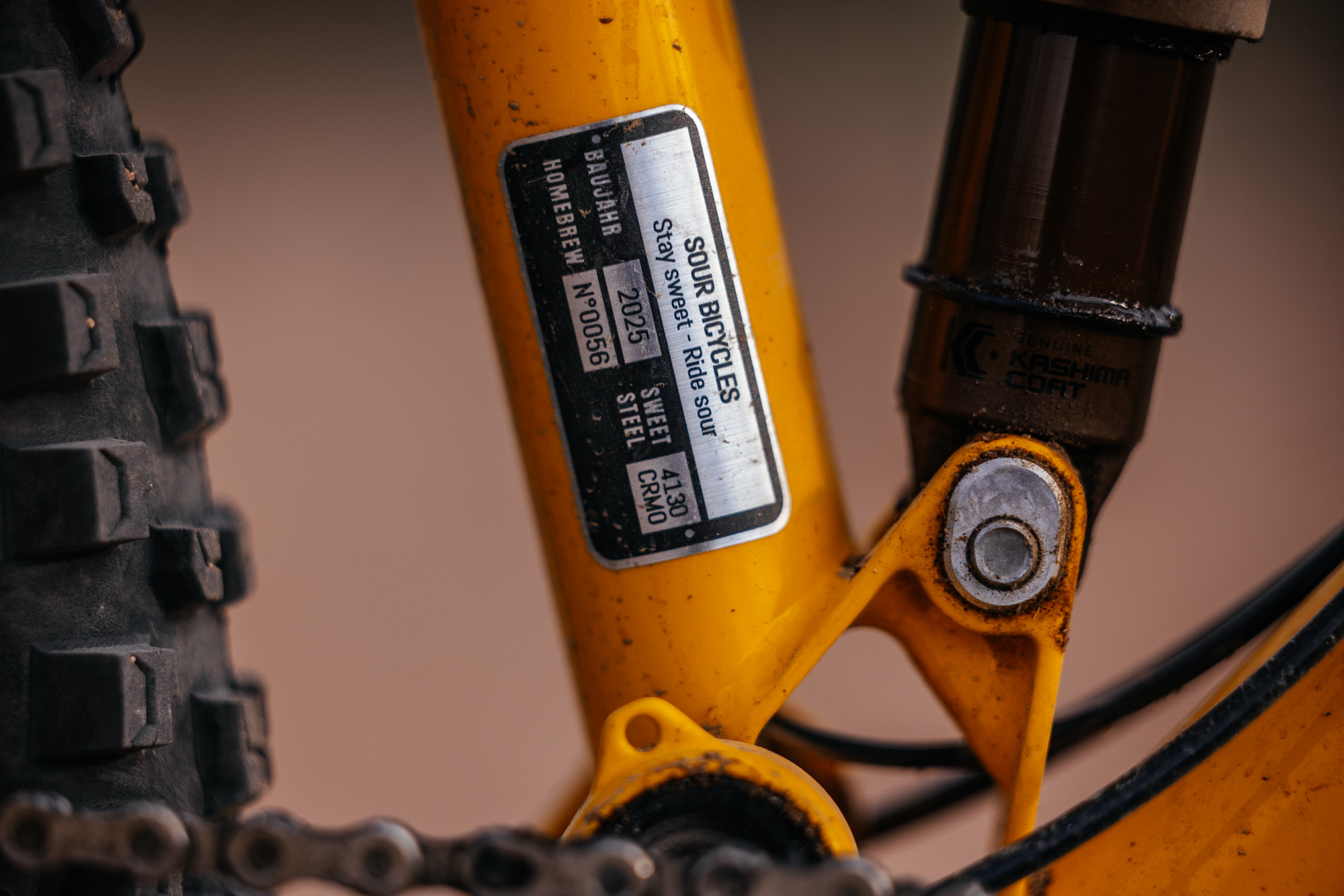
Sour Bicycles: A Sweet Brand
Swinging to the complete opposite end of the Sour spectrum from the Pasta Party, a 120 mm hardtail often built as a rigid MTB, the Cowboy Cookie launched in 2024 alongside the Double Choc trail bike. These bikes have sibling DNA with similar details, including a steel front triangle and aluminum rear swingarm, made in Germany.
Sour brought its frame fabrication back to Germany from Taiwan in 2021, and with this change, it began working on the Sour Racing Development line of bikes. After his Shop Visit to Sour‘s fabrication house, Petor took a few swings on the early prototype that would become the Double Choc. Last year, Kyle reviewed the production model.
At the heart of this sweet brand is Chris Süße, whose surname translates to English as “sweetness.” Chris is a lovely human being, living up to his surname, and I’ve really enjoyed having the opportunity to get to chat with him over the years.
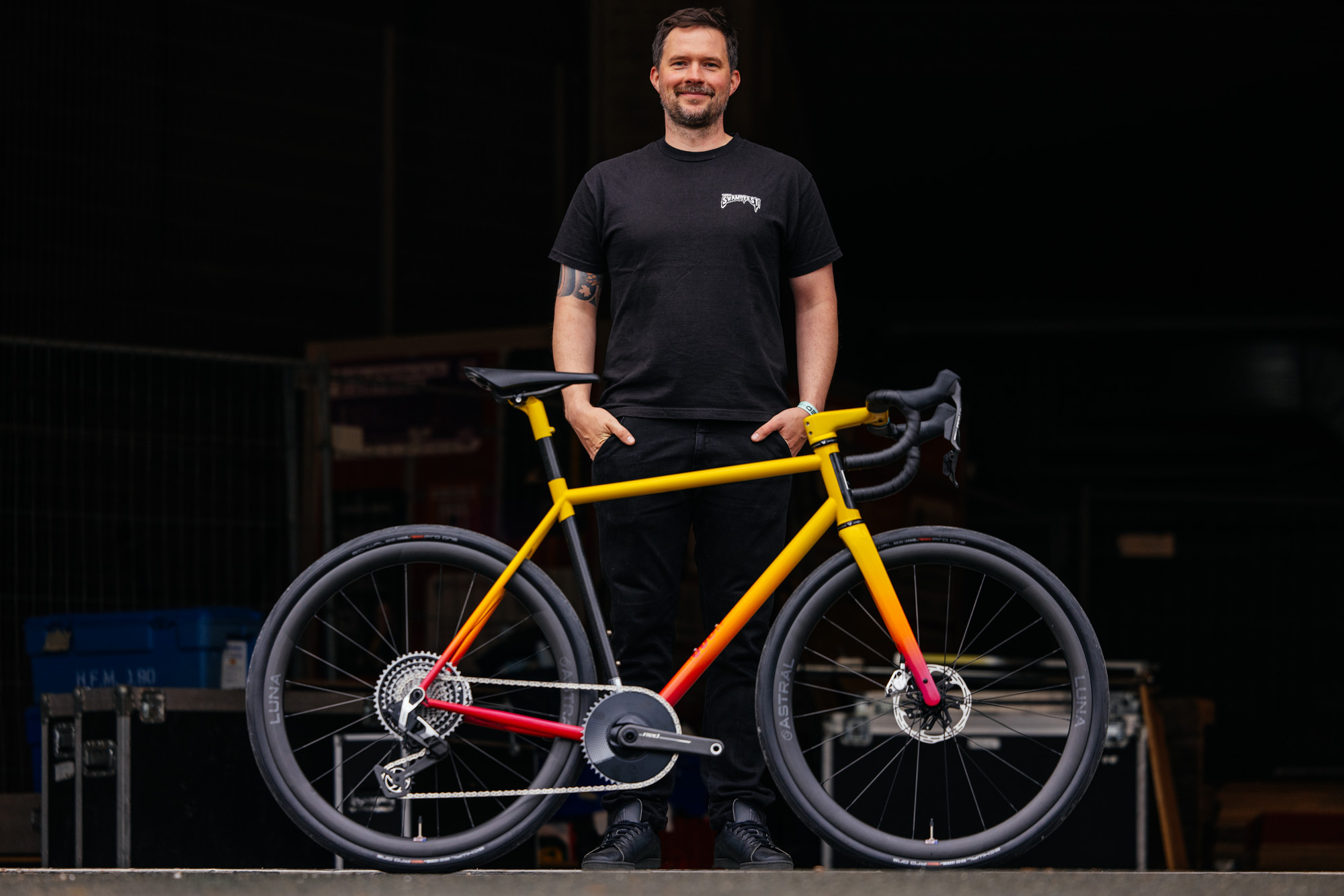
Last year at Bespoked Dresden, we met for the first time. He’s been a big fan of The Radavist since the early days and wanted to make sure we got our grubby little mitts on some of the brand’s echelon frames. Over the years, we’ve collectively penned three reviews of Sour’s squishy and sweet options, including this review you’re reading now.
To make matters confusing for our readership, all three Sour full suspension bikes are the same school bus yellow color. Hey, I asked Chris from Sour for a turquoise powder coat. This is the Southwest, after all!
Repetitive color aside, let’s crack open this beautiful bike…
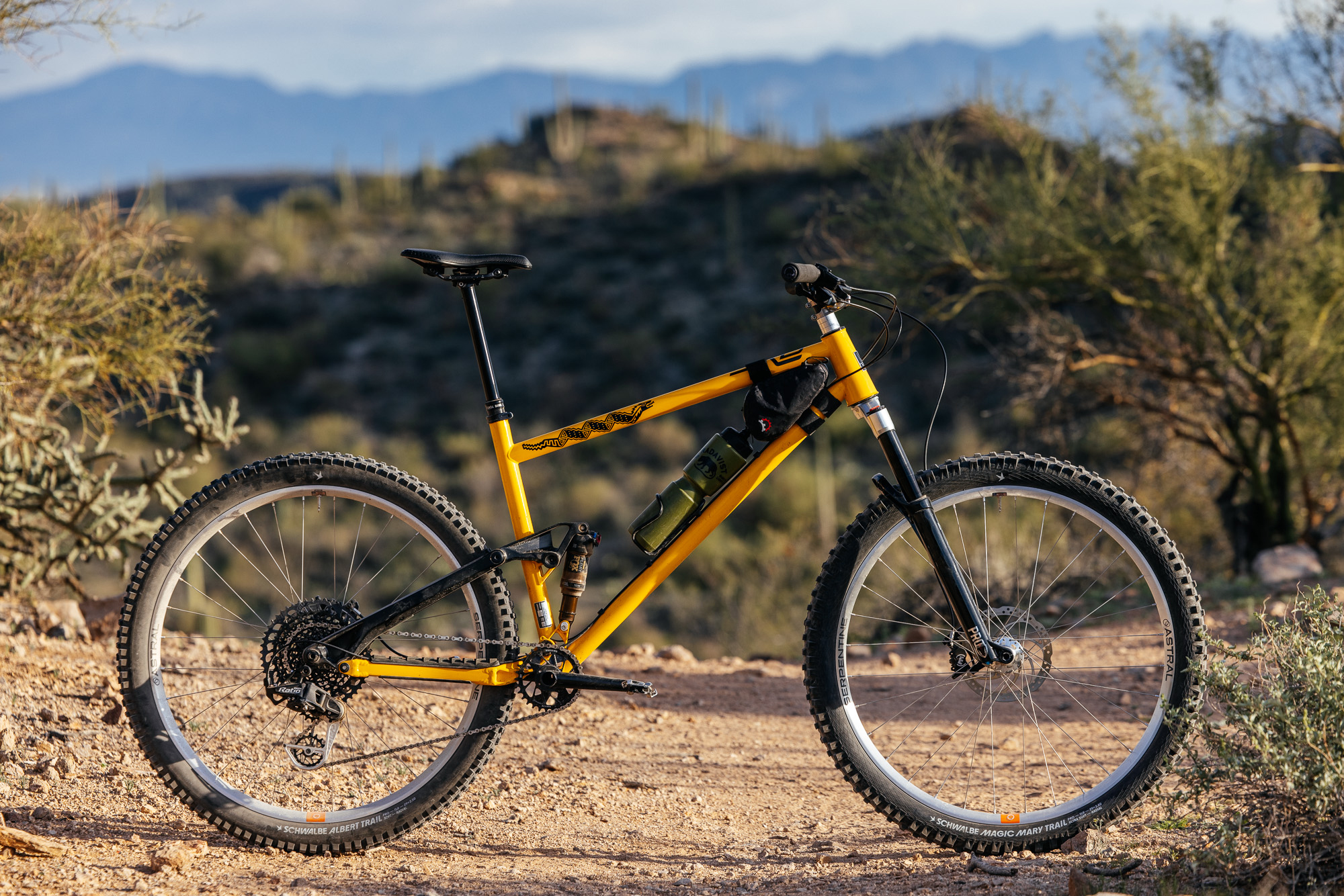
Sour Cowboy Cookie Quick Hits
- ~7 lb frame
- € 3,499 frame
- Front triangle welded by Sour
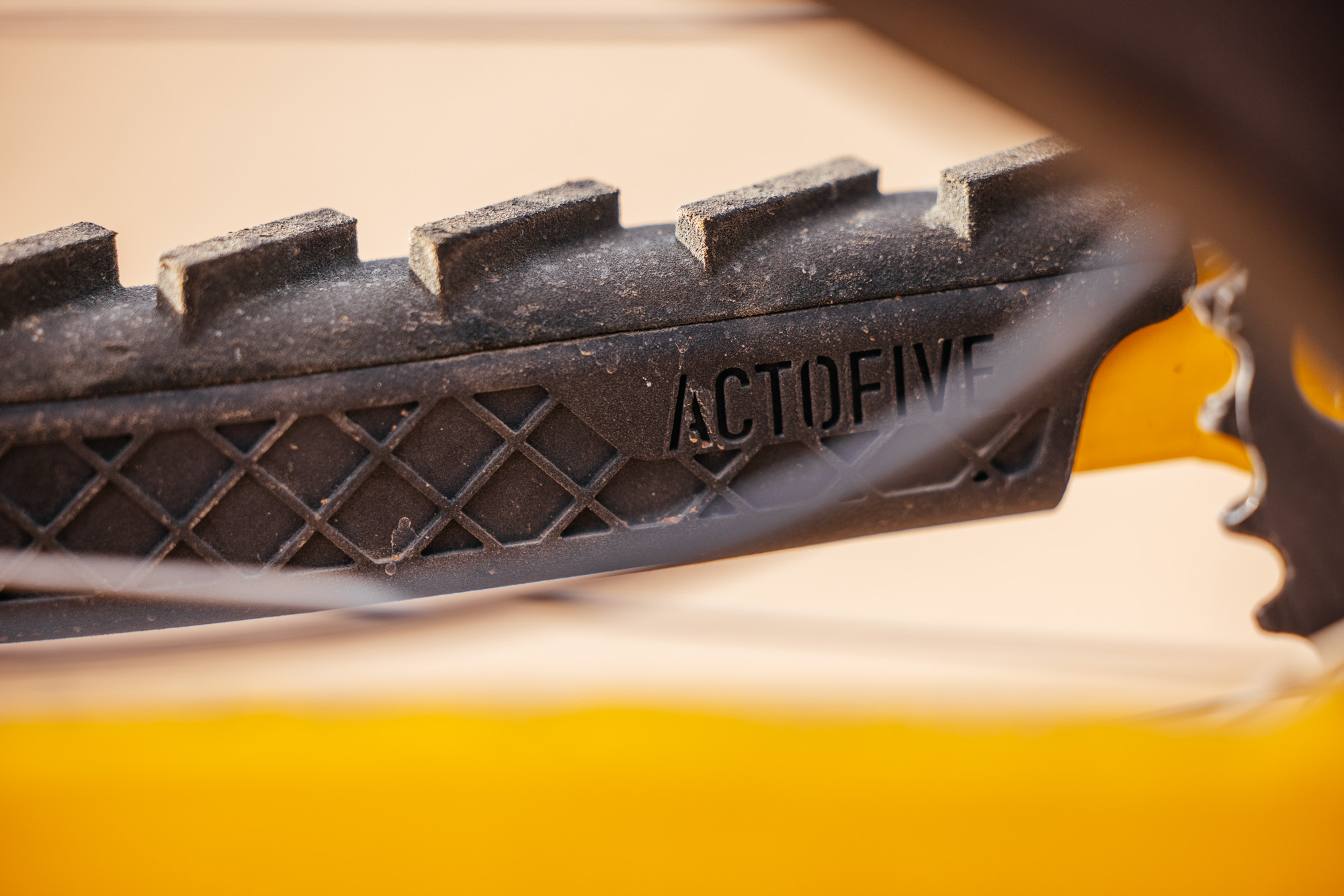
- Rear swingarm 7075 T6 aluminum and is made by Actofive in Dresden
- SRAM UDH derailleur hanger and Transmission-ready
- Maximum Tire Size 2.5″ (confirmed)
- External downtube cable routing
- Optional second bottle braze-on and top tube bag braze-on
- Low standover height
- CNC’d 73mm BSA threaded bottom bracket
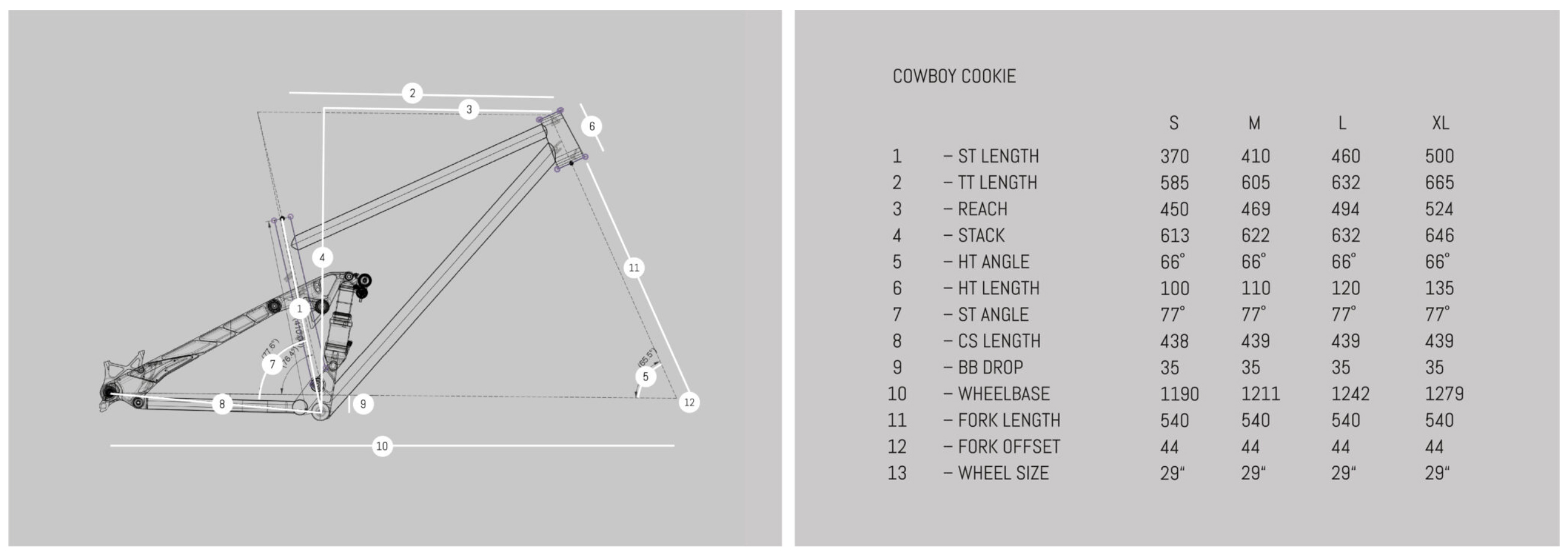
Geometry
The size XL I reviewed has a 1279 mm wheelbase and features a 66º head angle and a 77º seat angle (unsagged). What makes the Cowboy Cookie so appealing is its firmy “trail” geometry, versus other 120/130 XC or downcountry bikes that opt for slacker seat angles and steeper head angles. This means it’s an efficient climber and bombs downhill with a similar demeanor as bikes in much longer travel categories. While the bike could be built up ultralight and be raced competitively, I really admired how trail-oriented its overall feel is, and preferred my stouter build kit.
For the geo tinkerers, the lower shock mount can be flipped to the low setting – all frames ship with the flip chip in the high position – for slight geometry tweaks. With the flip chip in the lower position, the head angle changes by -0.3° and the seat angle -0.47° with a -5mm bottom bracket height. I rode the bike in both configurations but found the lower position netted more pedal strikes on our rocky Southwestern trails and preferred the chip in the high position. That was the only noticeable difference I could feel.
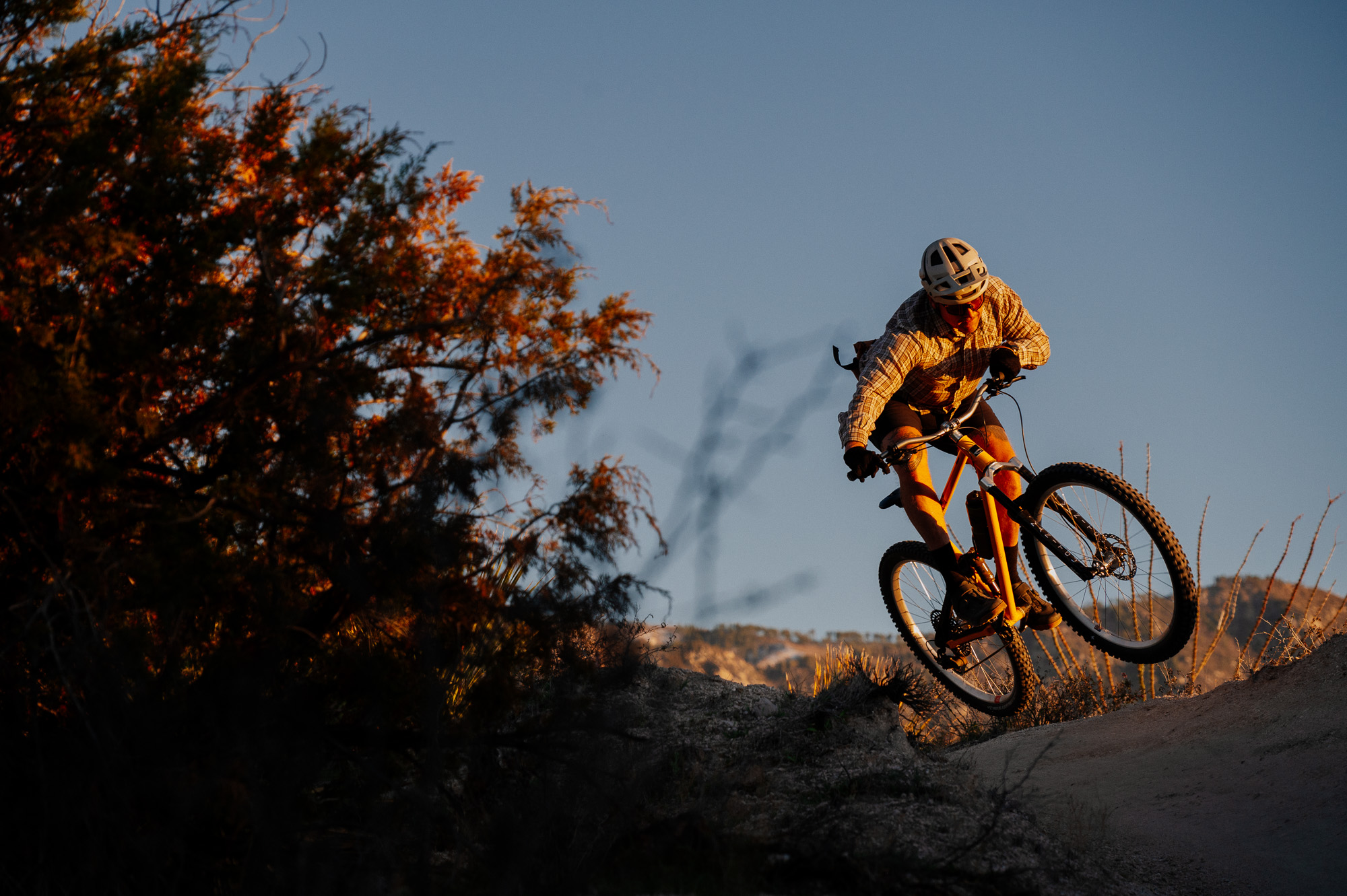
Horst Link that Gallops
Sour built the Cowboy Cookie using a Horst-link (four-bar) suspension design. For the uninitiated, Horst Link is known for its efficient pedaling but most importantly, its ability to calm even the most chattery trails. This is all thanks to Sour’s ability to fine-tune the anti-rise and anti-squat characteristics. Anti-rise is a measure of how little or how much a bike’s rear suspension will tend to extend (or “rise”) under rear-braking force, while anti-squat is a measure of how little or how much a bike’s rear suspension will tend to compress (or “squat”) under pedaling force.
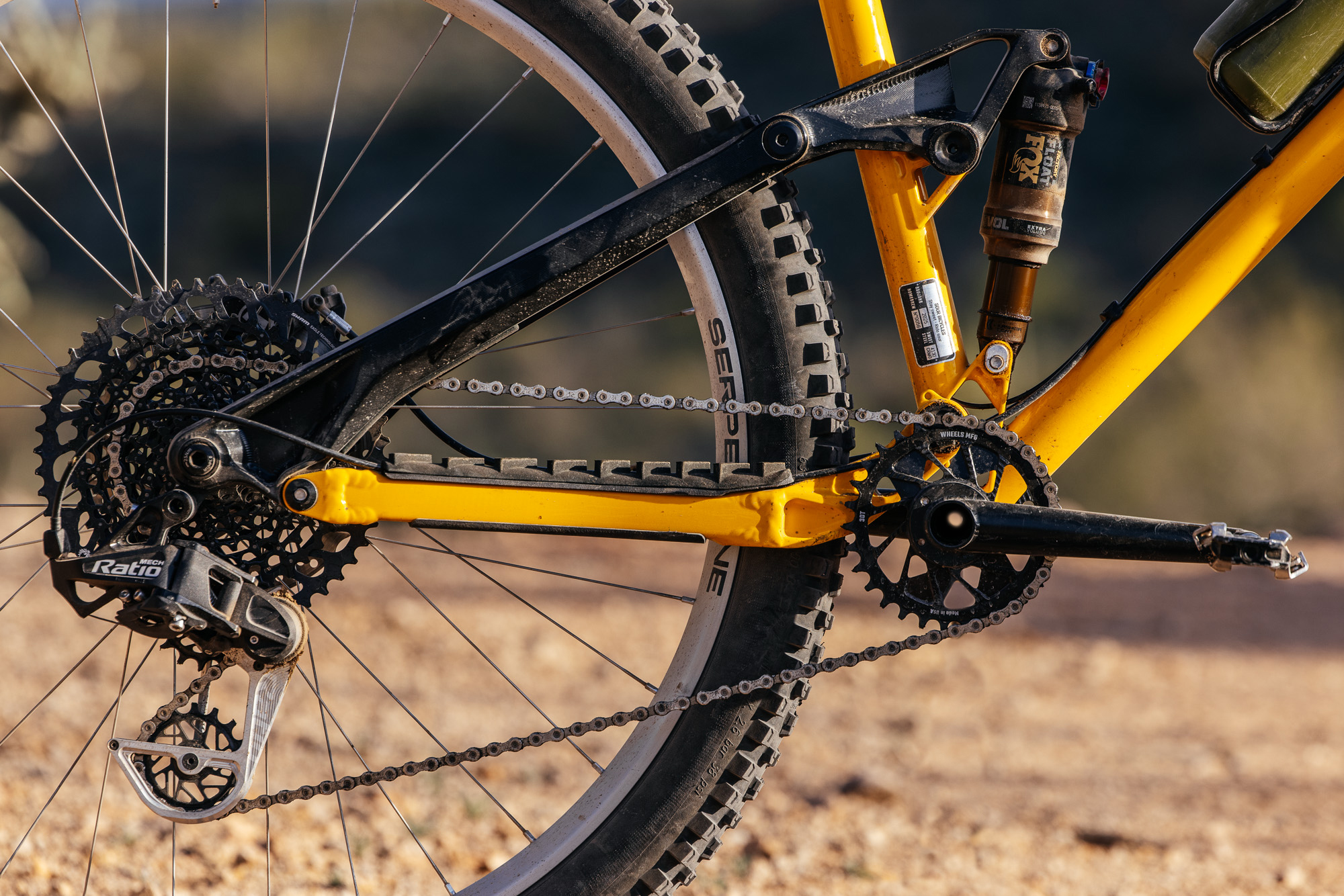
As you push through the travel on the Cowboy Cookie, the anti-rise increases to around 60%, which is relatively moderate. It prevents the rider’s weight from getting pitched too far up and forward while braking, but also helps ensure that enough travel will be left over for the suspension to remain active. It’s a measured approach that makes sense for a downcountry bike.
When designed correctly, anti-rise and anti-squat’s resulting characteristics can offer one of the most secure feeling ride qualities. Finding a balance between a stable geometry while braking, riding downhill, and remaining active while pedaling, without bobbing too much, is key. Especially on a 120 rear and 130 mm front travel suspension platform.
The resulting wizardry gives the Cowboy Cookie the ability to respond to rider input, which makes it an incredibly active-feeling platform. It responds instantaneously with stiffness when desired and flexes like a whip when needed. This is all thanks to its aluminum rear swingarm.
Sour Steel + Actofive Aluminum = Cowboy Cookie
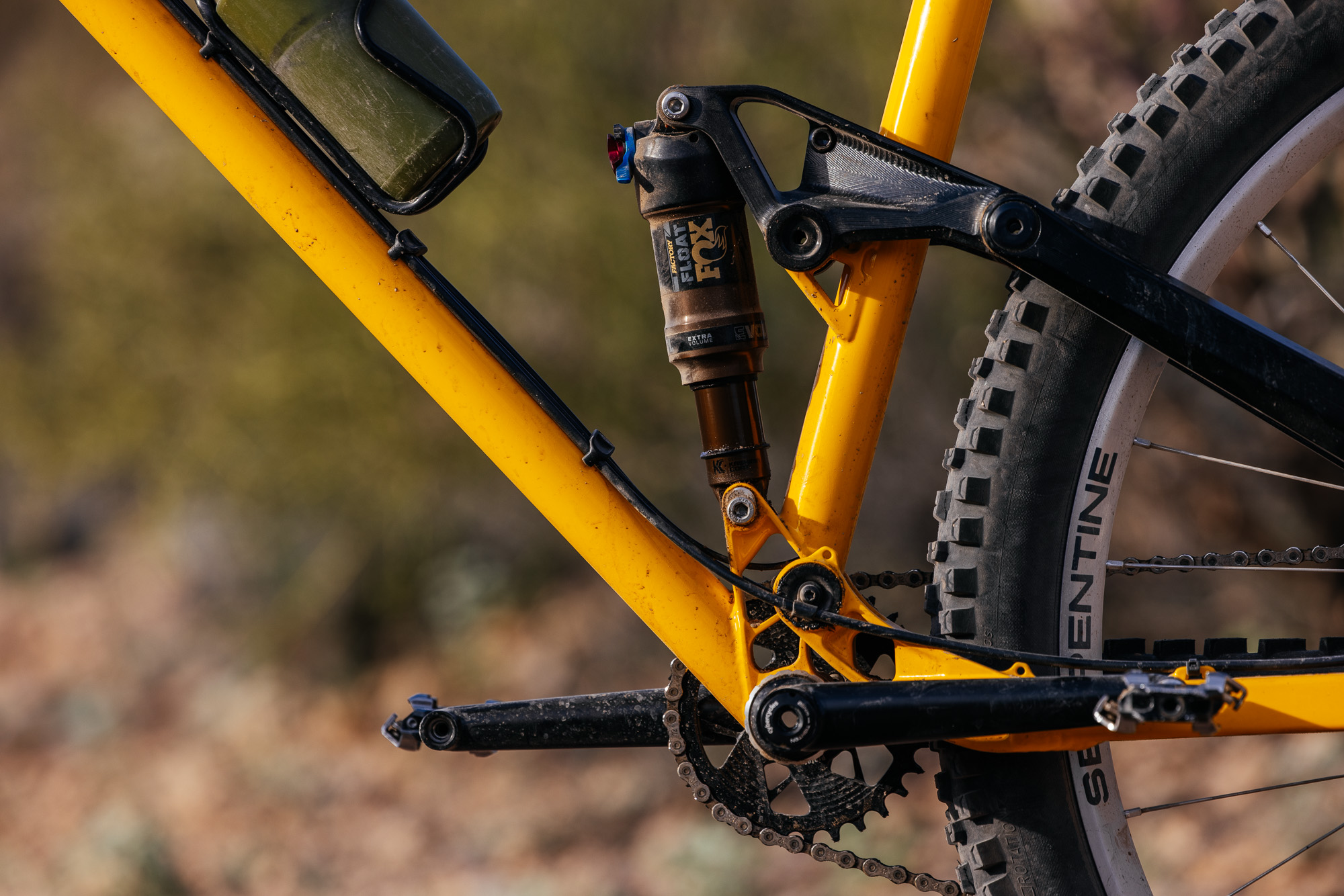
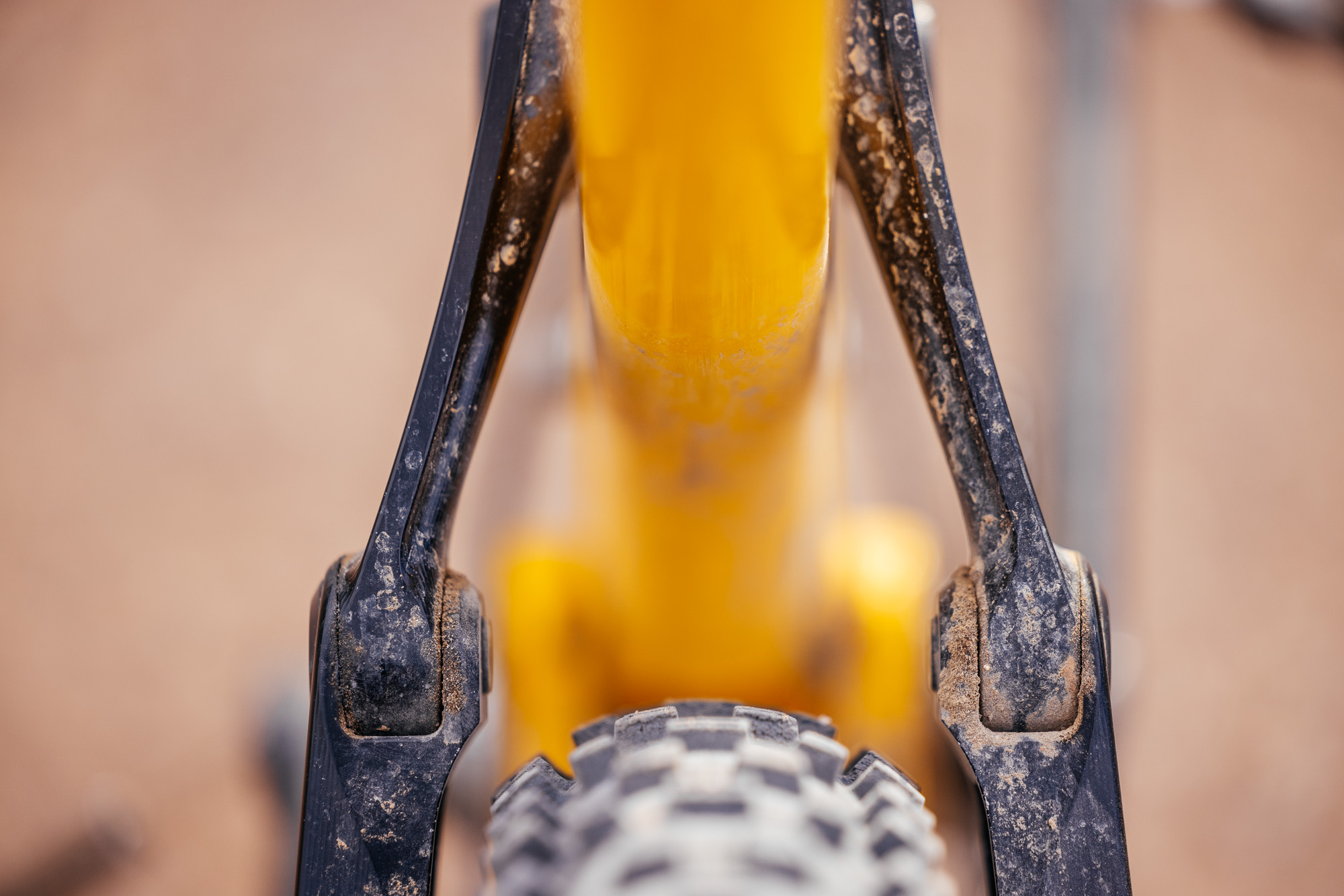
Dresden has a small community of makers, and also flying the Saxony banner is manufacturer Actofive. Sour reached out to Actofive during the Cowboy Cookie’s development, asking if they’d be willing to collaborate. The result is one of the most stunning rear swingarms on the market. This beautiful piece of CNC milling really elevates the Cowboy Cookie above other steel and aluminum full suspension bikes.
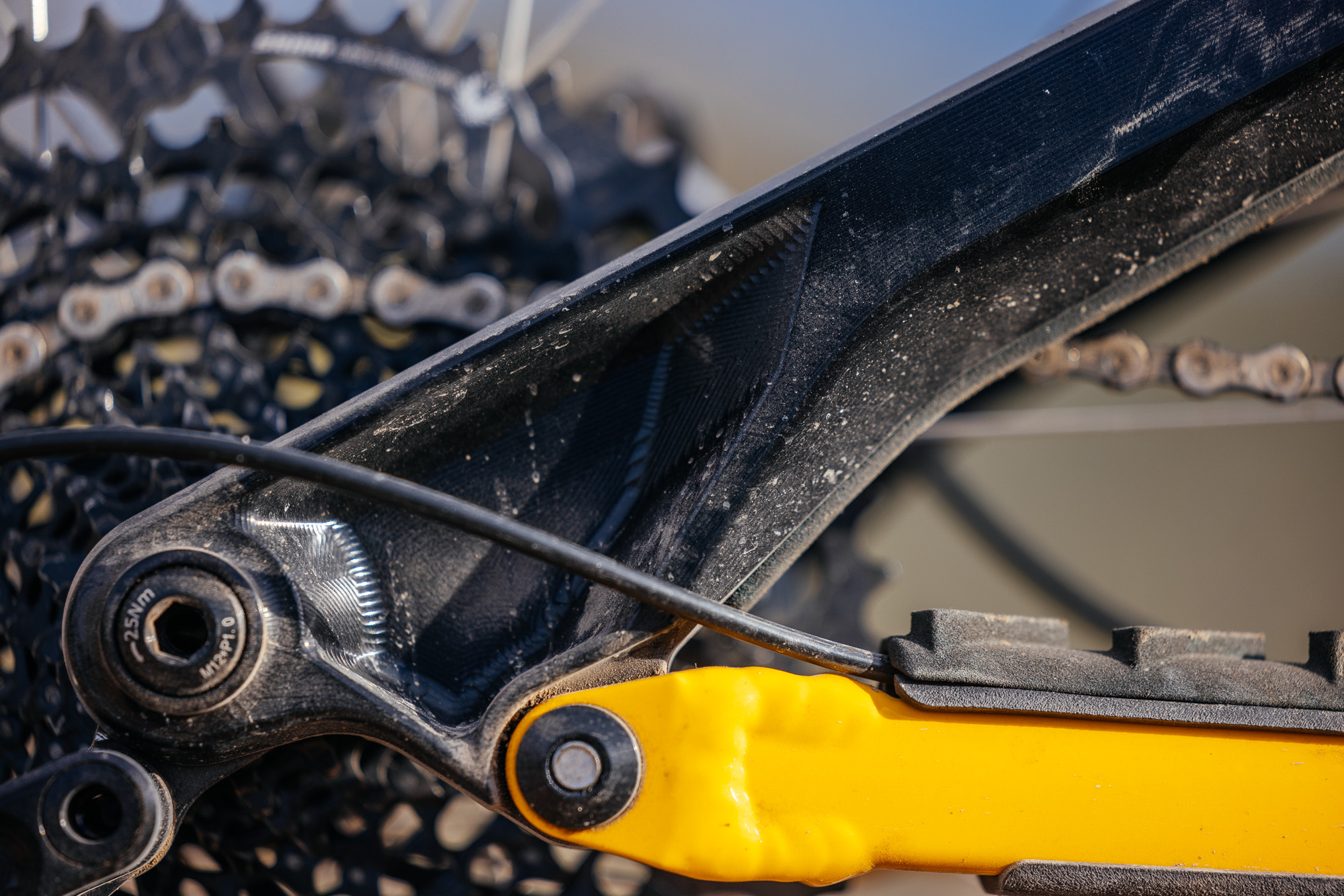
I reached out to Chris from Sour to ask why he specced an aluminum rear swingarm, versus steel:
“The early prototypes actually were rocker driven single pivots. I found the setup too flexy for my riding. This meant that we are able to build a “closed” rear triangle and get the right amount of flex/stiffness into the rear as I wanted. But from a builder’s point of view, that early rocker driven design had the same amount of parts and complexity as a real four-bar design without the good brake performance of a real four-bar.
So I went on to design a four-bar bike and since we are friends with Simon and our shops are only 300 m apart we talked and he mentioned the same thing. He wanted to move away from his high pivot design and wanted to make a four-bar so we came to the conclusion that we should join forces rather than doing the same at the same time 300 m away from each other.
After the Cad was finished we actually tried to make the rear triangles out of steel but they were either too flexy for my liking or way too heavy so I remembered that some time ago, in a very early interview I said that we are using steel, but only until we find a better material for the job. And that was the case for that particular project. We are still building 99% steel but for that special cause, aluminum just made more sense for us.
That doesn’t mean that we will not build a full suspension frame with a steel rear triangle in the future (hint 😉 )…”
In my experience, bikes like the Cowboy Cookie and my Cotic FlareMax have much stiffer rear swingarms compared to the Starling Murmur. And while I don’t necessarily feel one is better than the other – they both have compromises – some riders do prefer to have a stiffer rear end on their bikes.
Rider Profile
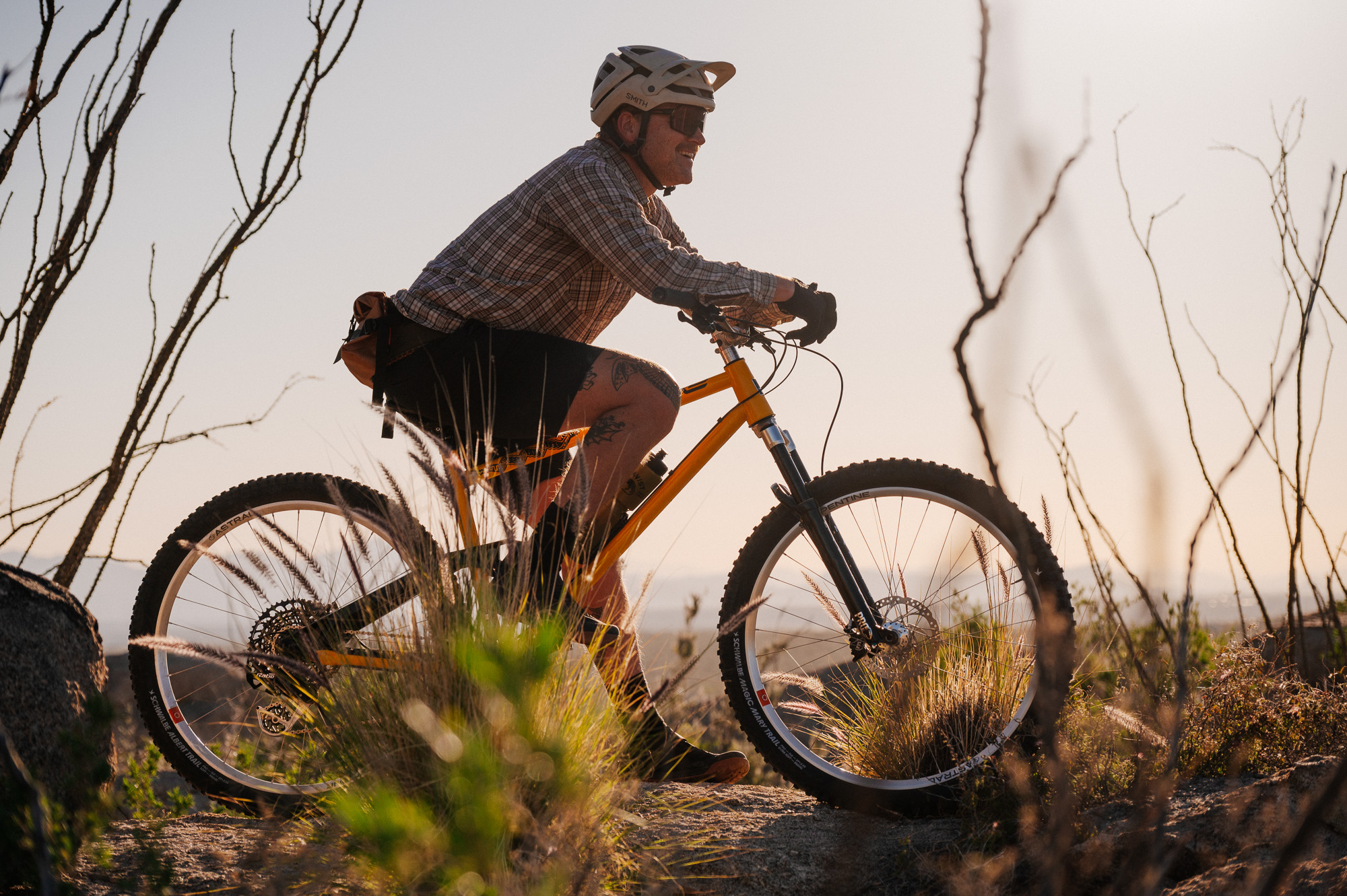
I’m 6’2″, 200 lbs, with long legs and long arms. In these photos, my saddle height is 83 cm. My riding is exclusive to primitive and technical singletrack. Steep up, steep down, loose, chunky, with a few moments of respite found in some “flowy” sections. I don’t ride park, either. In terms of riding style, I like to actively use the trail, hitting different lines each ride and jibbing all the way down. I prefer a supple front and active rear in terms of suspension setup.
Frame Details
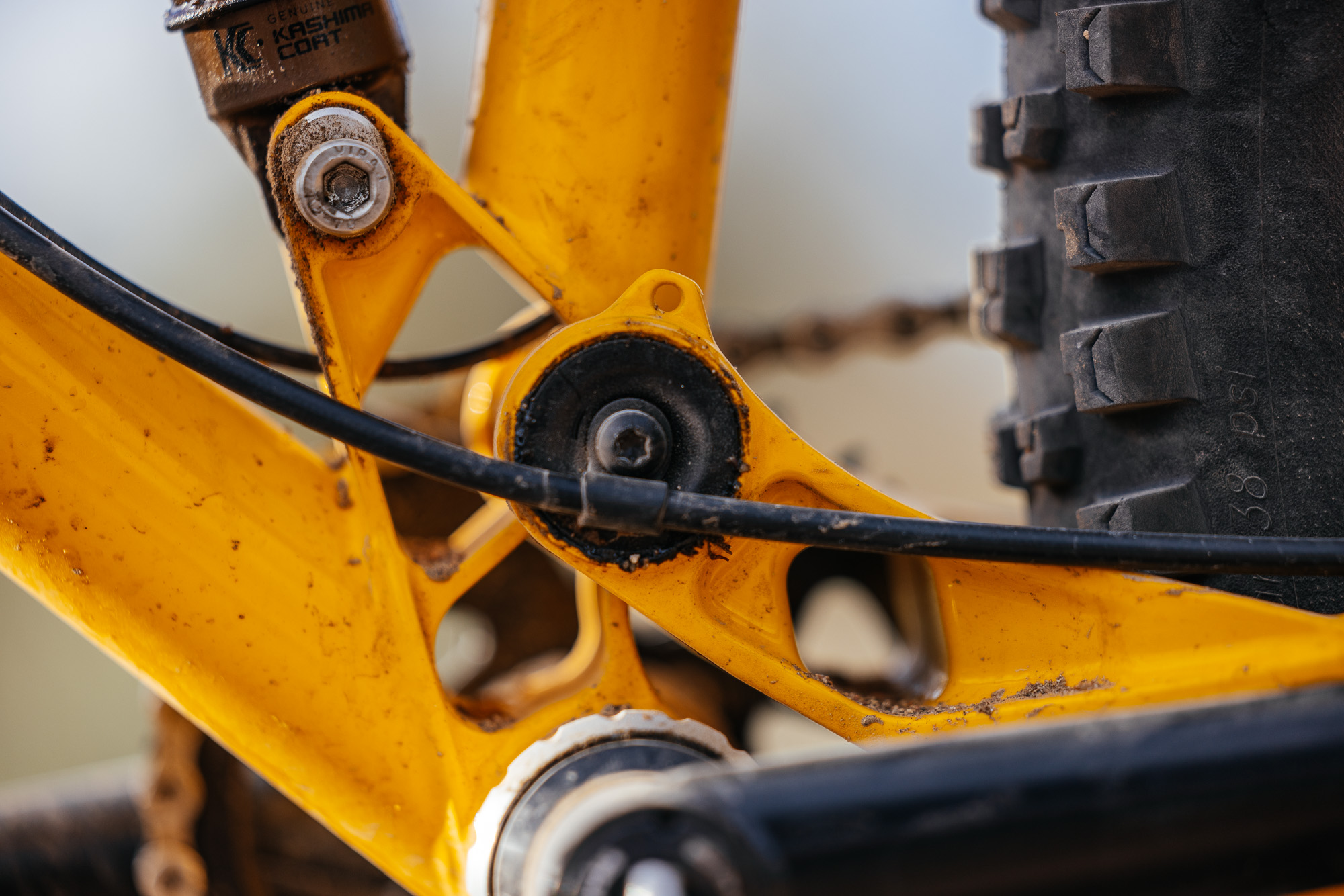
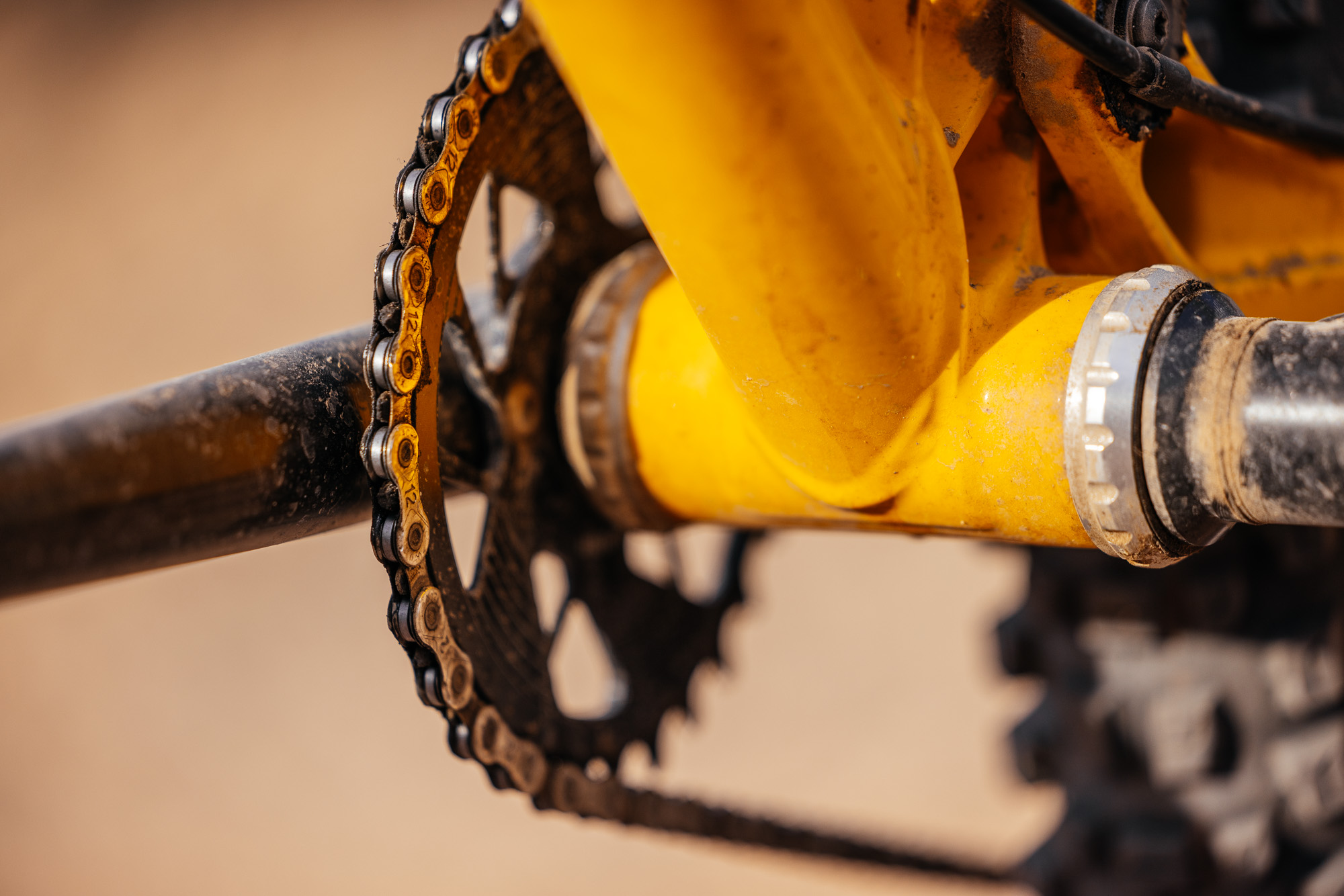
Sour has done a lovely job with this frame. The blending of steel and aluminum never looked so good. The external cable routing is nice and tidy, the bottom bracket cluster is a marvel in its own. All the linkage is dialed, with practical, easy-to-access hardware. The front triangle’s construction is impeccable. With the Horst Link kinematics, it frees up a lot of space for a big frame bag, and while I do wish there were a second set of bottle bosses under the top tube next to the seat tube, I’m sure if you asked nicely, Sour would add those for you.
I love the slight flare to the top and bottom of the headtube and the clean brazing found throughout. Throughout this extended review, I’ve only had one bolt loosen up on the shock mount. If things do loosen up, Sour has all the torque specs on the website. And oh my, I love the clevices on the seat stays!
You’re really getting a lot for your money with this bike. It epitomizes German design and engineering.
Cowboy Cookie Build Kit
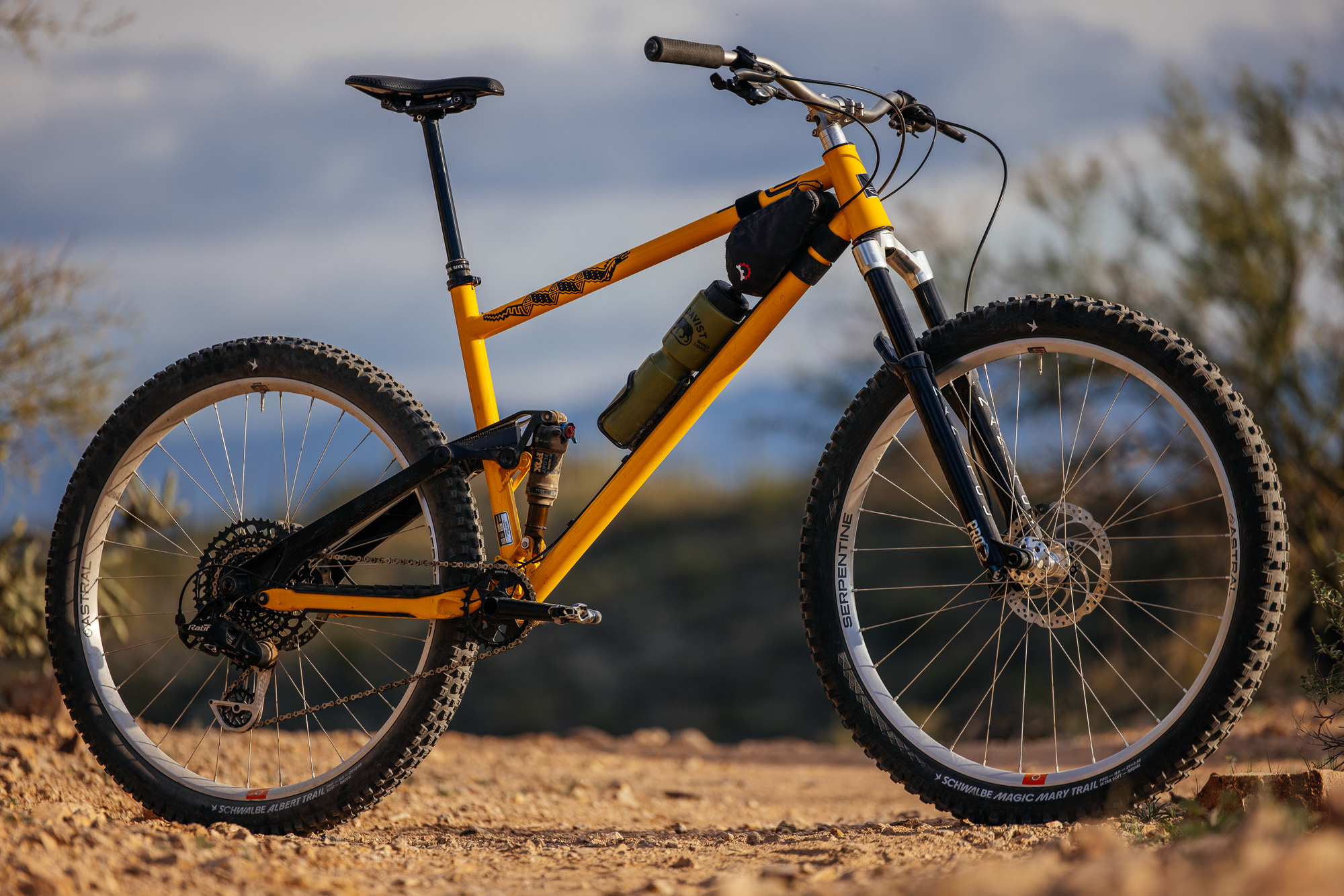
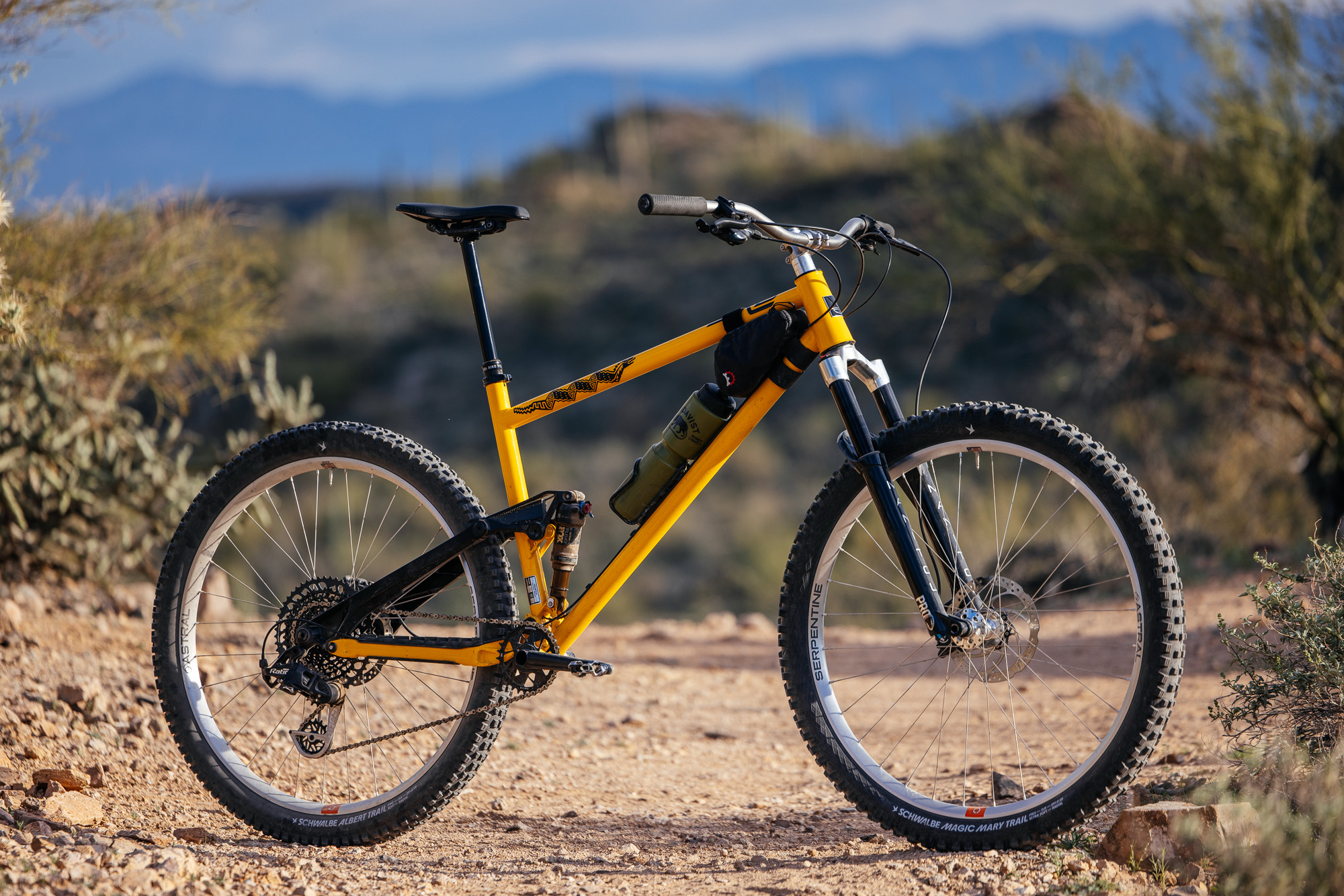
While I prefer to review complete bikes because they represent how the various companies we work with see their product, oftentimes I get sent a frame to review. That was the case here with the Cowboy Cookie. The frame showed up with a Fox Float shock installed, in a secure box loaded with Bike Yoke components. This meant I had to source components for the rest of the build, which took some time. Most of these products will get their own reviews in the coming weeks.
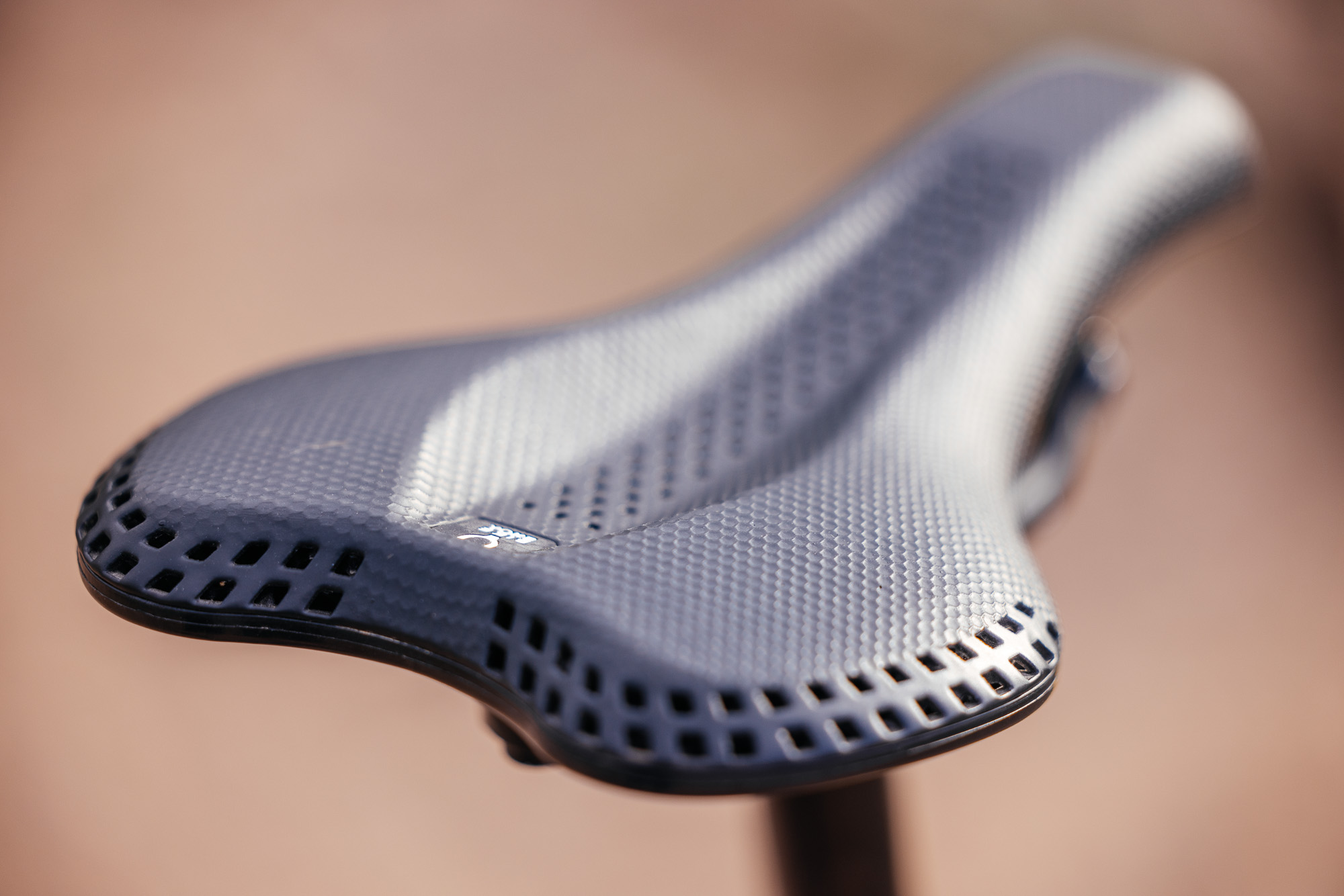
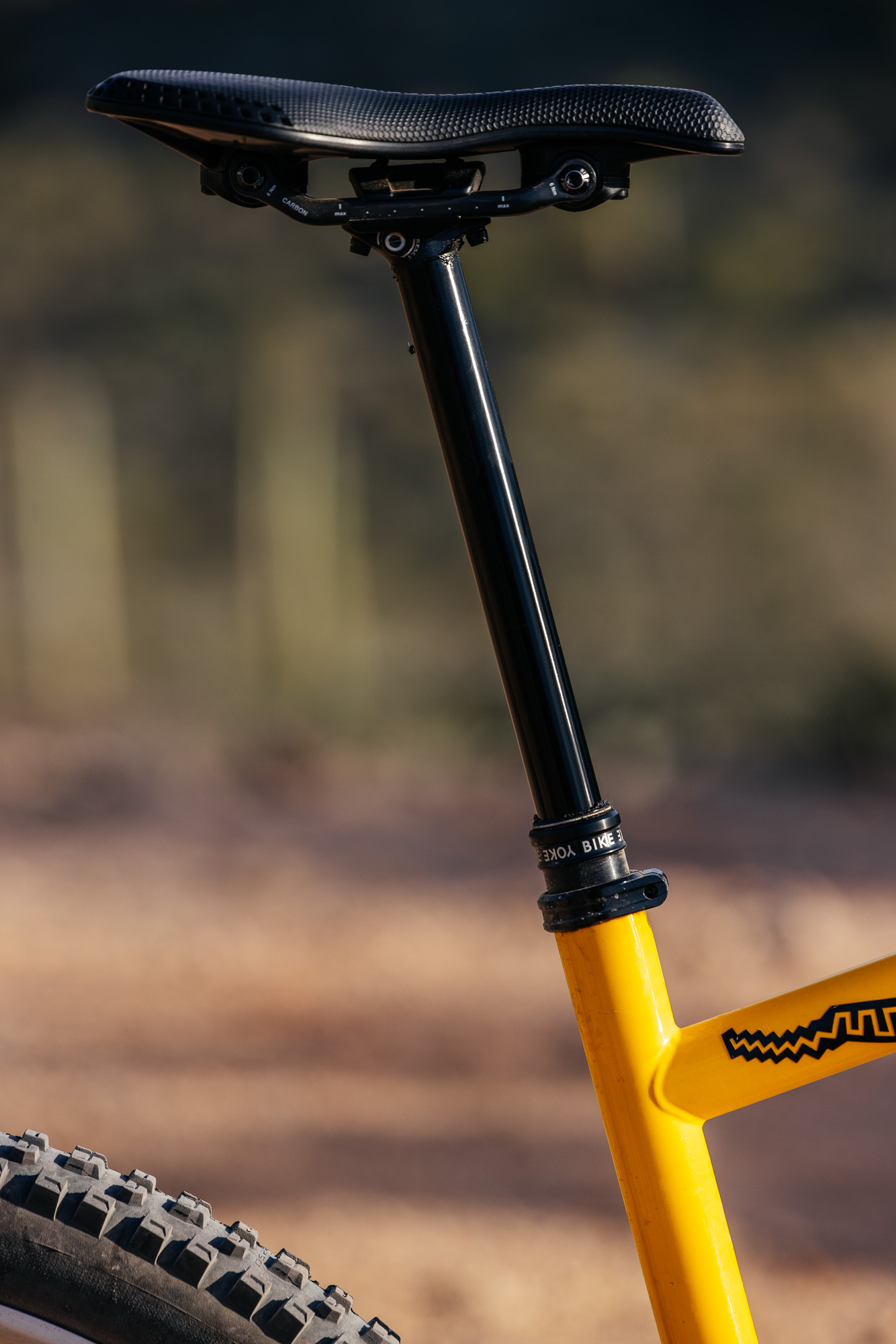
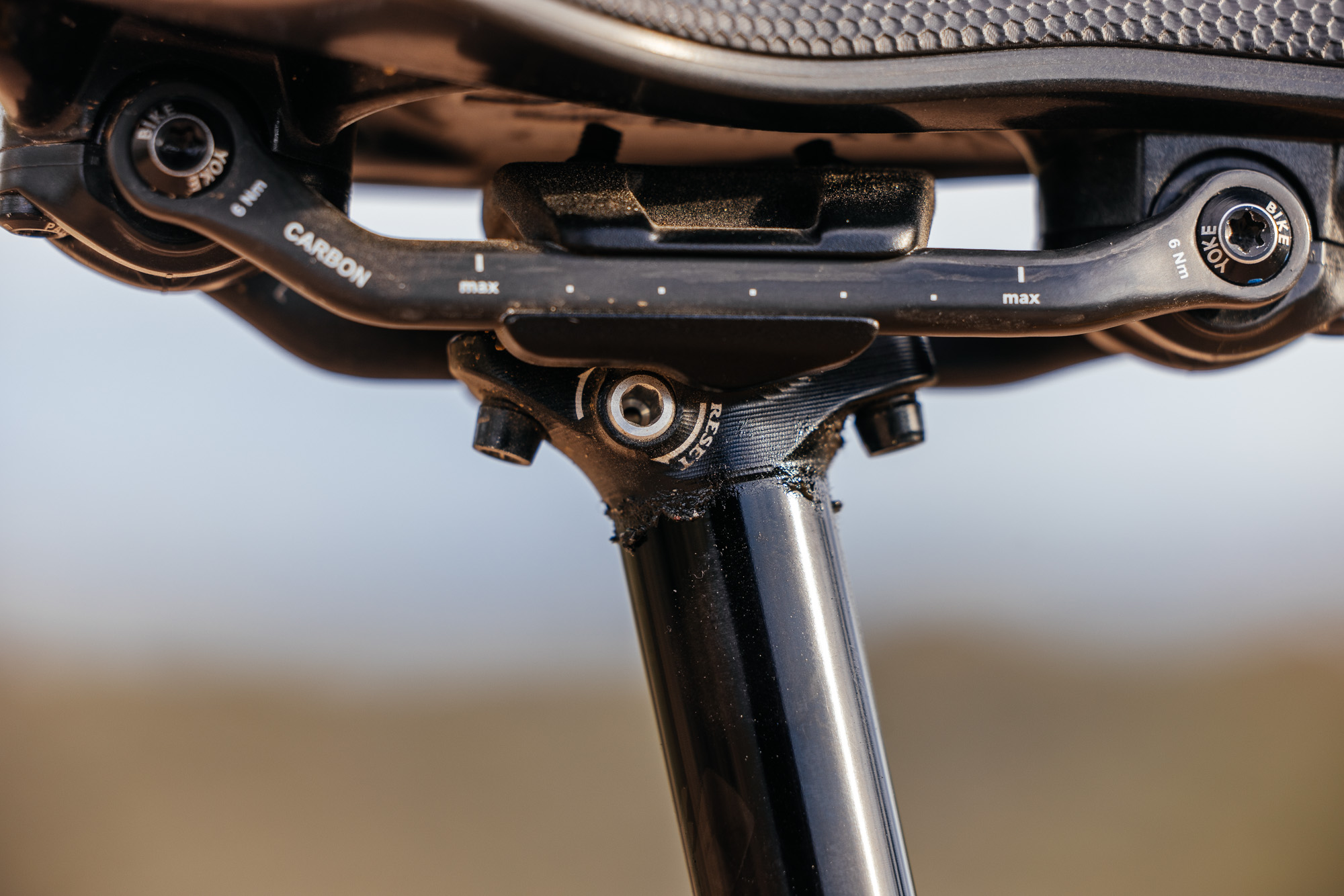
BikeYoke is a small company also based in Germany that is perhaps best known for its dropper posts and for good reason. The easy Reset system keeps it dropping and returning like new after probably thousands of actuations. BikeYoke also sent one of its Sagma 3D saddles, along with a raw cast stem and handlebars. Even though it looks phenomenal, I found the cockpit too stiff for my taste, so I swapped in some Doom bars.
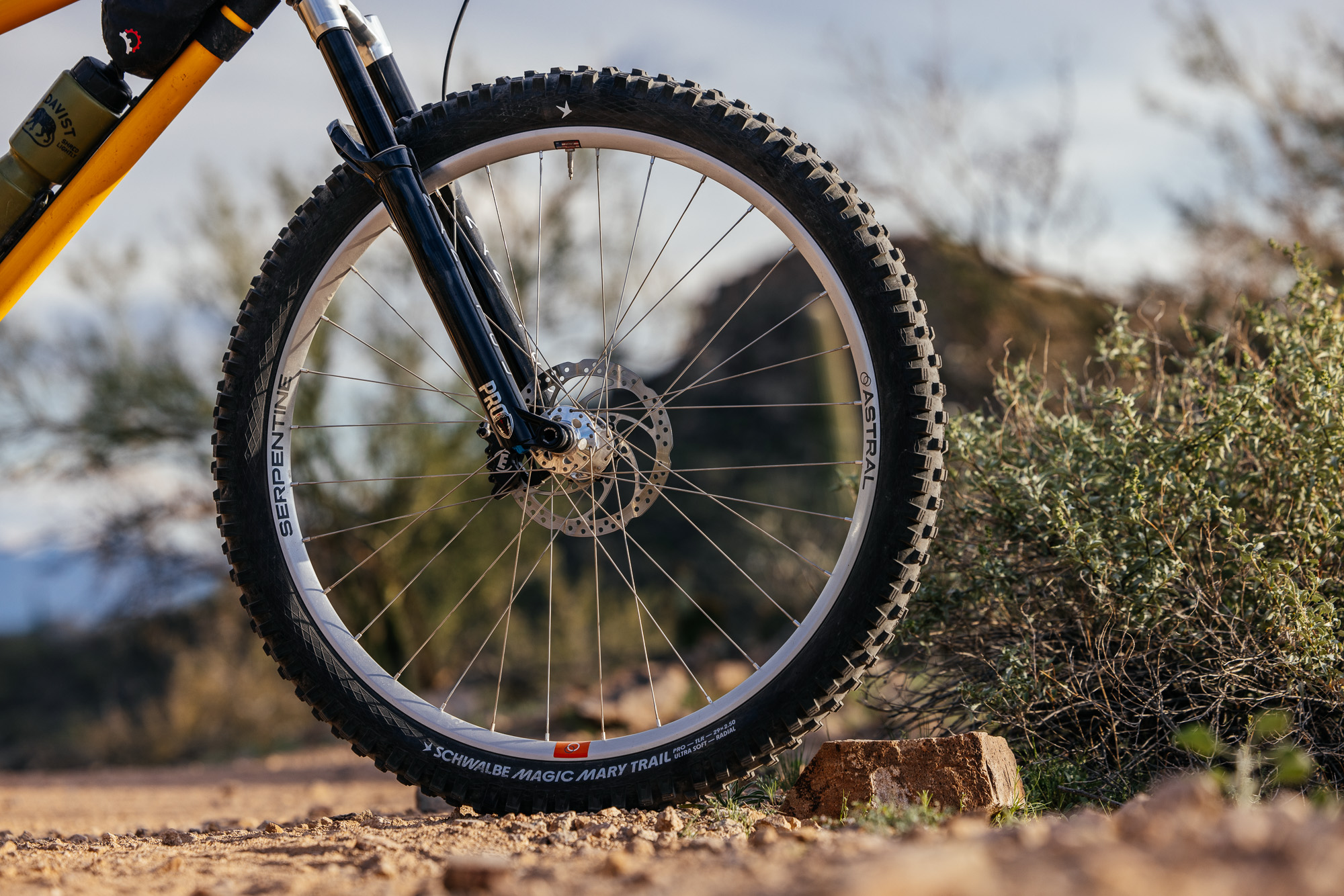
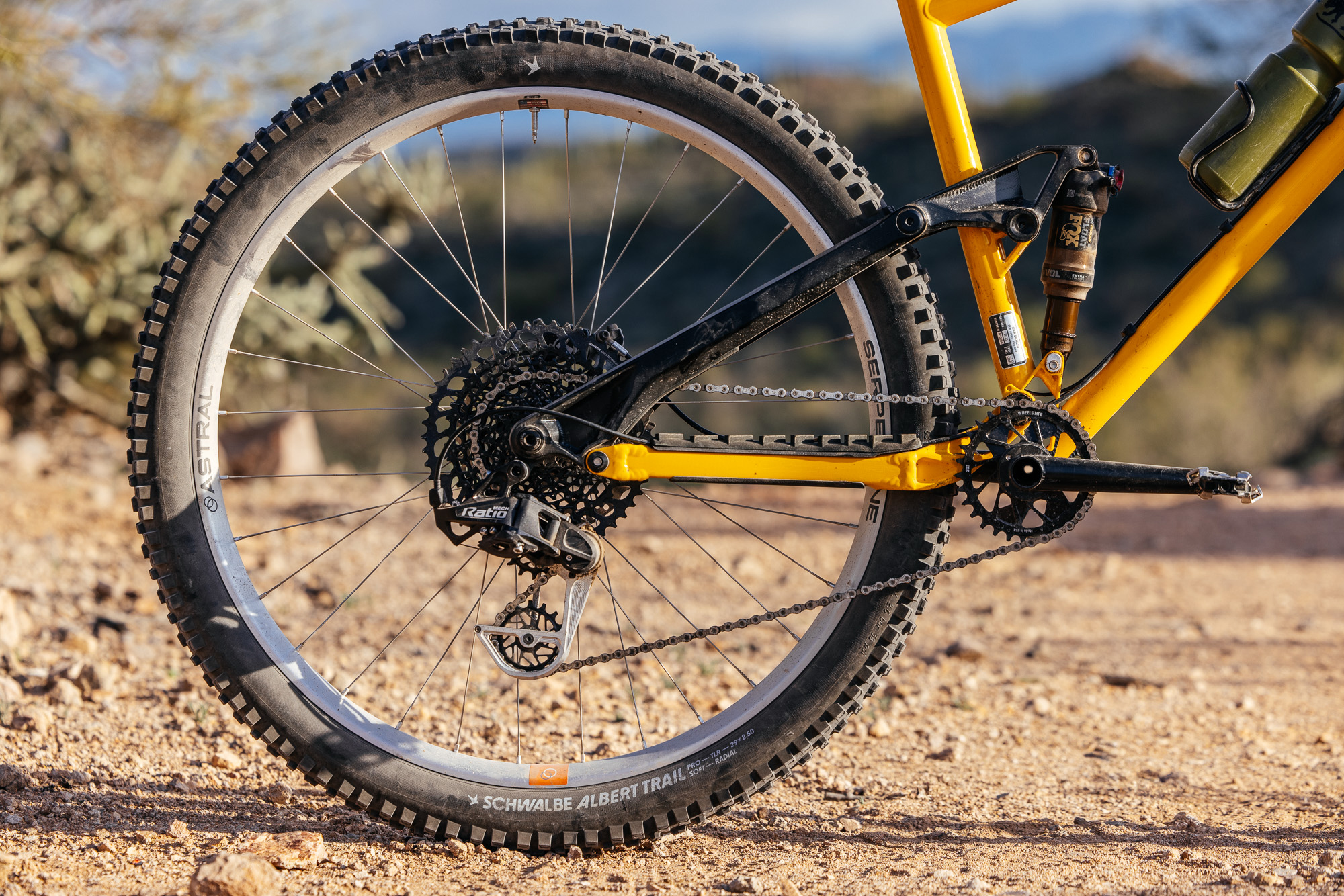
Astral’s Outback wheels have surpassed my expectations on my Ponderosa gravel bike, so when Loren from Astral asked if I’d like to try out some of the brand’s Serpentine wheels, I was very curious. To add some sweetness to this balleur build, the rims would be raw aluminum, too! I have beaten the living shit out of these wheels through the review period, and they have maintained proper spoke tension and continue to roll strong. Read my review here.
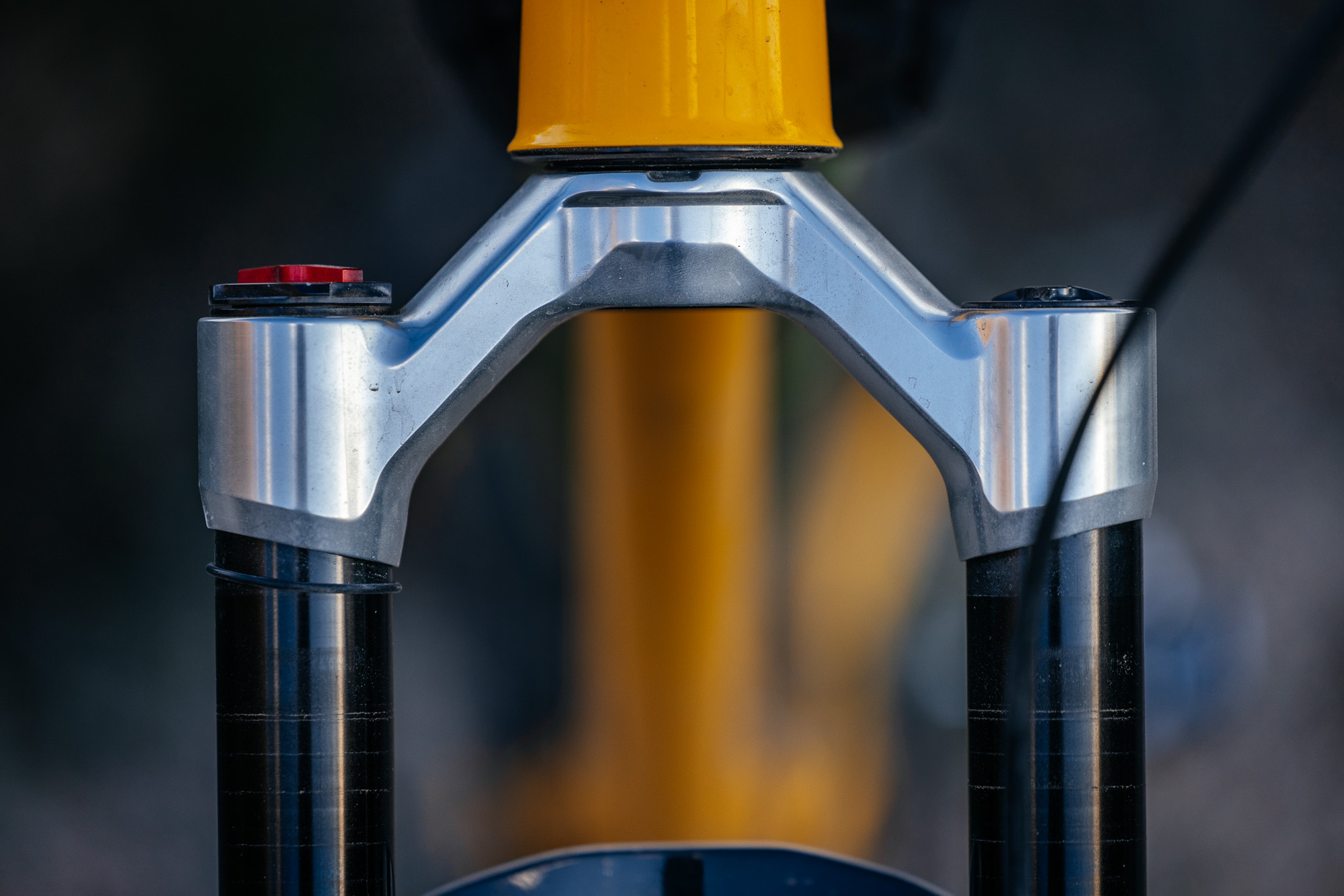
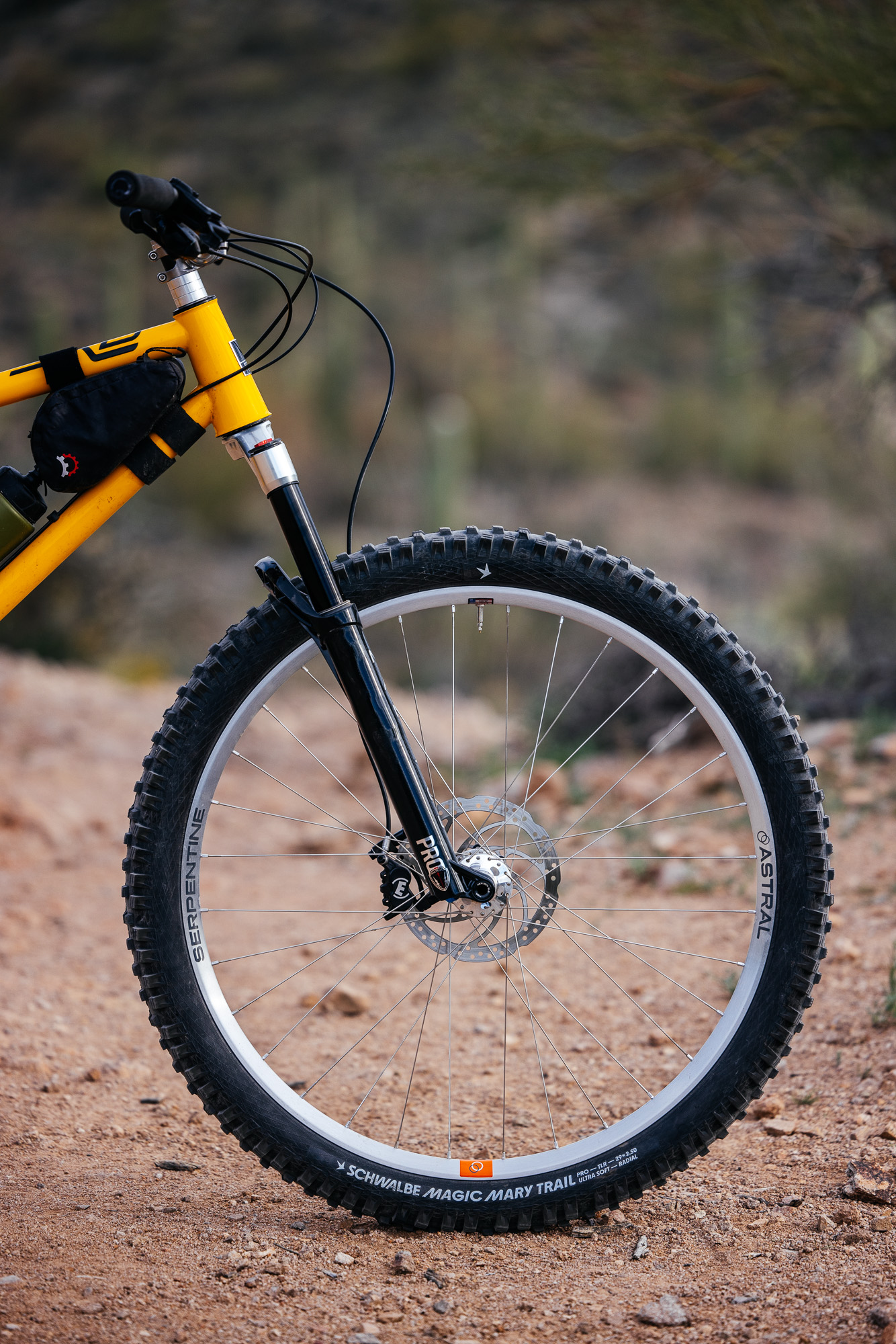
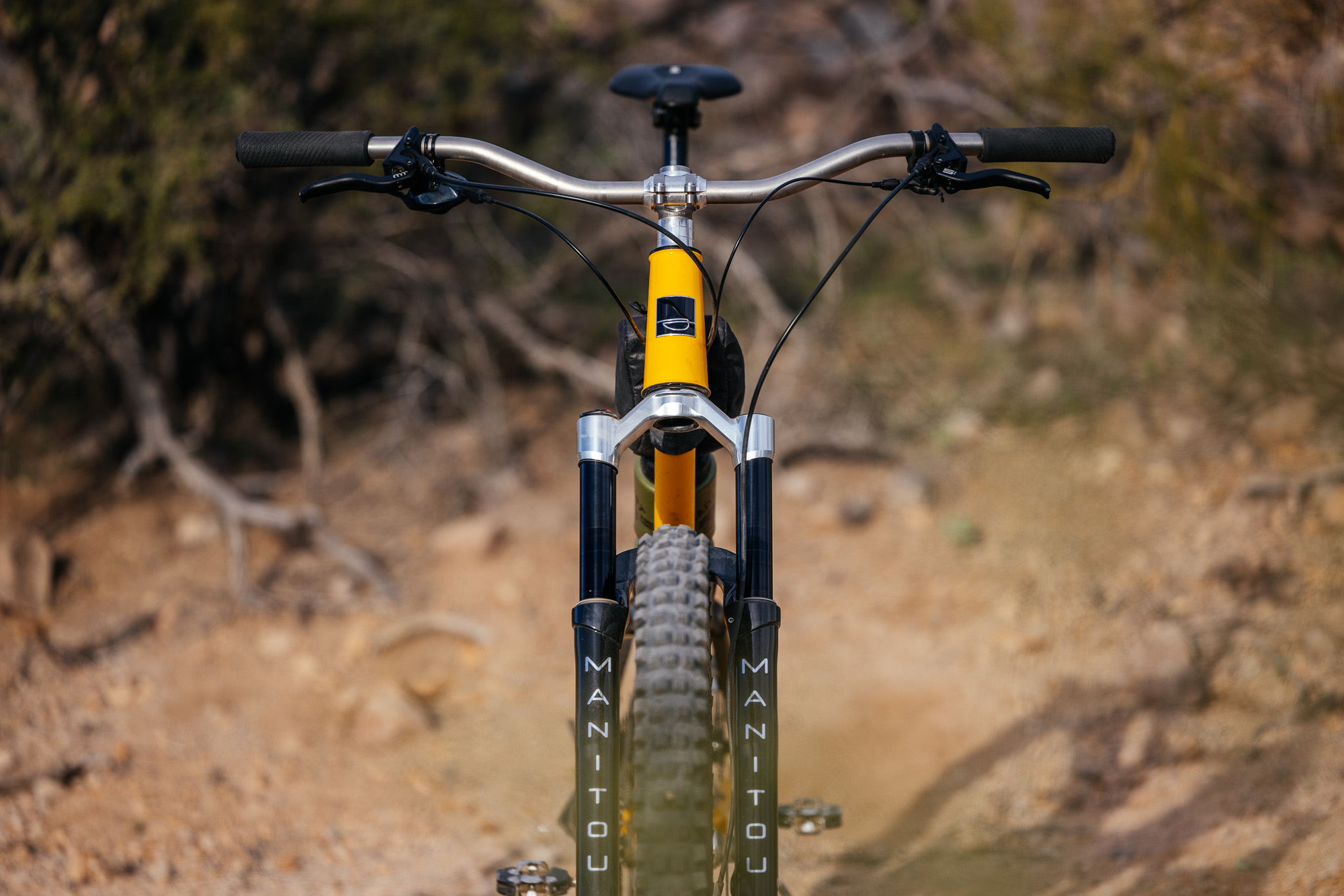
After Kyle reviewed the Double Choc with the Mantou Mattoc Pro fork, I was curious how far the brand had come from its earlier designs. My first hardtail had a Manitou fork but that was two decades ago, so I bought a Mattoc Pro from Sincere Cycles and have been really blown away by its feel…
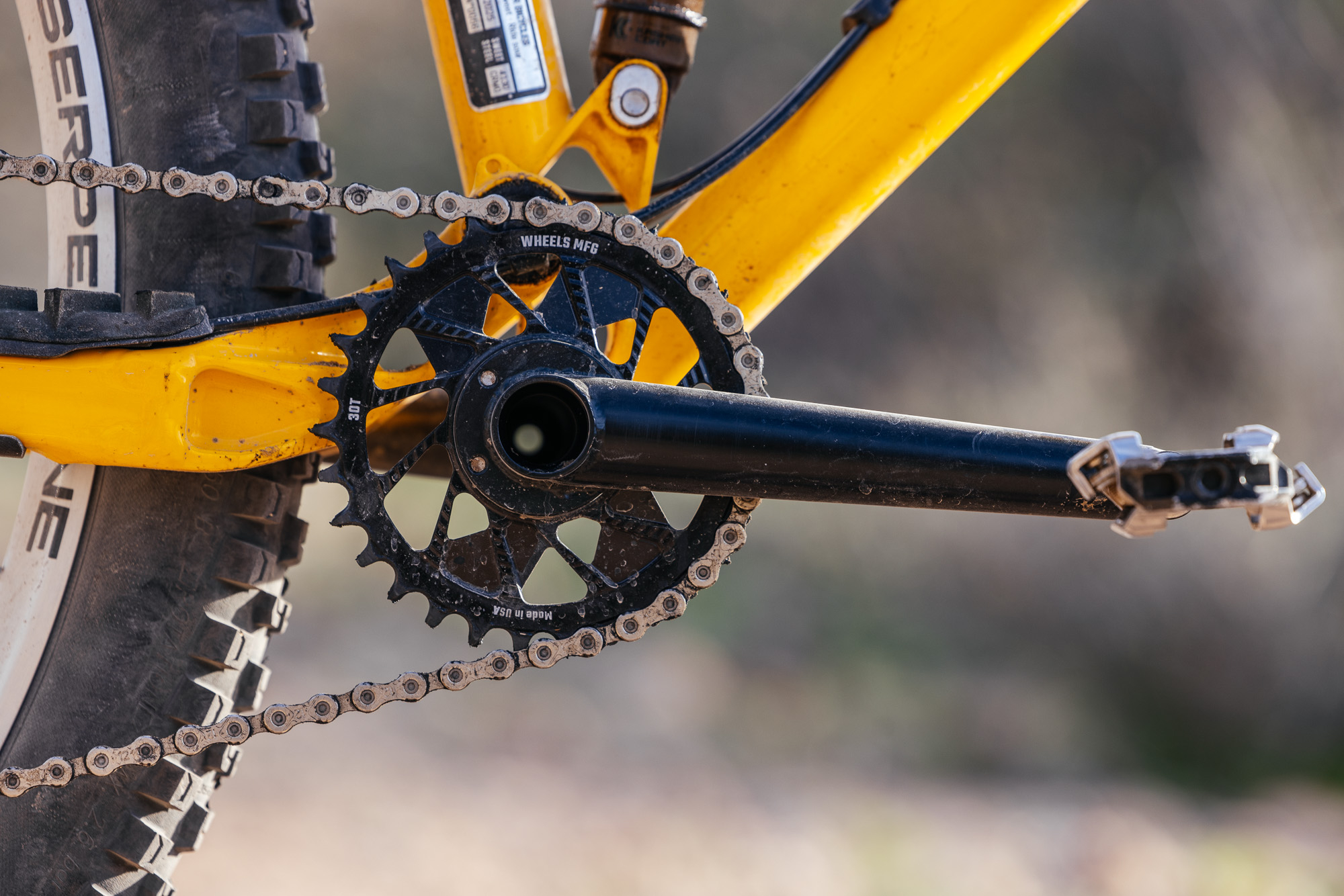
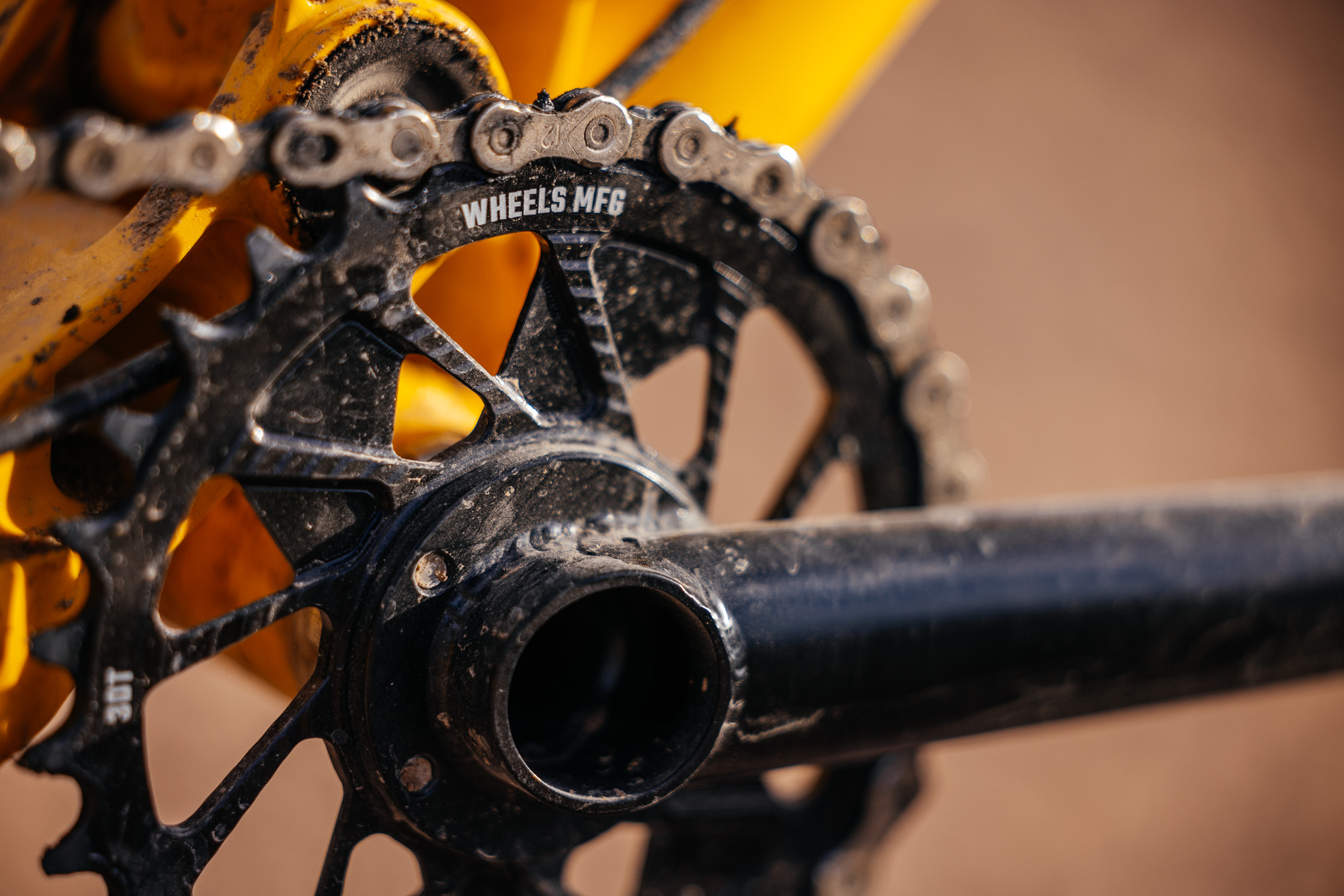
Perhaps my favorite detail on this build is the Cyber Cycles cranks. Growing up drooling over Profile cranks, and having ridden them for years on my fixed gear bike in NYC, the Cyber Cycles cranks take the vintage silhouette of steel cranks and modernize them with a 30 mm spindle and a 3-bolt chainring. They’ve got more than looks and tech going on as well. While they’re not engineered for “enduro” riding, they felt amazing on the Sour.
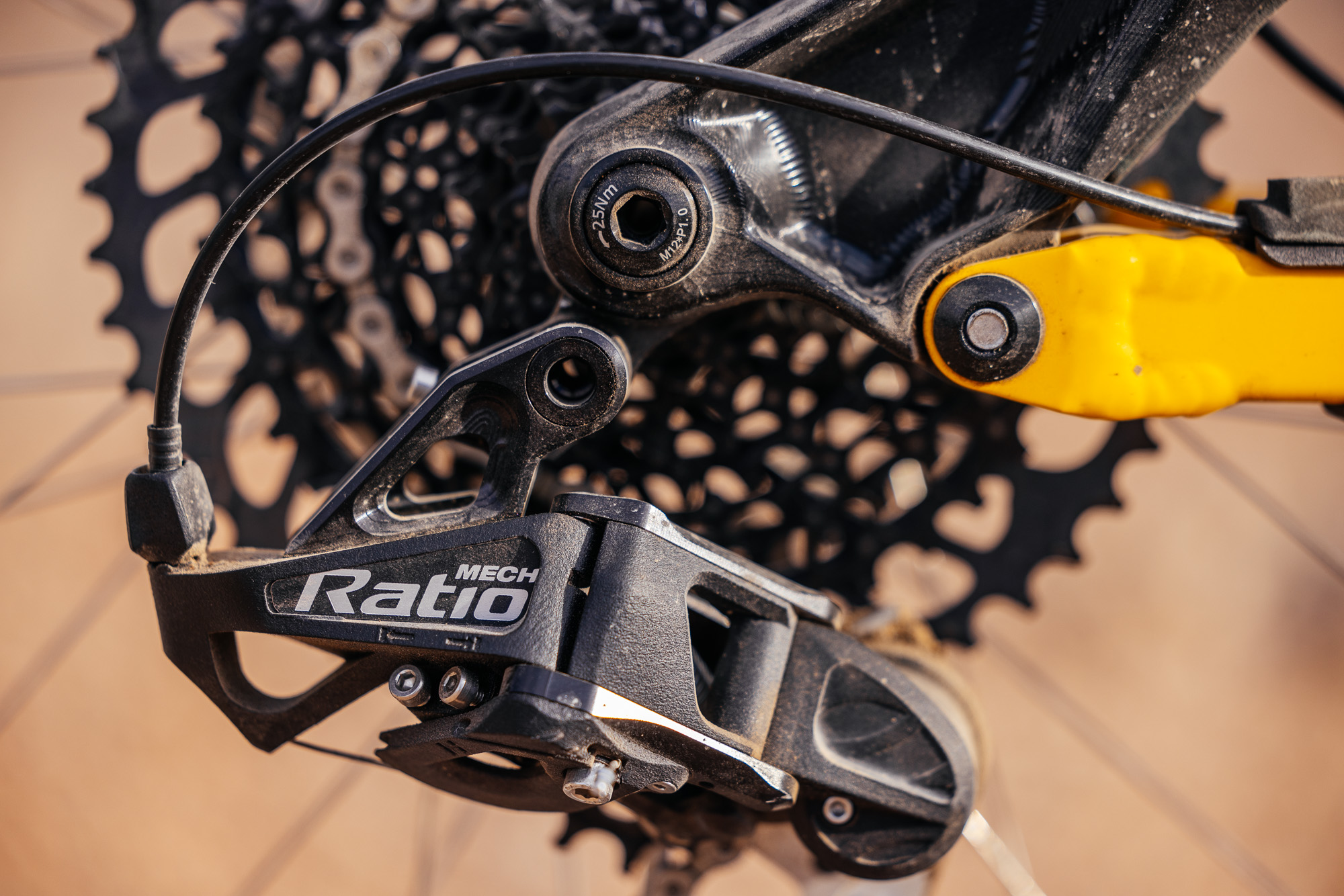
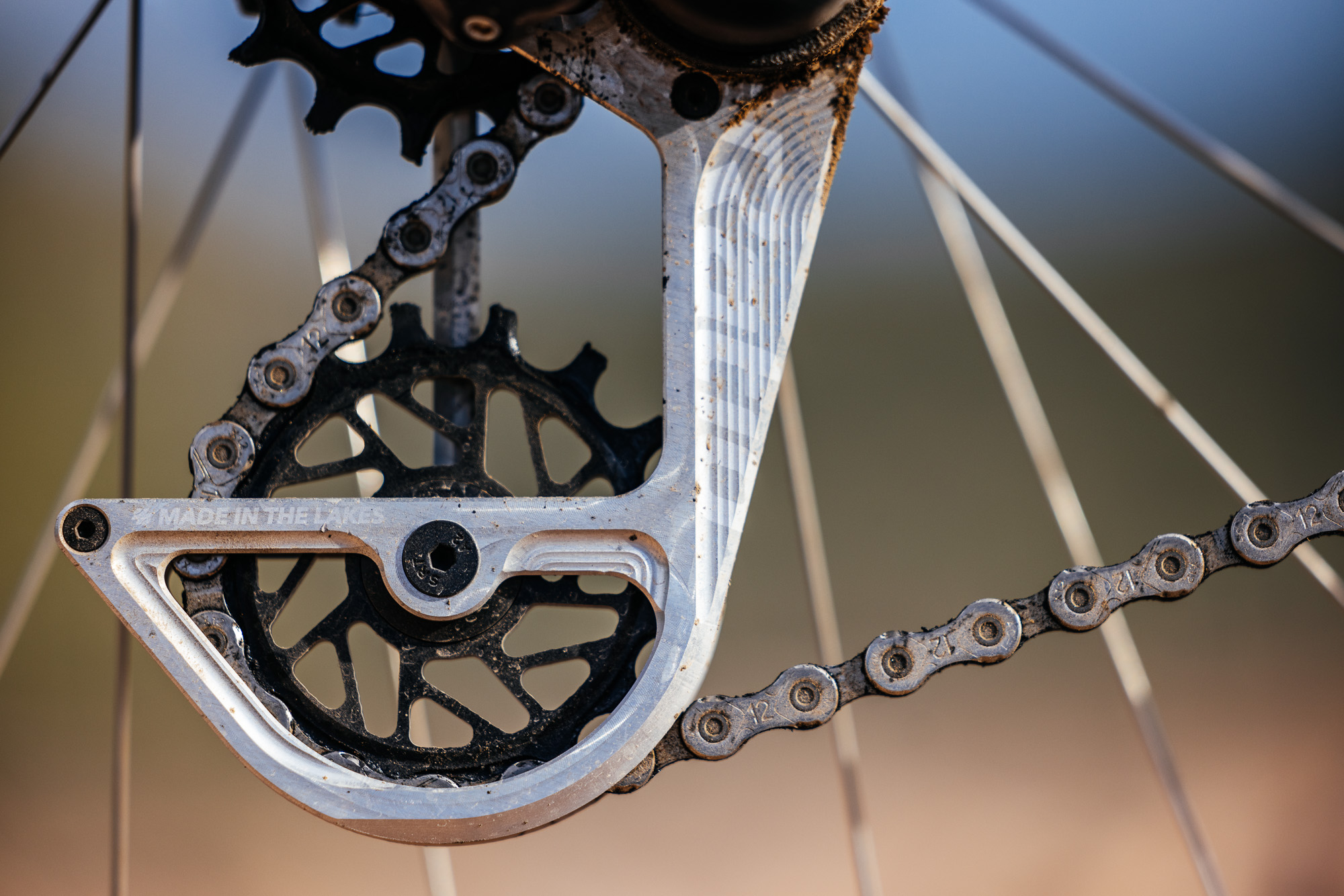
I’ve fielded a lot of questions about the Ratio Mech on my Instagram whenever I post photos of the bike. Expect a full-length review this week!
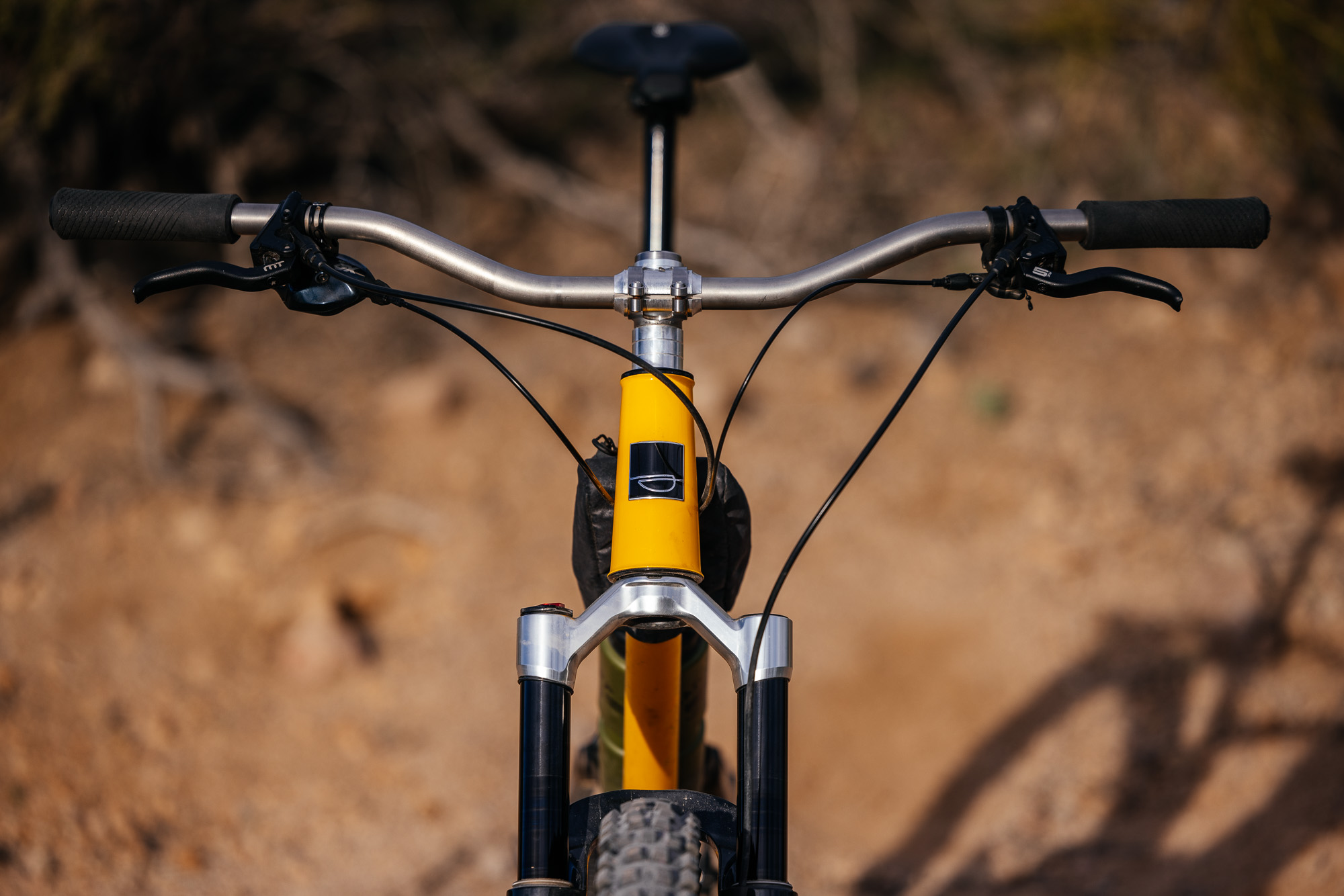
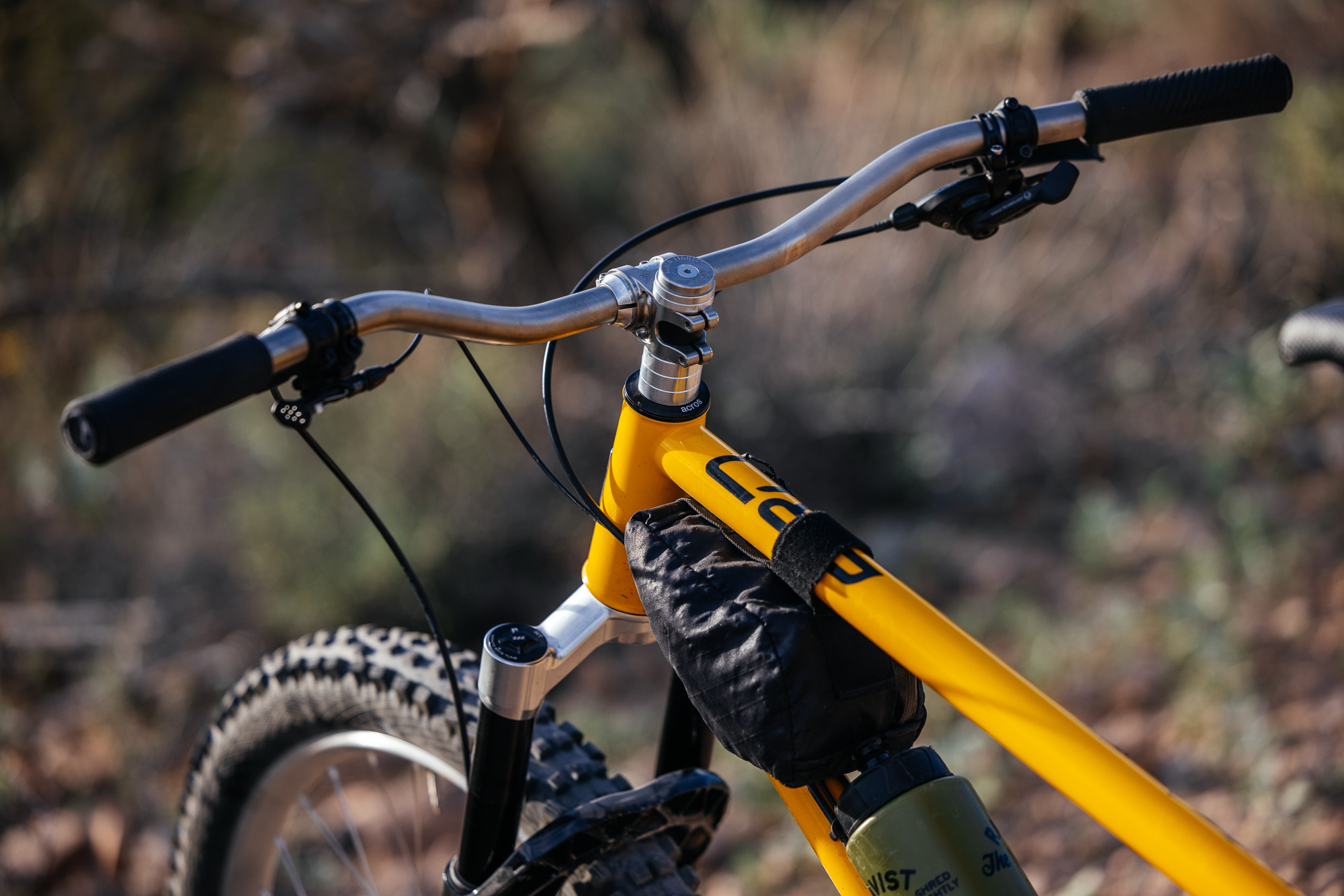
At this point, any bike I own has Doom Lucky Risers. These are the best handlebars out there!
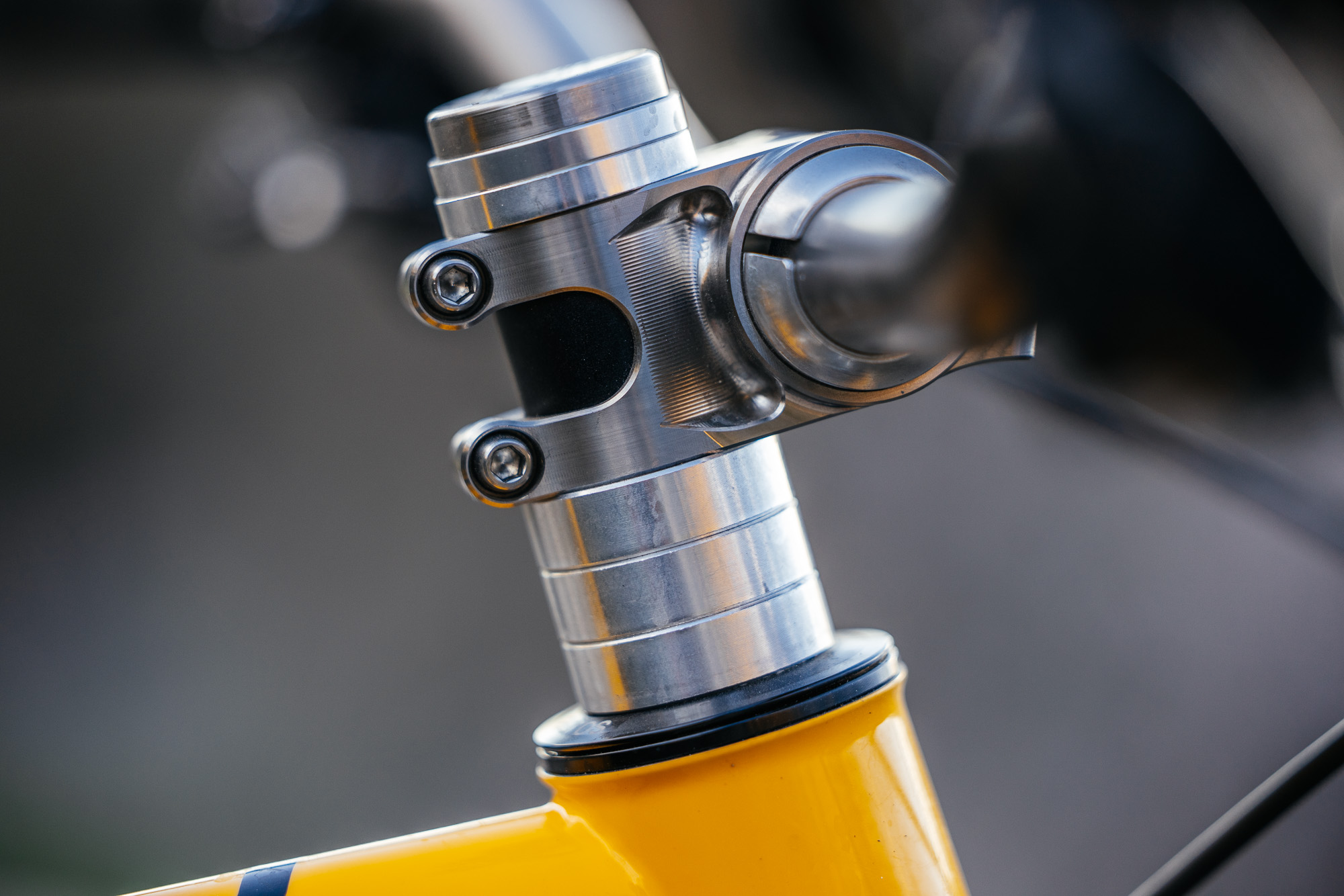
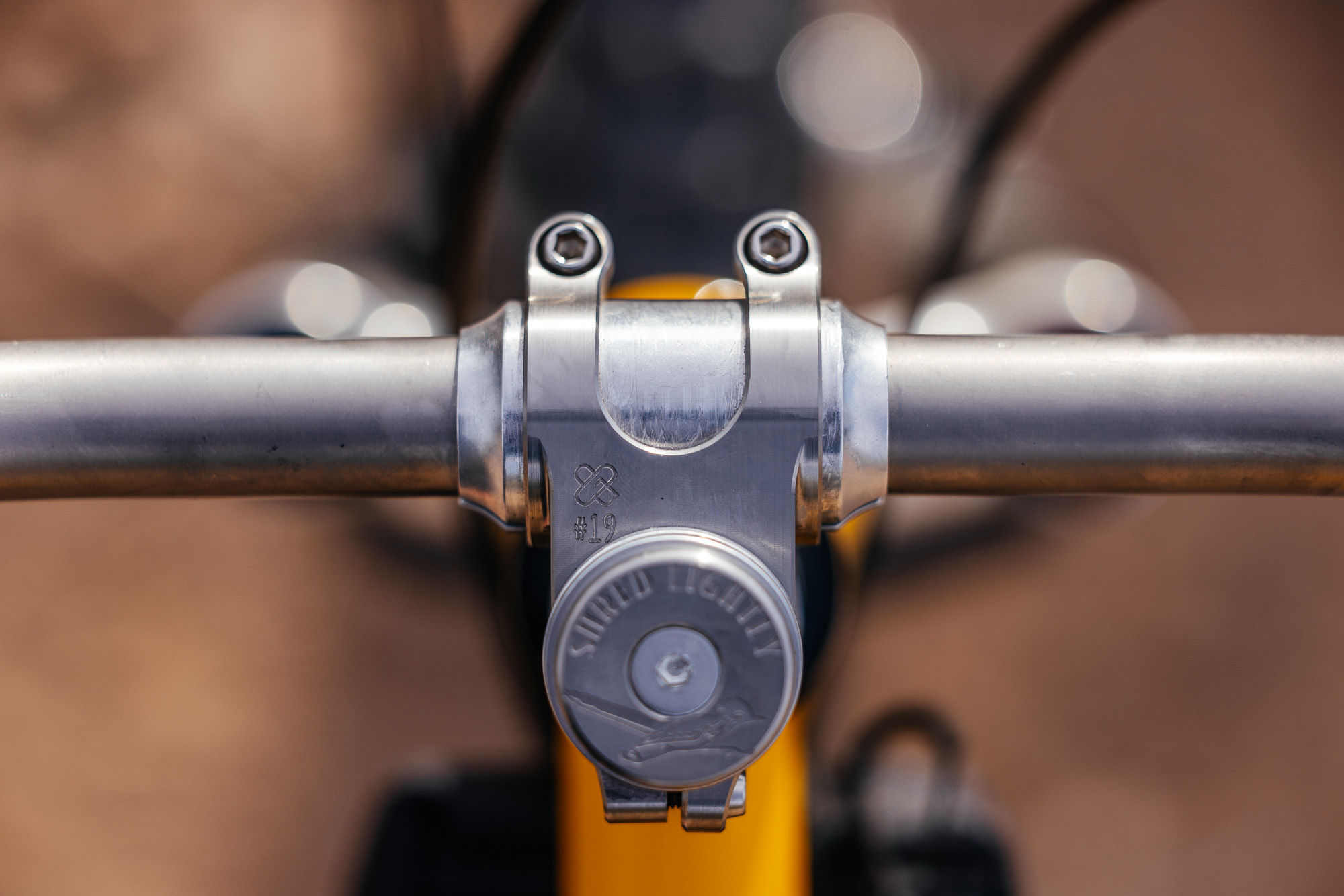
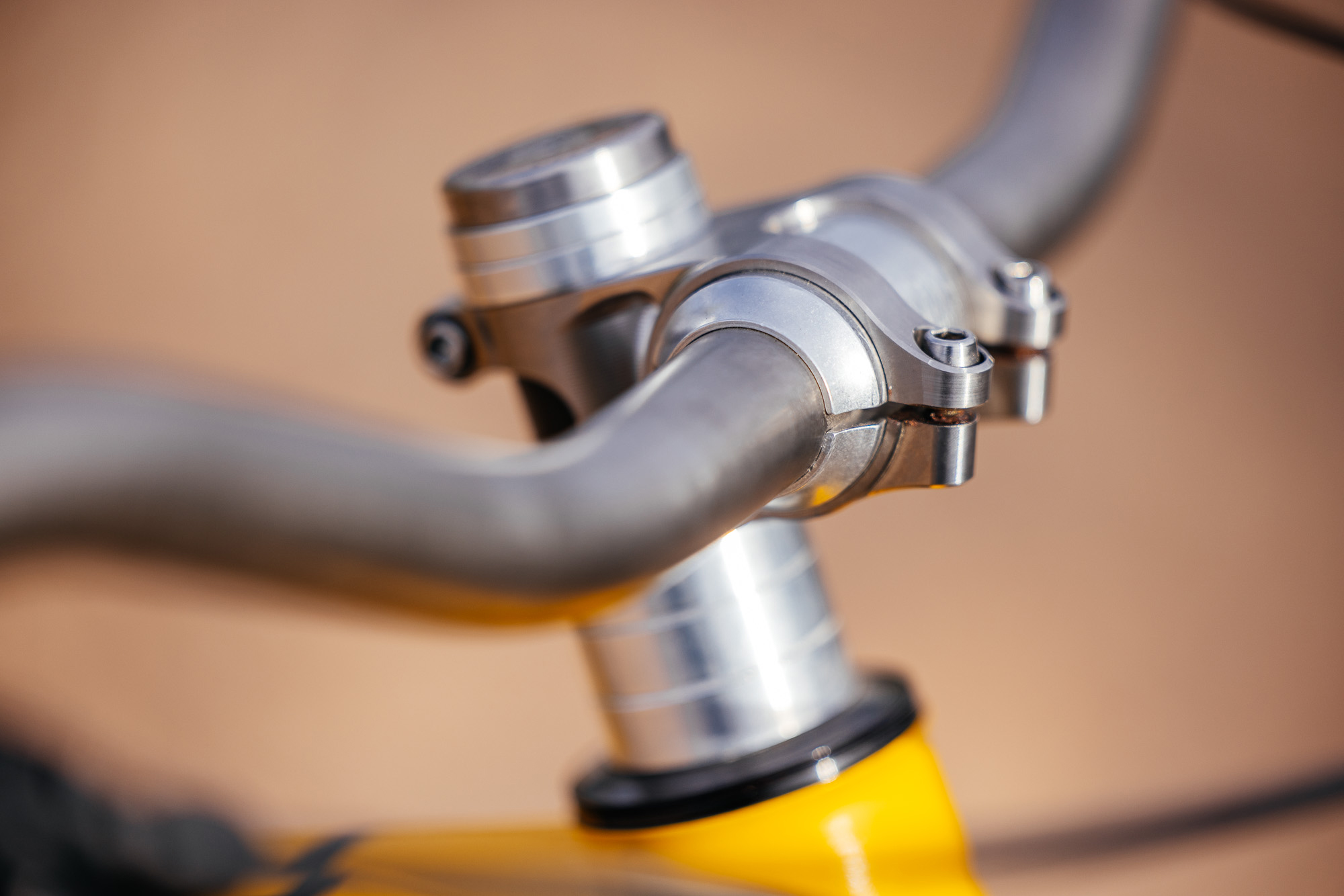
Ogle Components Little Boy Ti Stem
After meeting Josh Ogle at Made last year, I bought one of his stems, which got lost in the USPS system. He sent out another, and it arrived just in time for me to build up the Cowboy Cookie. These uber-lightweight stems are CNC-milled and pass ISO testing, exceeding the stringent standards. Unlike the Doom Bars, the stem doesn’t flex at all, but I just love the way it looks, especially with the aluminum shim and 22.2 clamp bars!
Climbing Notes
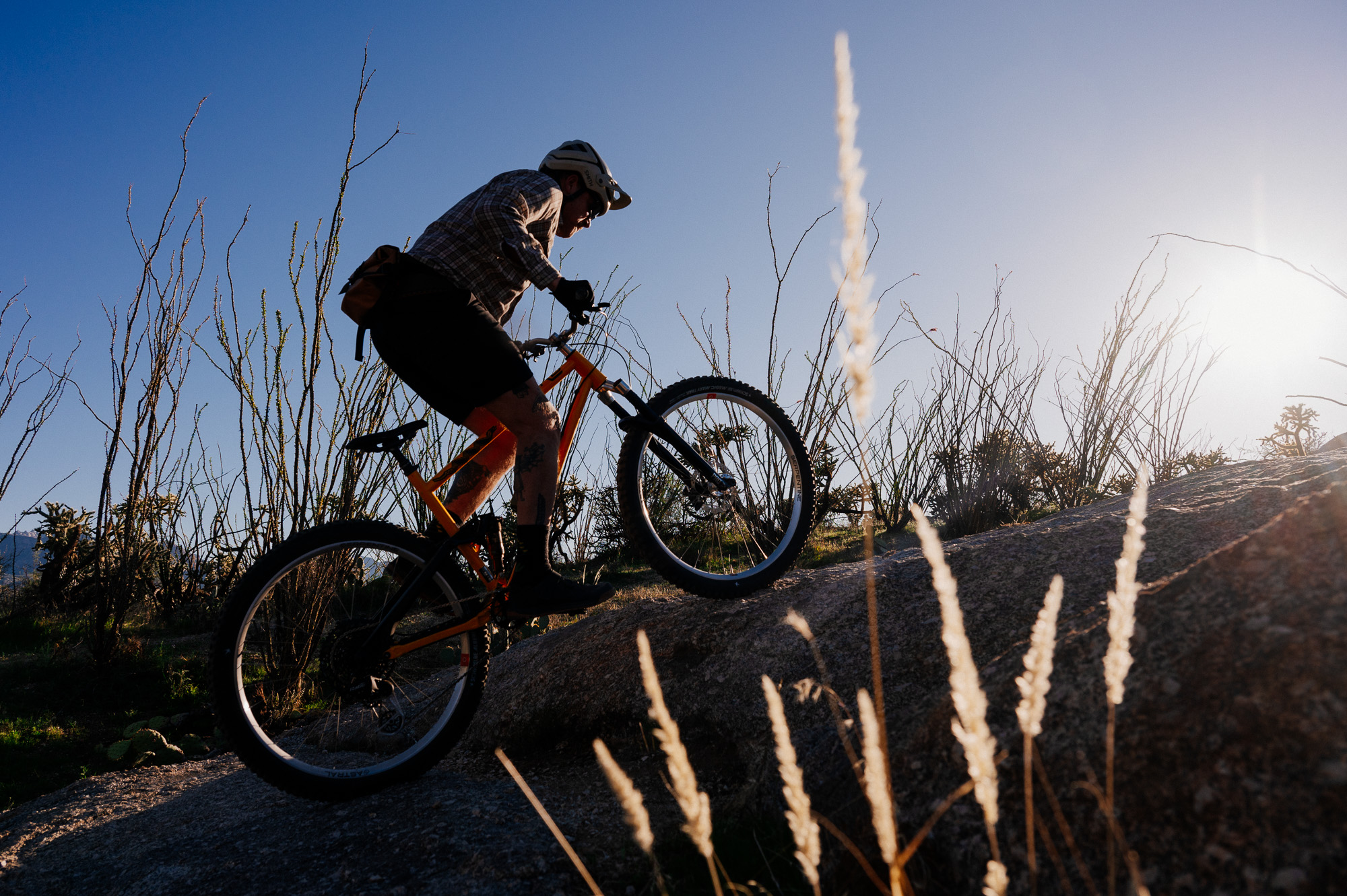
Every time I take a review on to ride in Santa Fe, the bike’s initial impressions are always climbing. From my front door, across town, into the trails, and to the top of the trail is about an hour and just shy of 2,000′ elevation gain. Sometimes, I’ll hit a curb cut booter on the way to the trail, but I truly don’t have much of an indication as to how the bike will descend until I point the bike downhill after the climb.
None of our climbing entails fire roads. Or rather, I opt for singletrack climbs rather than the one fire road climb we have. The singletrack adds considerable time and energy spent, and it’s always a tell-tell sign when I can clear techy bits on the first ride on a new bike.
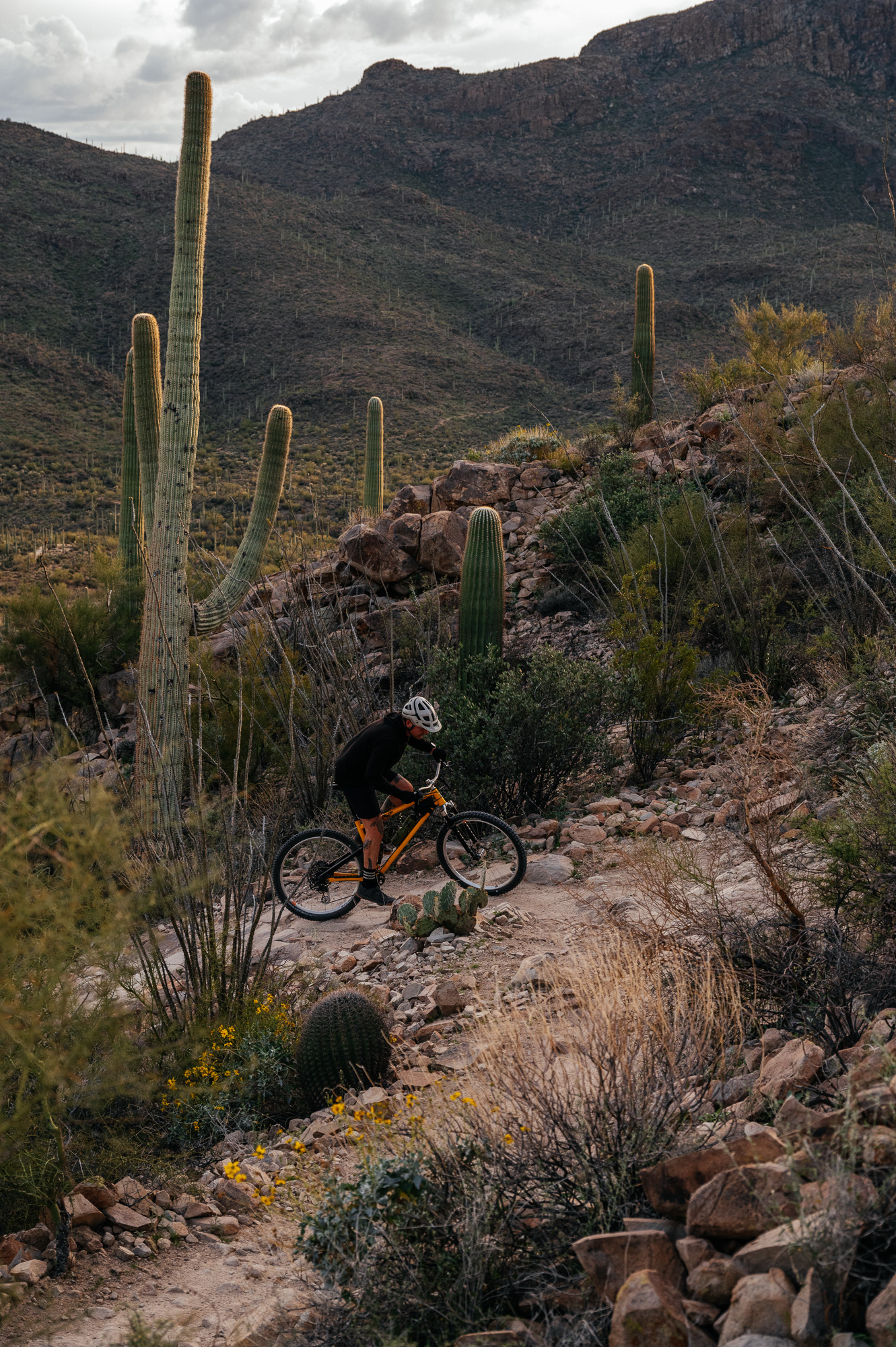
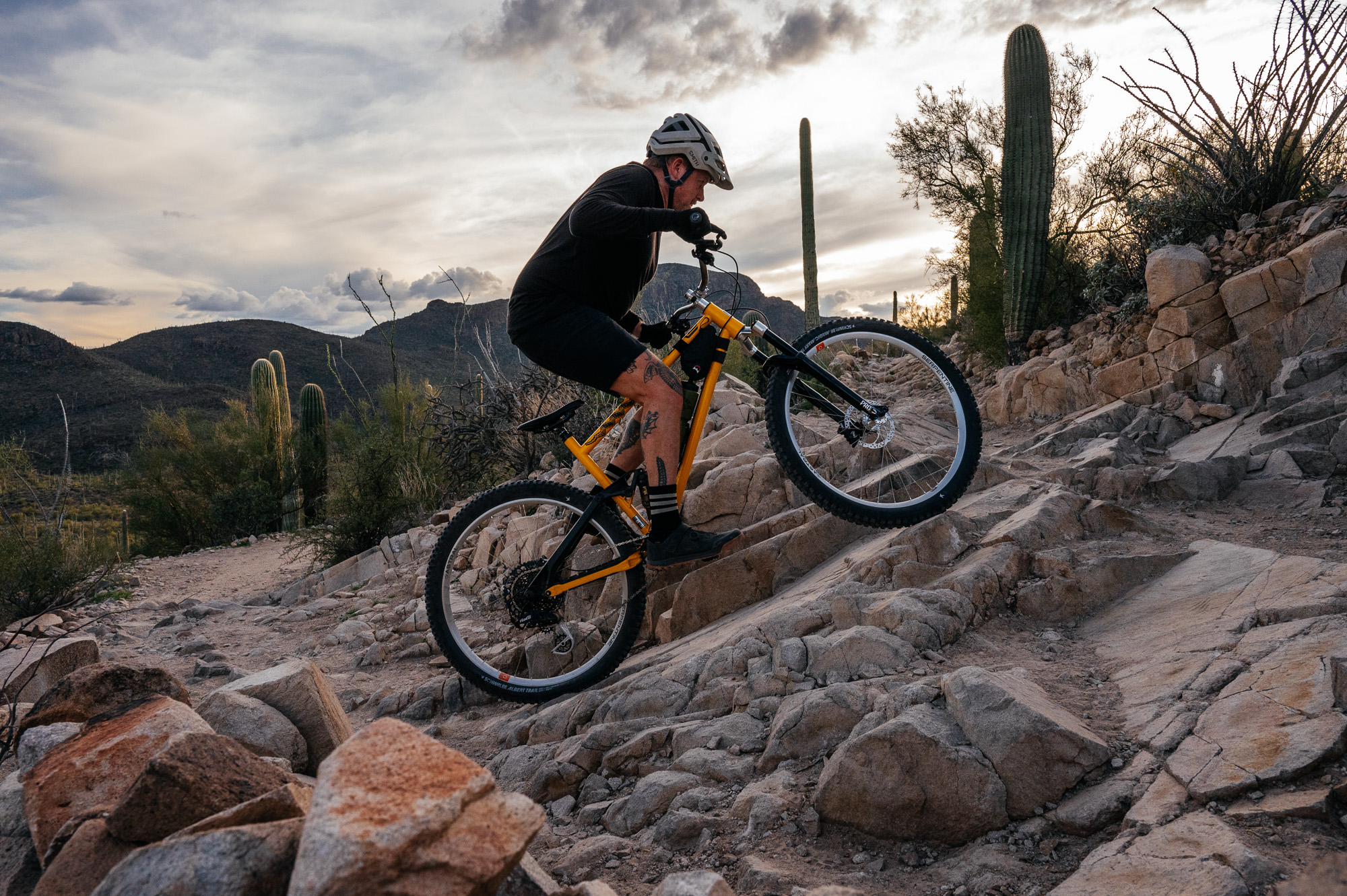
Yet, it’s these long, technical climbs that I truly begin to understand a bike’s intent. With the Cowboy Cookie, it felt familiar, like a number of Horst-Link suspension bikes I’ve ridden over the years. Pedal bob was minimal, it had a snappy disposition that was ready for when I had to spin up to speed to clear a techy rocky line, it delivered. The steep seat angle put me over the bottom bracket, and I could literally tractor crawl up anything.
While climbing isn’t as romanticized as descending with mountain biking, I’m a firm believer that the roots of the sport lie in technical achievements on the ups as well as the downs.
After climbing, the Cowboy Cookie comes alive and active on the trail.
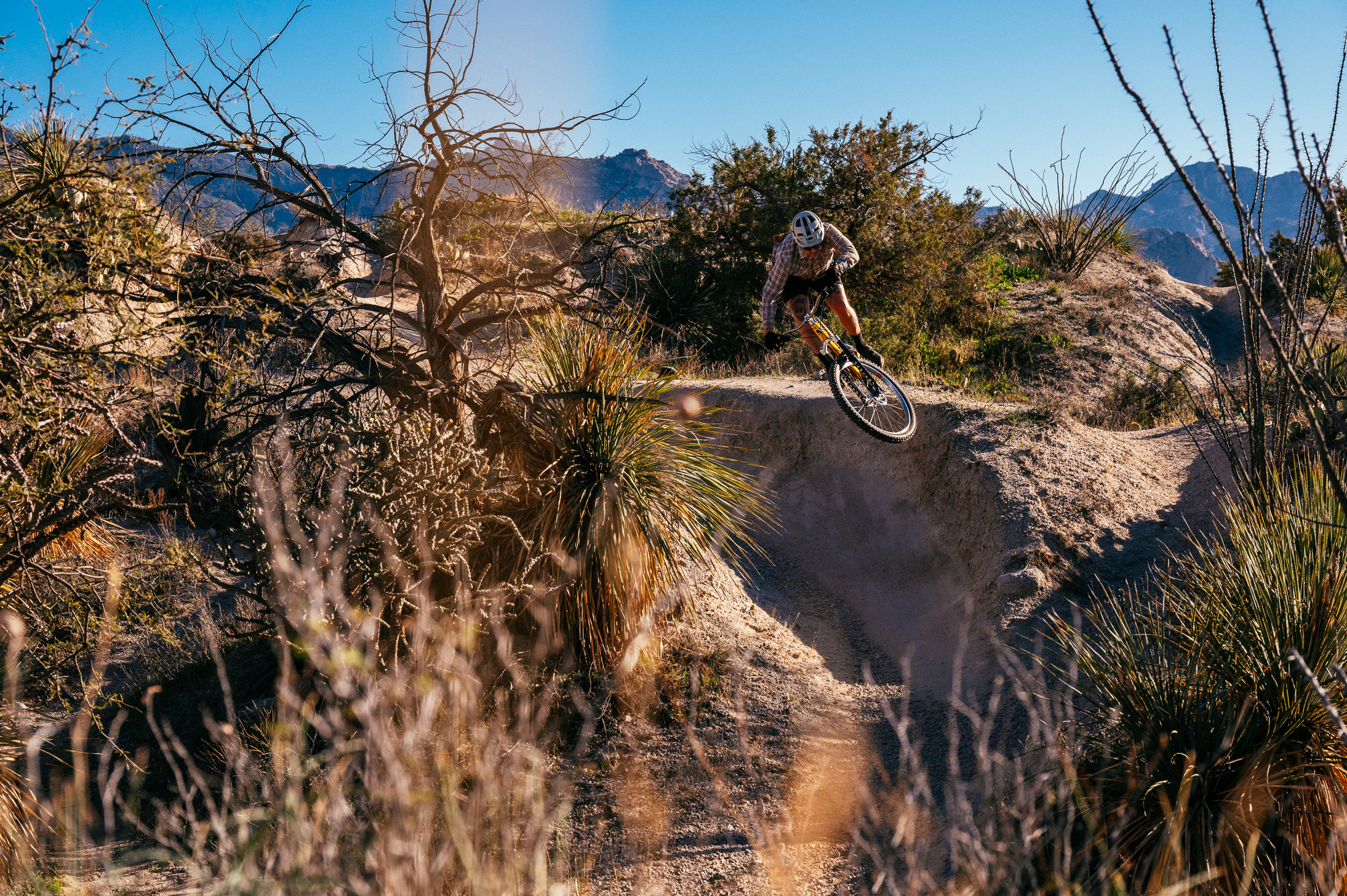
Descending Glee
Bikes in this class are worlds apart from the XC race bikes you see in World Cups. Shorter travel numbers do not imply skittish riding behavior. Rather, the Cowboy Cookie, when built up with wide bars and 2.5″ rubber from Schwalbe can go head to head with trails I’d normally tackle on a longer-travel bike like my Murmur. While it might not be a bruiser like the Apogee One, the Cowboy Cookie enjoys to smash rock.
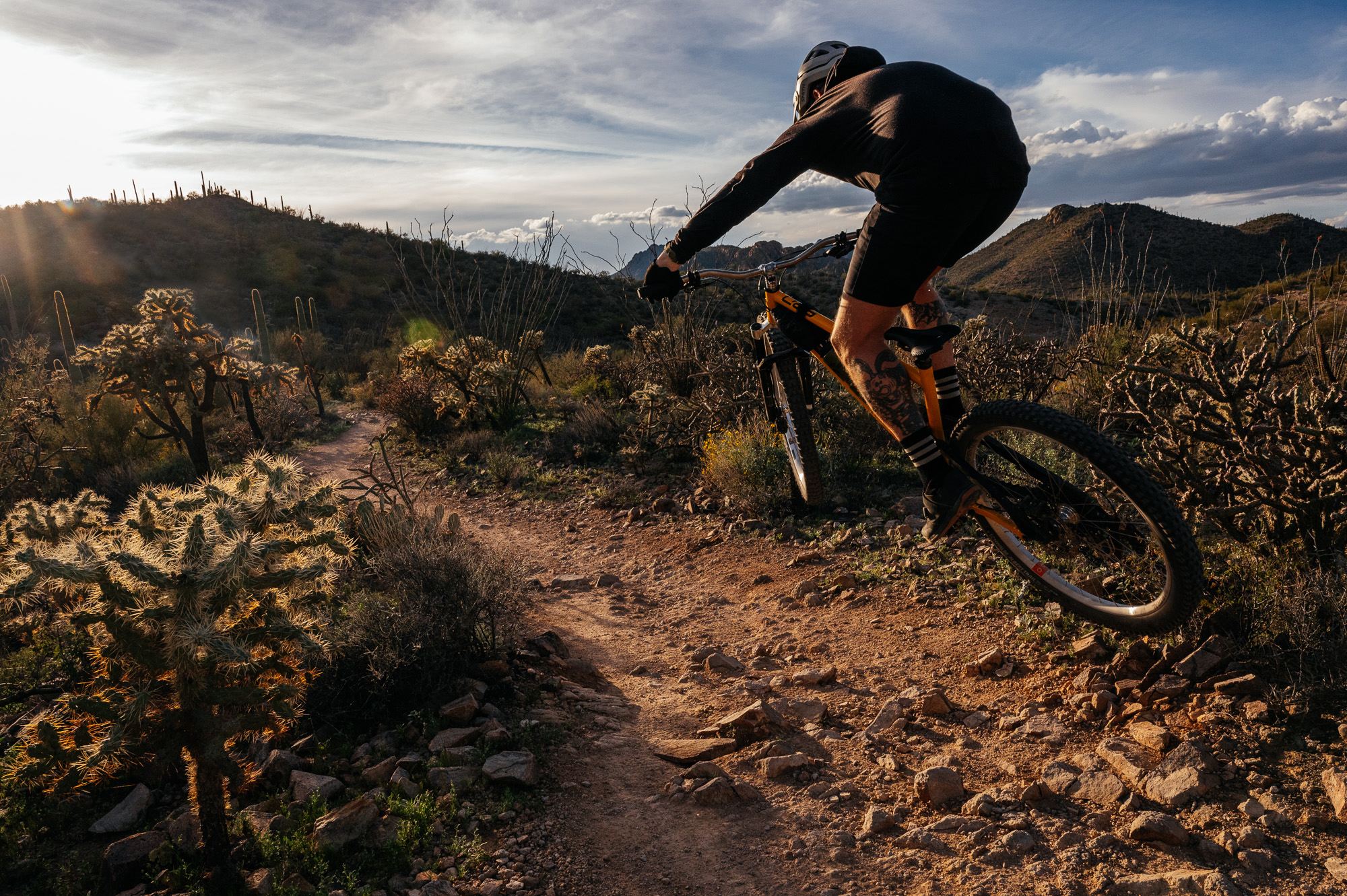
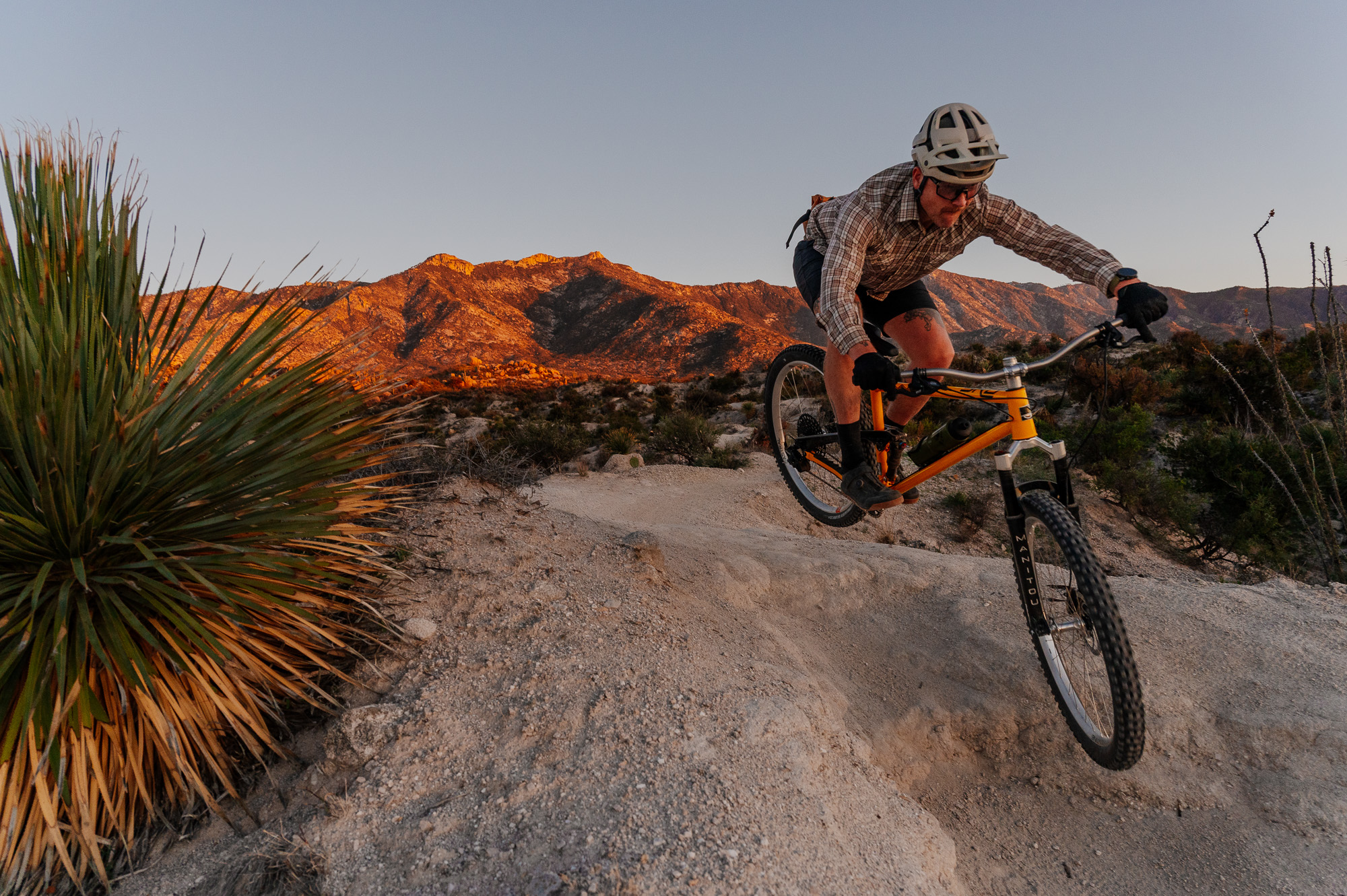
On my favorite loop, I found it to be a bike that delivered a galloping glee, bounding down the trail, discovering new side cuts and inside hot lines. It handled high-speed chunder like the rest of ’em. Without flinching, the bike felt secure underfoot, and just beckoned to be throttled. Letting off the brakes, the only reminder that I was on a 120/130 bike came to some of the bigger, deeper hits.
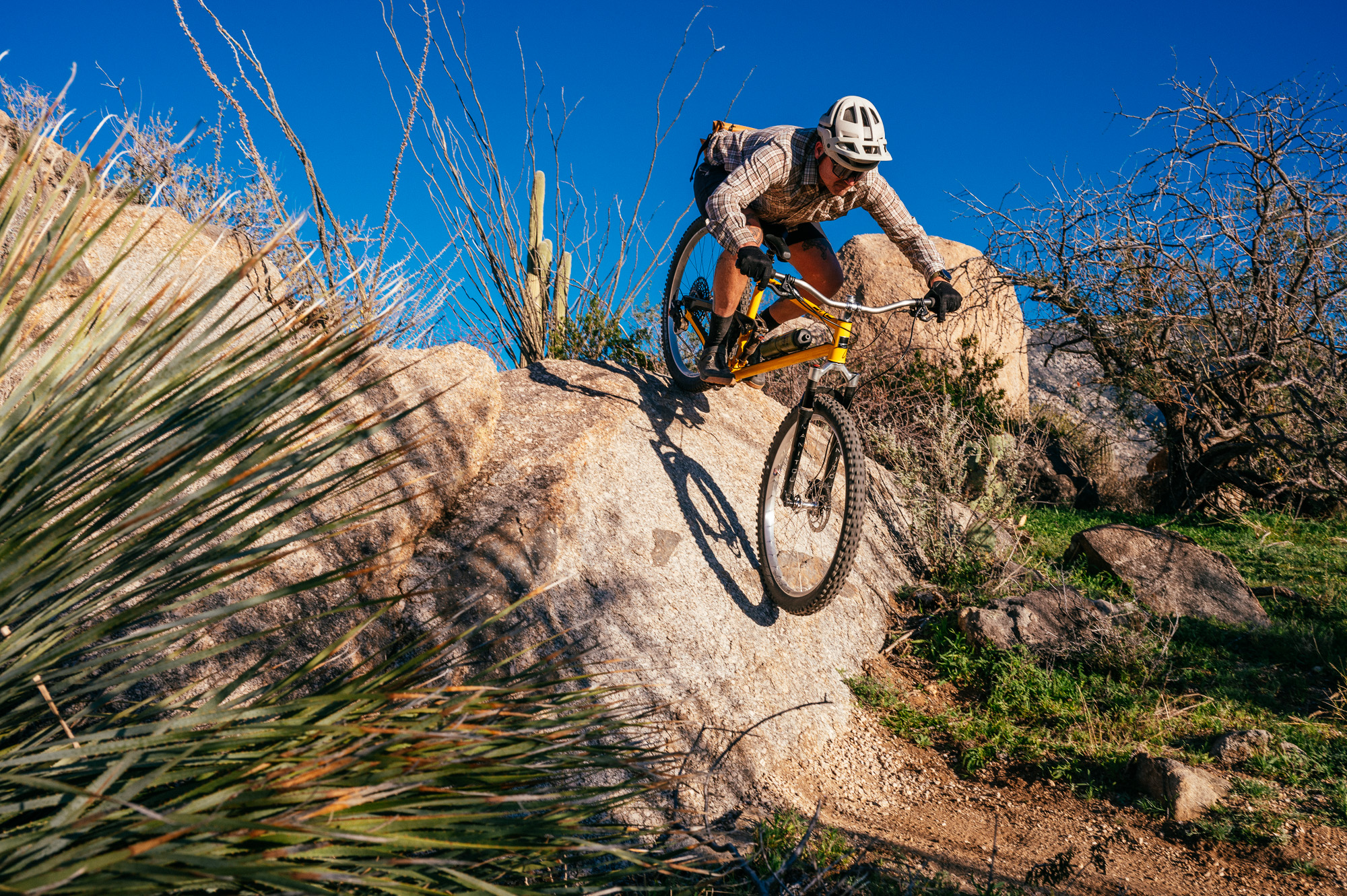
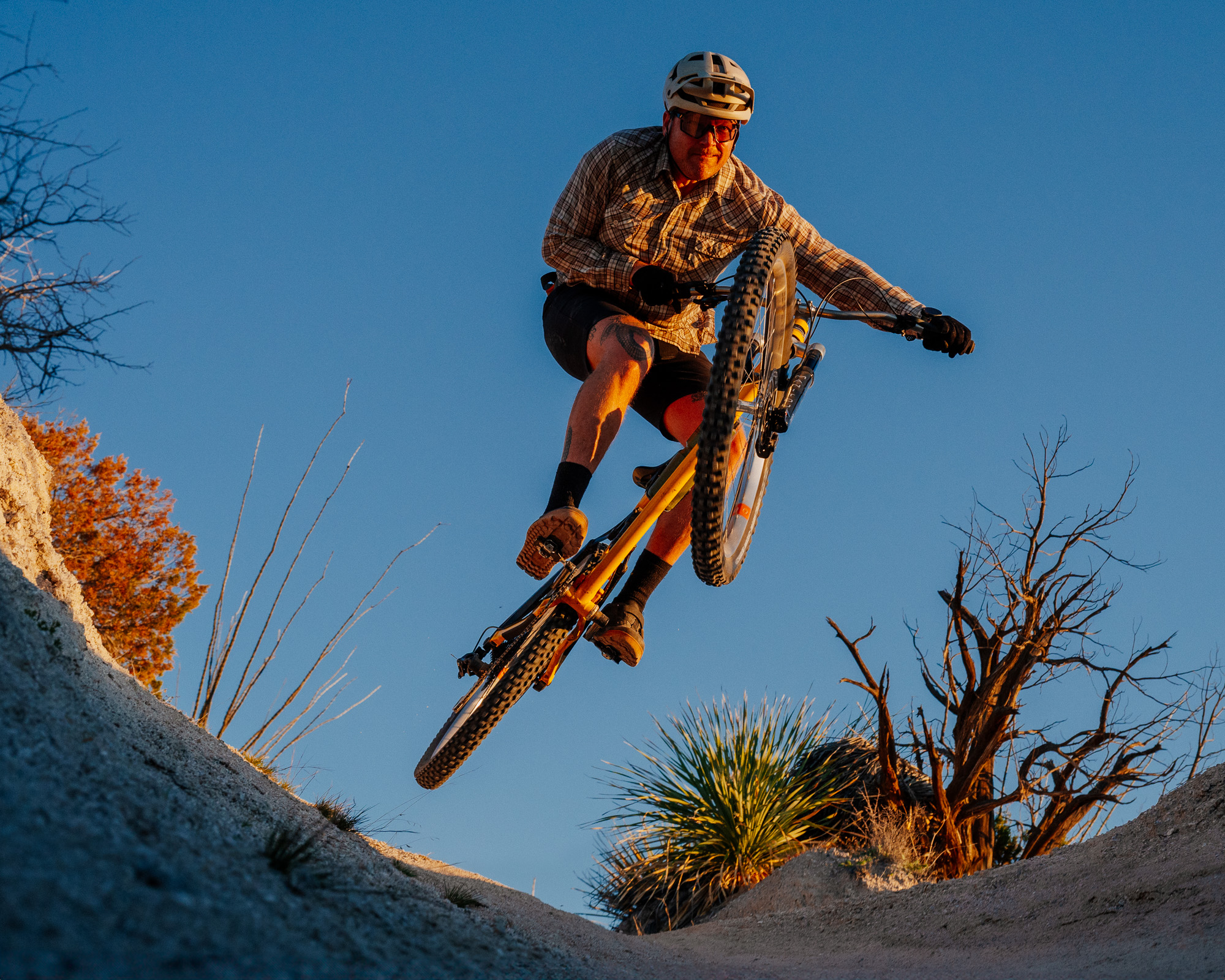
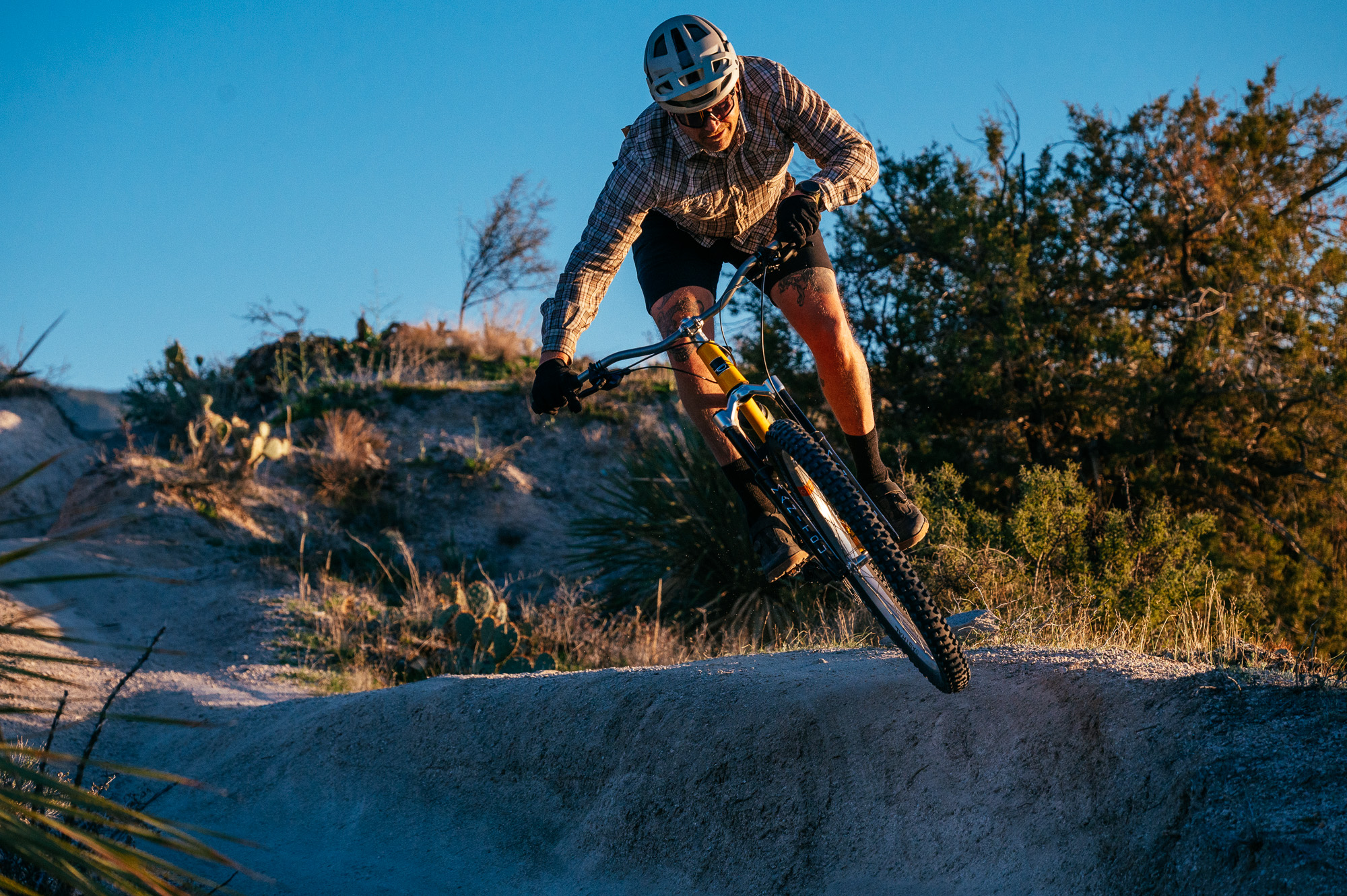
Whereas bikes like the Murmur have a good amount of spring on the rear end, the Cowboy Cookie is considerably stiffer. Nose-pivoting tight corners and flicking the rear around lands with a hardened edge that forms a foundation for immediate power transfer. There’s no holding back with this bike. It’s an ally of the immediate and won’t relent.
I will note that, whereas other Horst-Link bikes can often feel too planted to be properly hucked and jibbed, the Cowboy Cookie enjoyed being aloft. Dropping into step-downs and airing out of booters, the bike felt spring-loaded and tracked with precision. Sometimes, just carrying speed over a lip without even hefting the bike upward would cause it to float.
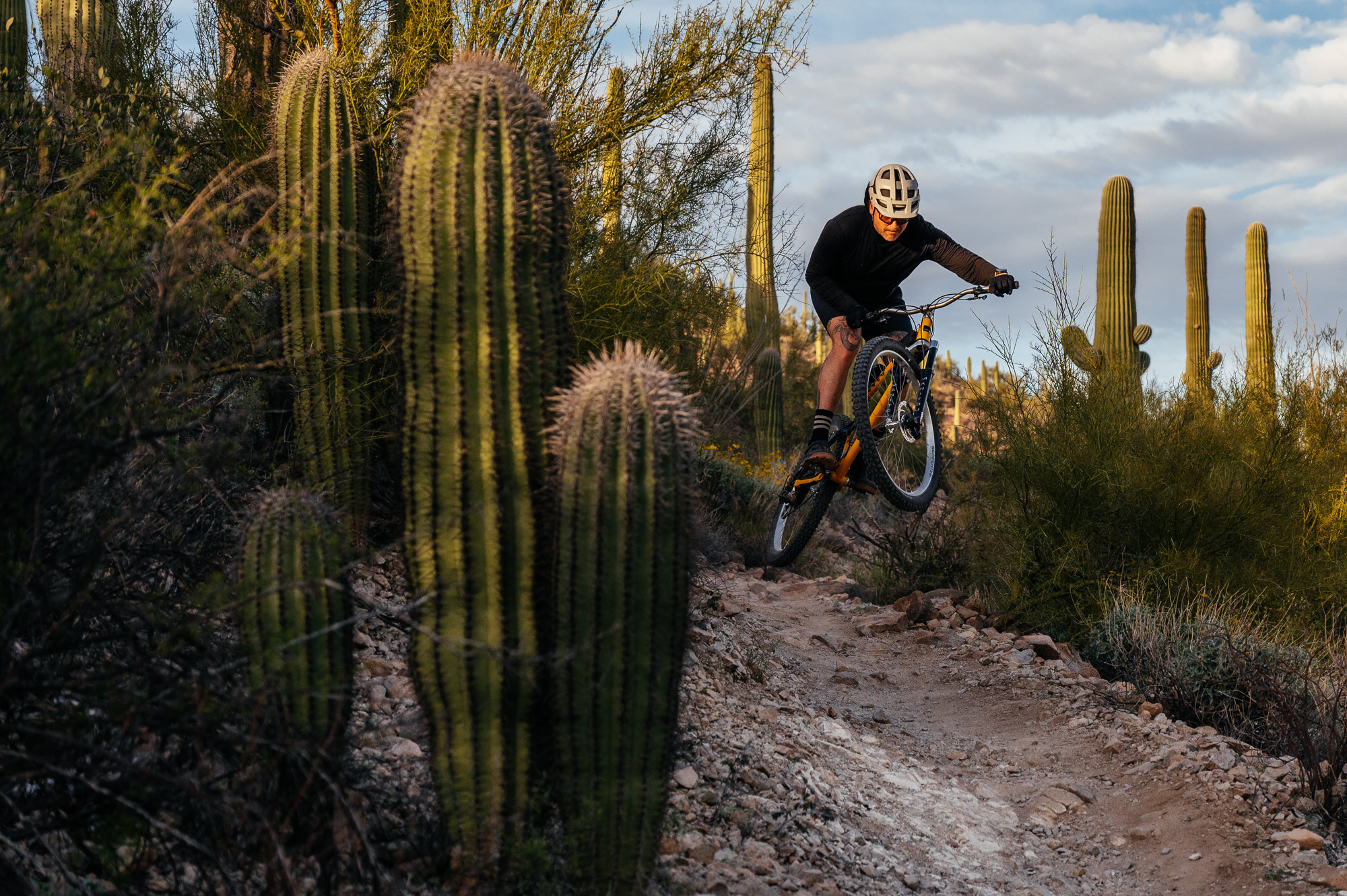
On a recent ride on Mount Lemmon, a large group of us were descending down Bug Springs when I was able to link up a series of alt lines and jibs, achieving a flow state with the Cowboy Cookie. Truthfully, there were but a few moments on that trail where I was reminded that I was on a 120/130 bike. Previously, I’d ridden Bugs on my 135/160 Murmur and worried the lower travel of the Cowboy Cookier would limit my line choice. Instead, I was able to plow through rocky lines just fine. There was but a single line in particular where a poor line choice had me bottoming out the fork and jamming my wrist pretty hard, but I kept the bike upright and rolling.
Over a multi-month, multi-hundred-mile review period that happened but once.
TL;DR
120/130 bikes are plenty capable, and at this point in my riding journey, I treat them the same as my bigger bikes. Riding that edge between personal ability while learning about a bike’s kinematics is one of the joys of riding review bikes for me. Tipping your toes over the line is what makes you a better rider. It’s those near misses that are emblematic of progression. Throughout this journey of mine, I’ve found that bigger bikes with longer travel aren’t always the answer, and it’s perhaps why I really enjoy this downcountry space so much.
Meaty, big tires, wide bars, short stem, an active rear shock, and a supple front fork transform me into a vibed the fuck out javelina on the descents while maintaining balanced, sure-footedness on the climbs. For me, this is what mountain biking is.
Riding (surviving) up and (thriving) down mountains.
Final Takeaway
The Cowboy Cookie relies on a tried and true Horst Link suspension system; its geometry is progressive for its travel, and its build construction is bomber. It’s heavier than carbon counterparts, but you don’t have to go all-metal in your build kit as I did. What I was hoping for was a solid companion for climbing and descending techy Southwestern trails, and it’s been a proper ally over the past several months.
Being made in Germany is a huge plus for me, and seeing Sour team up with its neighbors, Actofive, is a feel-good moment in the small maker bike industry.
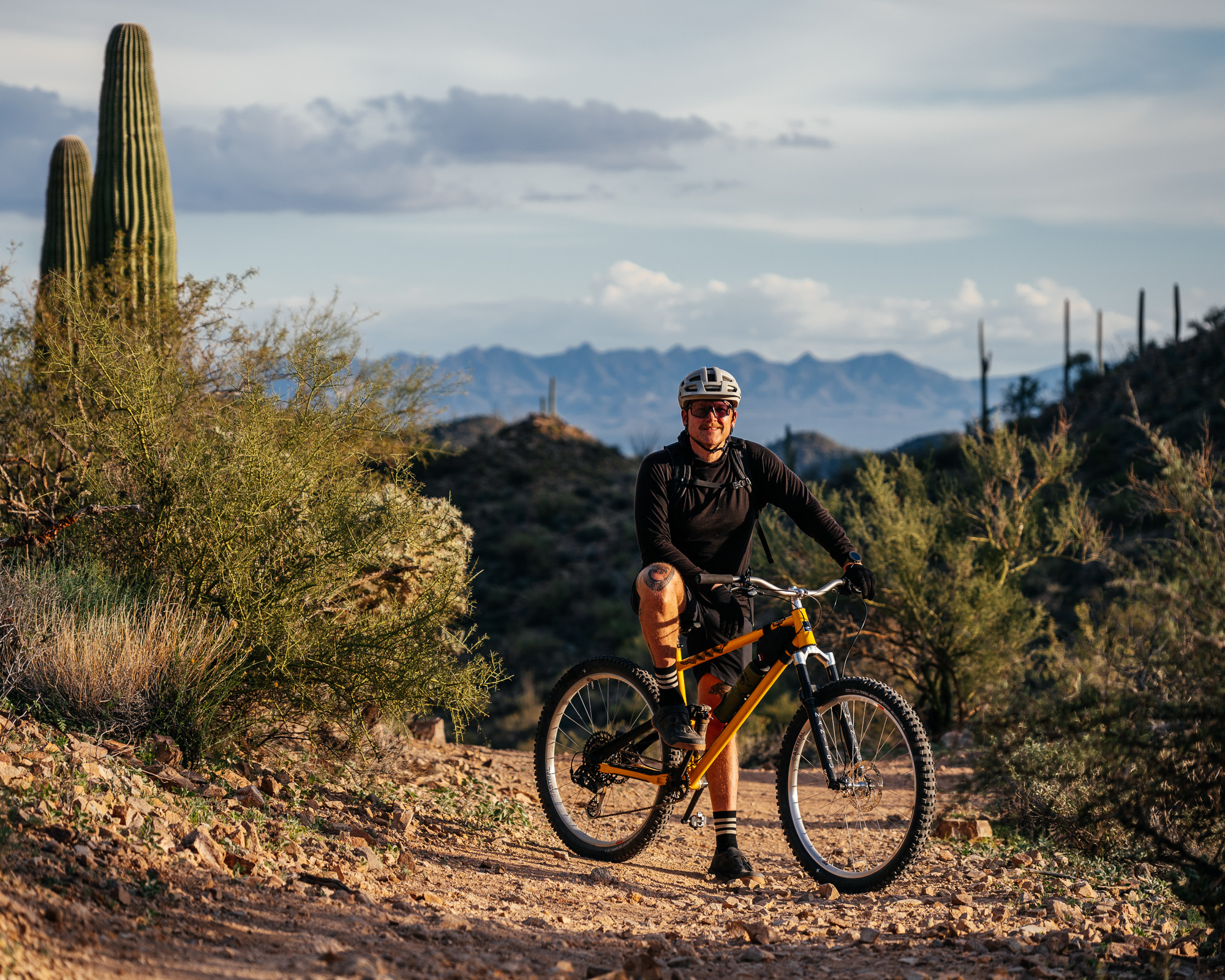
This platform is dialed. It facilitates clearing technical climbs, as you can tell from these riding photos, and initiates lift-off, offering galloping glee.
I’ve ridden many Horst Link bikes and a good number of metal full-suspensions…
…and the Sour Cowboy Cookie is my favorite yet.
Pros
- Lightweight for a metal full suspension
- Rides incredibly balanced
- Details are very pro; very German
- Bike just hauls ass downhill and isn’t afraid to climb
- Progressive geo helps tackle tech
- Custom colors available
- Look at it! It’s divine
- Big frame bag space
Cons
- Not always in stock; Sour holds pre-orders for batches
- Tariffs might affect the total price to your door in the States
- Could use more bottle bosses (a custom add-on)
- Expensive at € 3,499 for the frame, but it is still cheaper than high-end carbon bikes that will eventually wear out.
You can now pre-order the Cowboy Cookie at Sour Bicycles.