





Ever since John saw an early prototype of the Apogee One at the 2023 Made Bike Show, he’s been in love with the design. It’s taken a few years, but he was finally able to ride one for an extended review. Read on for his thoughts on what makes this steel full suspension so unique and why we chose it for MTB of the Year in 2025…
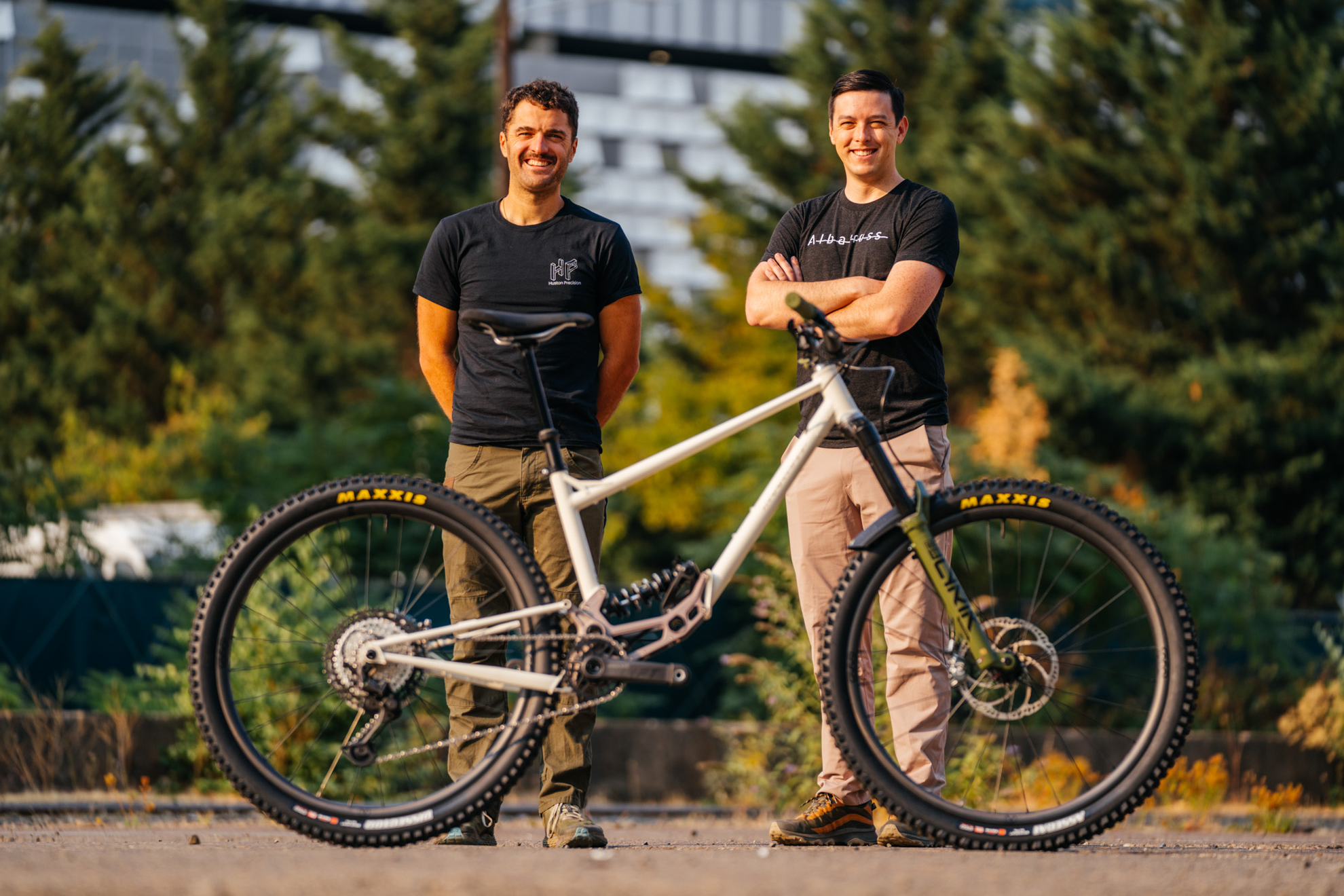
Collin and Will of Apogee Bikes with their One prototype, 2023
Apogee Bikes
Being witness to waves of innovation in the framebuilder scene is not something I take lightly. I’ve had a privileged life in this space, and it has brought some very memorable moments. One such is when I first laid eyes on the Free Float Module on an early prototype of the Apogee One – back then, it was dubbed the Albatross – at the Made Bike Show in 2023.
Apogee was born from the minds of Collin Huston and Will Hilgenberg. The two designers teamed up and developed one of the most distinctive offerings in the metal full-suspension space. This is a damn sexy bike, with one of the most original designs I’ve ever seen. In a world where everything looks so similar, there’s something nice about seeing a disruptor like this take shape.
It is, indeed, a show stopper.
I’ve ridden and owned several metal full suspension bikes and am always stoked to see new brands enter the space, particularly in the USA. For whatever reason, the US-made steel full-suspension market has never caught up to the UK and EU brands. Both of my personal full suspension bikes come from the UK, and another bike I’m reviewing comes from Germany. Yet, to date, the only builder in the USA currently offering production steel full-suspension bikes is REEB.
Needless to say, the Apogee One caught my eye, and I expressed an interest in reviewing one as soon as they were ready. Flash forward two years, and the One arrived at my door.
Apogee One Quick Hits
- Frame only $4,295
- Completes starting at $7,455
- Size XL weight as reviewed: 36 lbs
- FFM machined by Huston Precision in Tahoe, California
- DuoFrame made by Rat King Frames in Seattle, Washington
- Sizes:
- Small: 4’ 11” – 5’ 3”
- Medium: 5’ 2” – 5’ 8”
- Medium Large: 5’ 5” – 5’ 11”
- Large: 5’ 8” – 6’ 2”
- X-Large (reviewed here): 5’ 10” – 6’ 6”
- Fork Compatibility: 150-160 mm fork compatible
- Rear Suspension Travel: 140 mm
- Shock Size: 185×55 Trunnion Shock
- Rear Dropout: UDH-Compatible
- Wheel Size: 29” Front and Rear
- Rear Tire Clearance: 2.4” Max
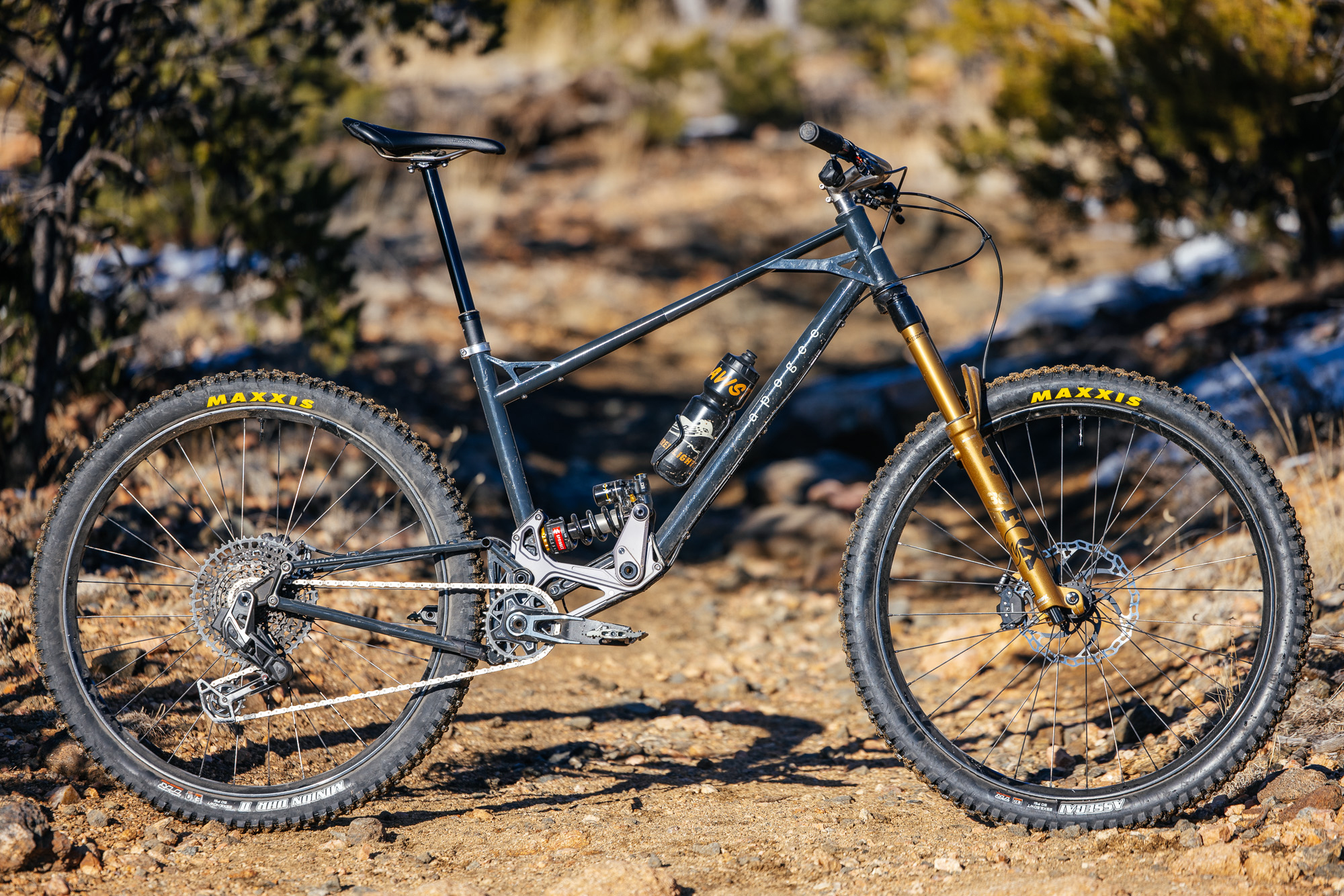
Apogee One Build
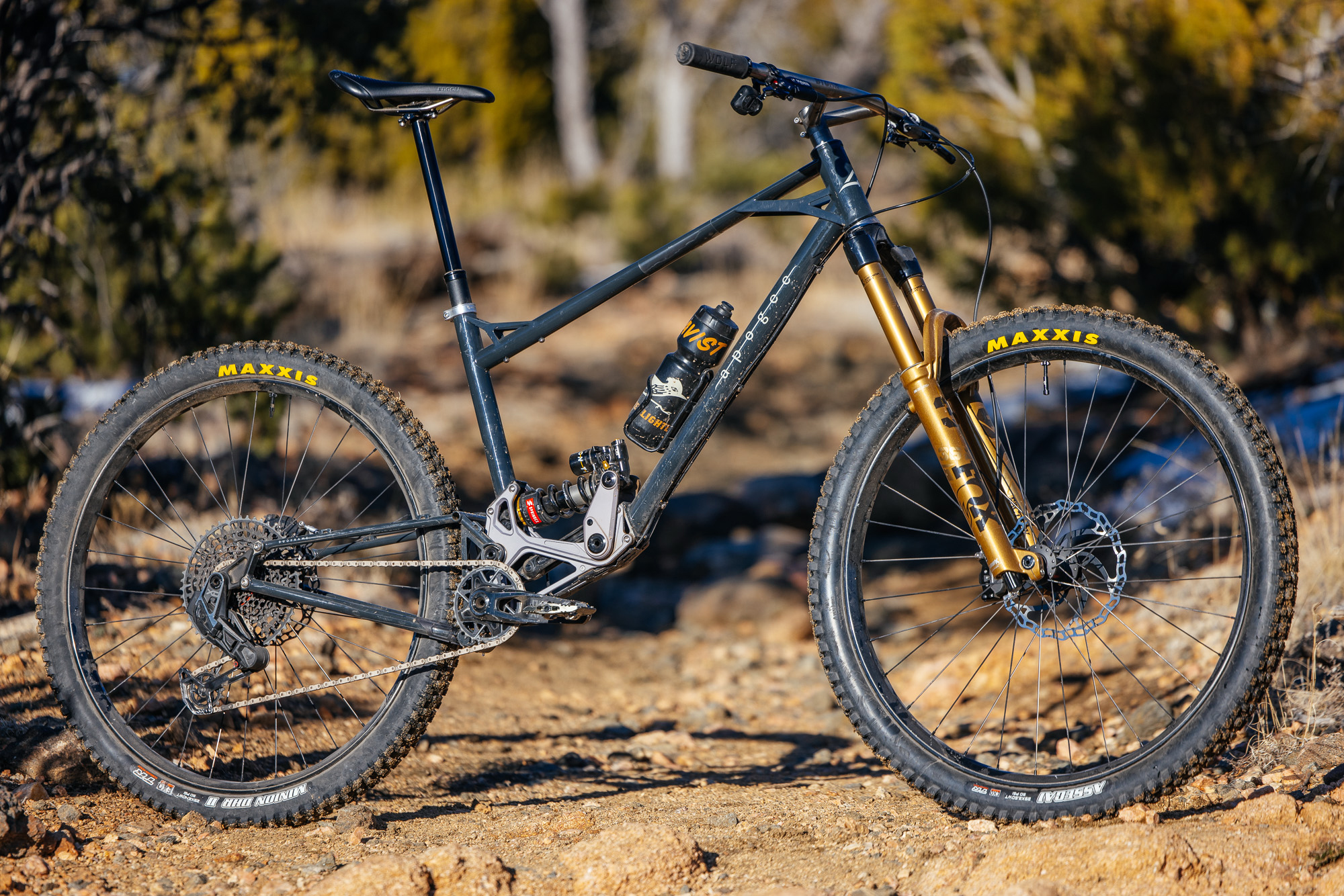
I took receipt of the Apogee One late last summer, just in time to still ride some of the higher alpine trails here in Santa Fe. Immediately, I replaced some of the components on the stock build: the dropper, which I swapped out for a 242 mm travel Wolf Tooth (tell me you have long legs without telling me); the fork, which I swapped the 150 mm Lyrik for a 160 mm travel Fox 36; and the handlebars, for my BTCHN Bike Ti Bullmoose.
Finish Options
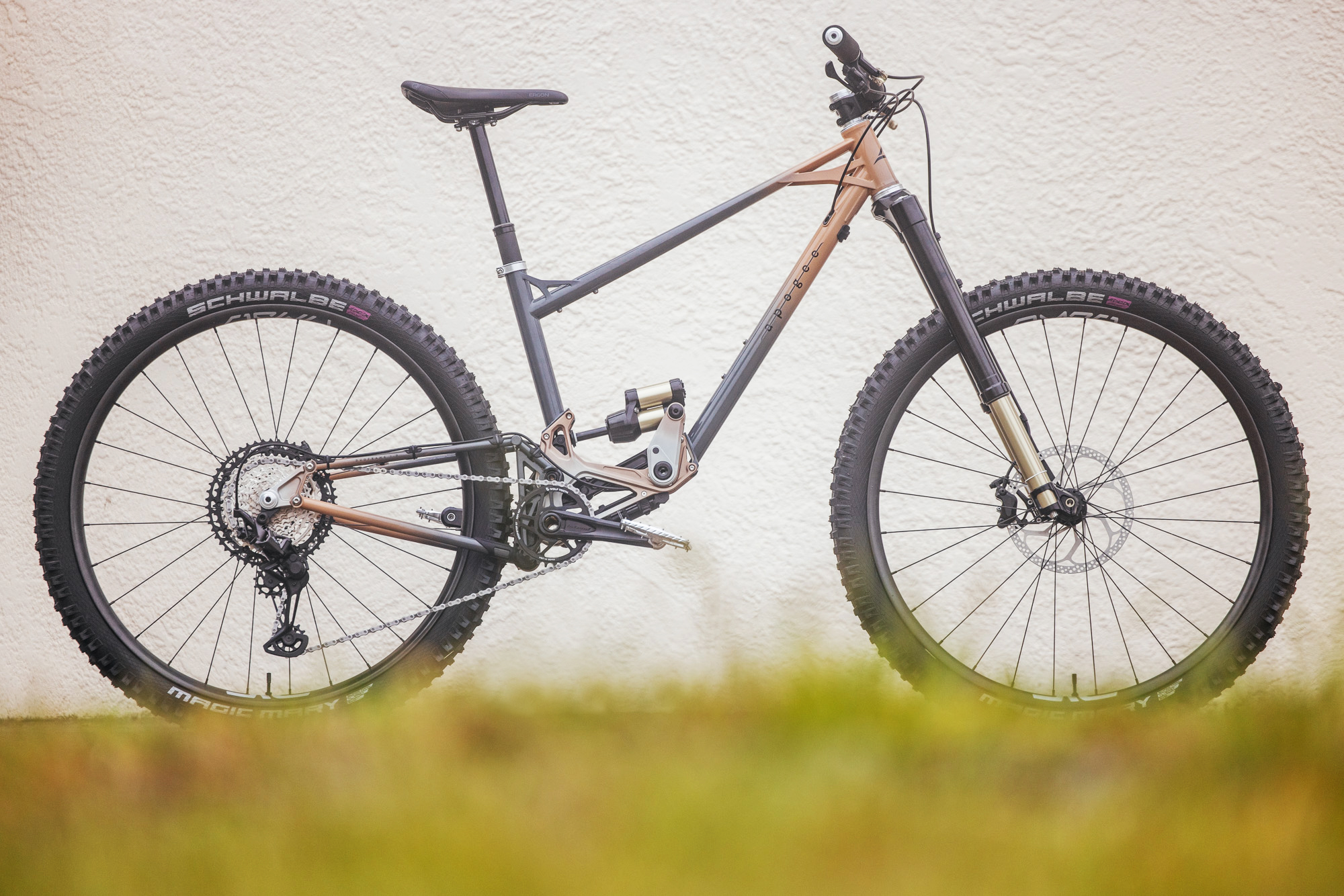
Apogee has rolled out some exquisite finish options for the One, including a “Dune” ombré I documented at this year’s Sea Otter Classic and again at the 2025 Made Bike Show. Other options include Manzanita Root, Potter’s Clay, Dark Beach Stone (reviewed here), and Meteor Fade. If you want to go custom with your paint and anodizing, Apogee is more than willing to work with you to create your dream bike. Personally, I really dug this custom anodized FFM that Apogee displayed at the 2024 Made Bike Show.
If you’re spending this much money on a bike, you might as well make it truly unique.
Rider Profile
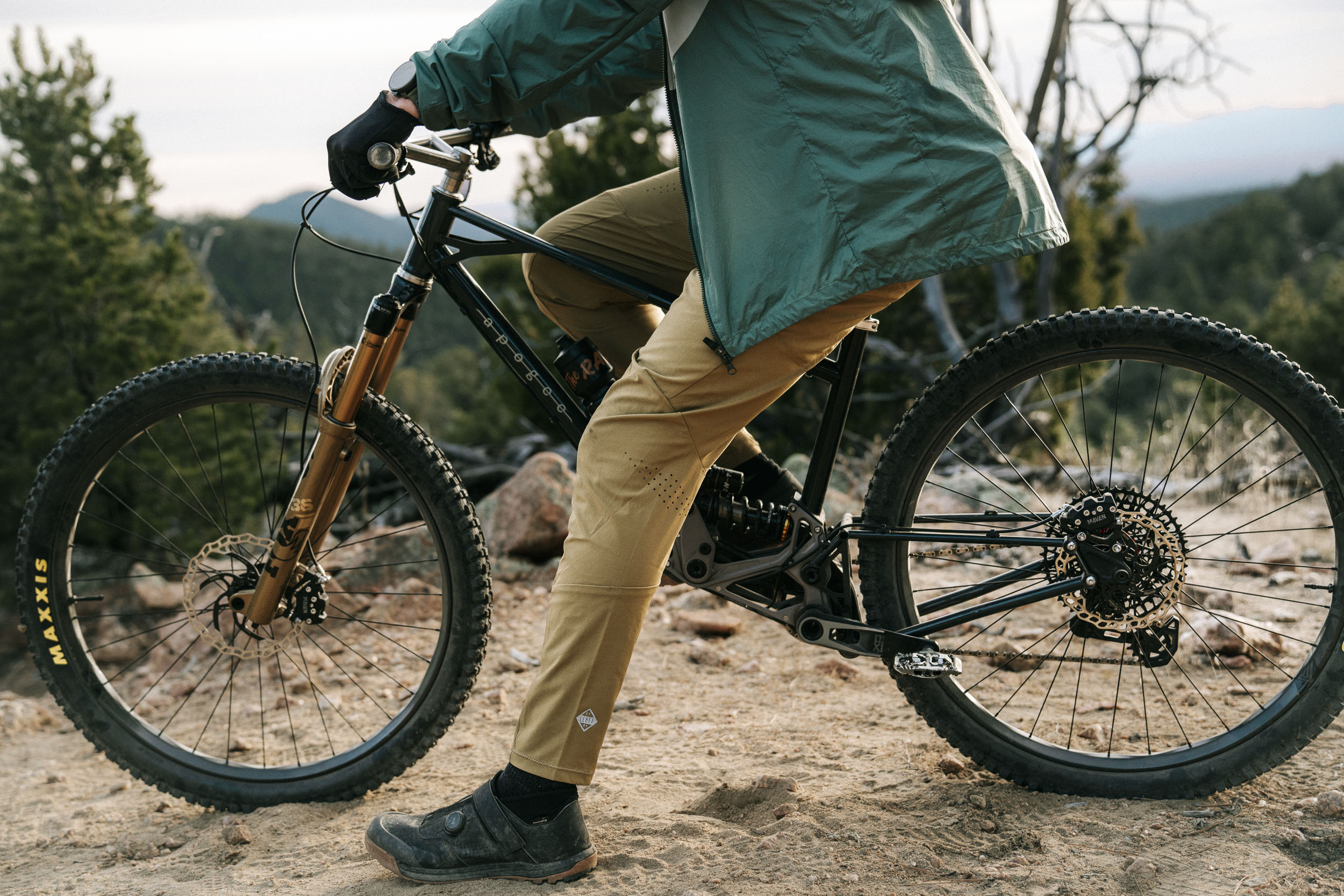
I’m 6’2″, 200 lbs, with long legs and long arms. In these photos, my saddle height is 83 cm. My riding is exclusive to primitive and technical singletrack. Steep up, steep down, loose, chunky, with a few moments of respite found in some “flowy” sections. I don’t ride park, either. In terms of riding style, I like to actively use the trail, hitting different lines each ride and jibbing all the way down. I prefer a supple front and active rear in terms of suspension setup.
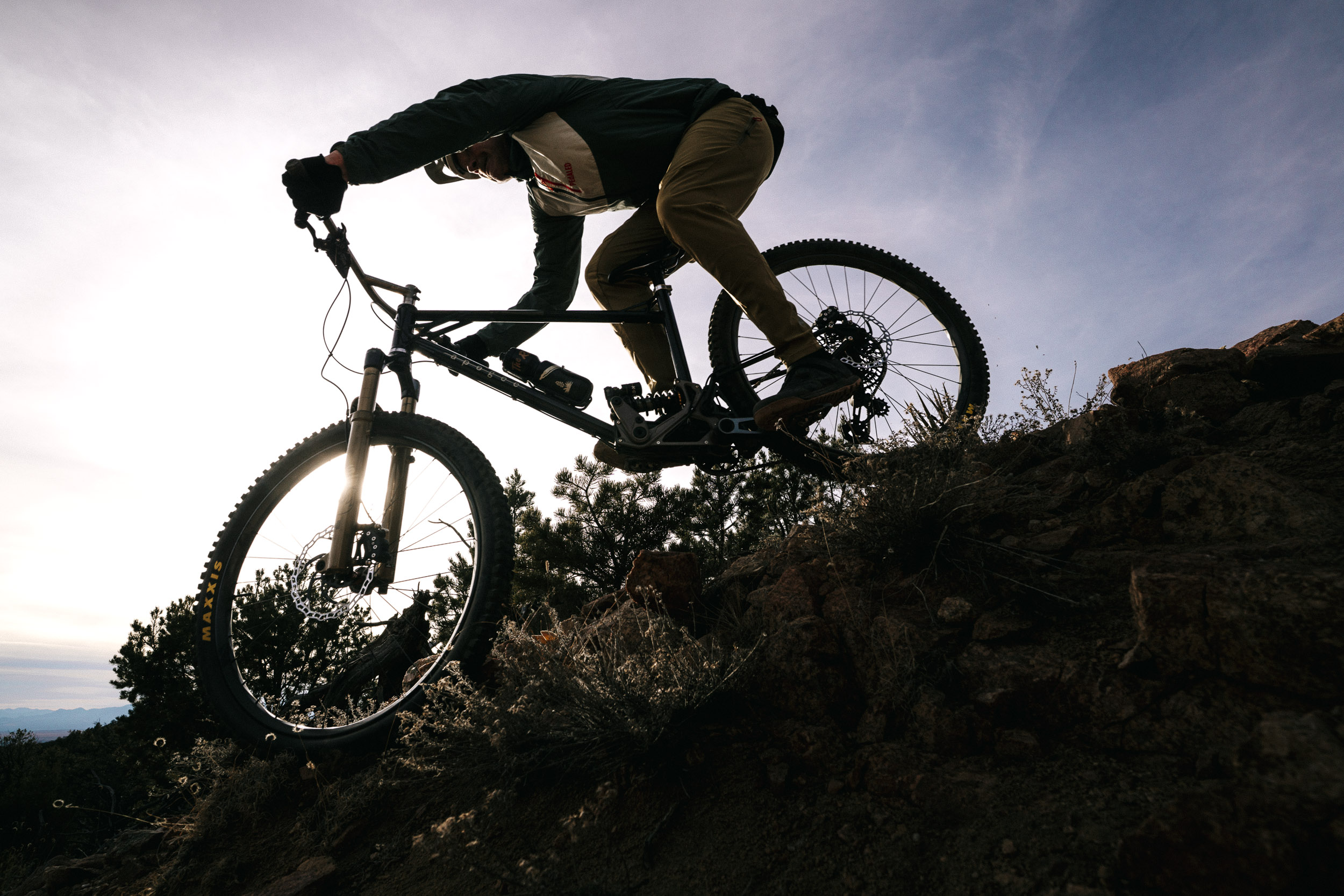
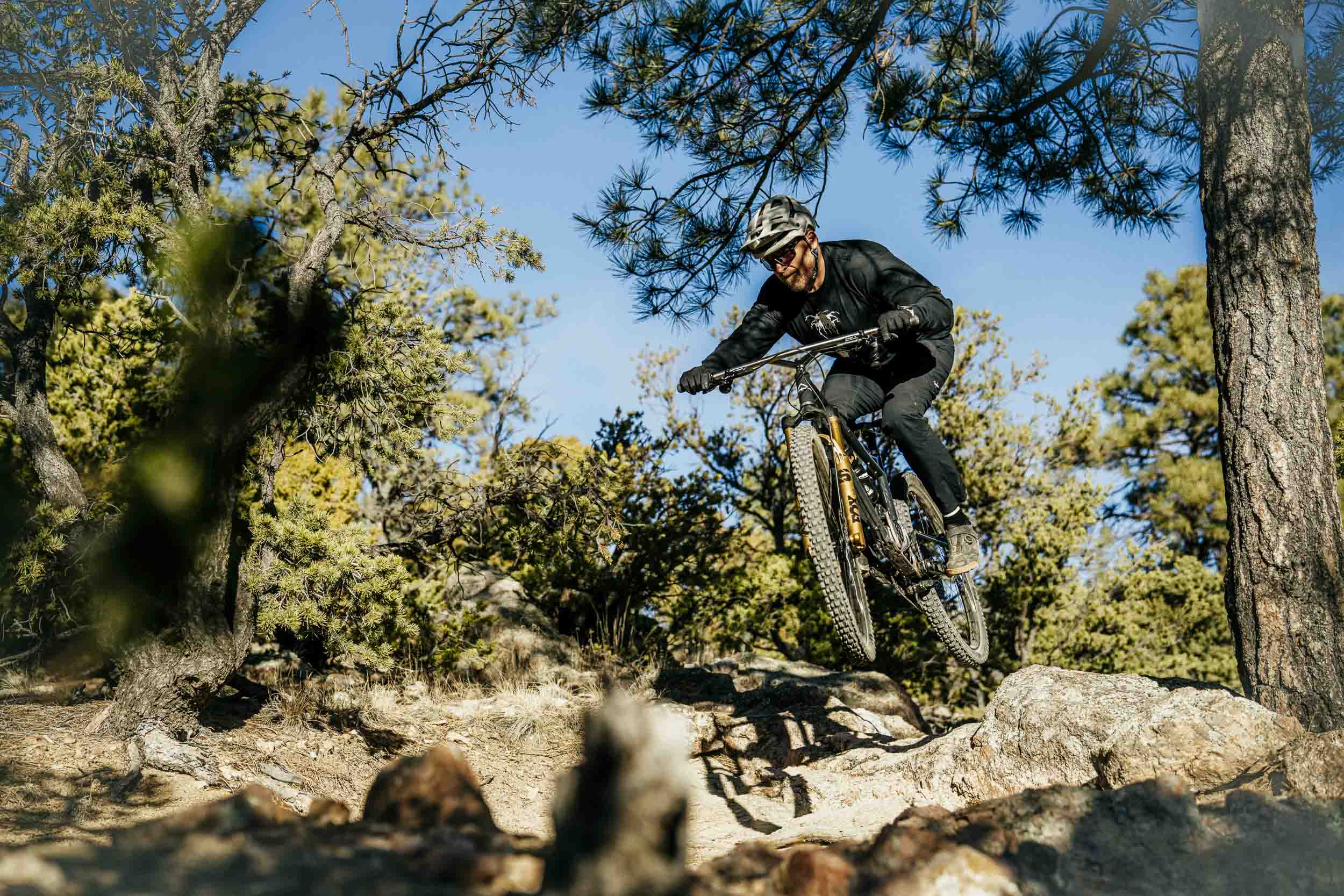
I’d rather have my extension longer than short, so when I received the bike, I put on one of my BTCHN Ti Bullmoose bars, which have an effective reach of around 50 mm, offsetting the bar’s backsweep. Most importantly, these bars flex a lot more than modern cockpits, and I felt like, when paired with the right suspension setup, they helped dampen the front end of the bike.
Most of the miles I put on the One were on my lunch loop, but the bike’s abilities came alive during my favorite longer, three-hour rides.
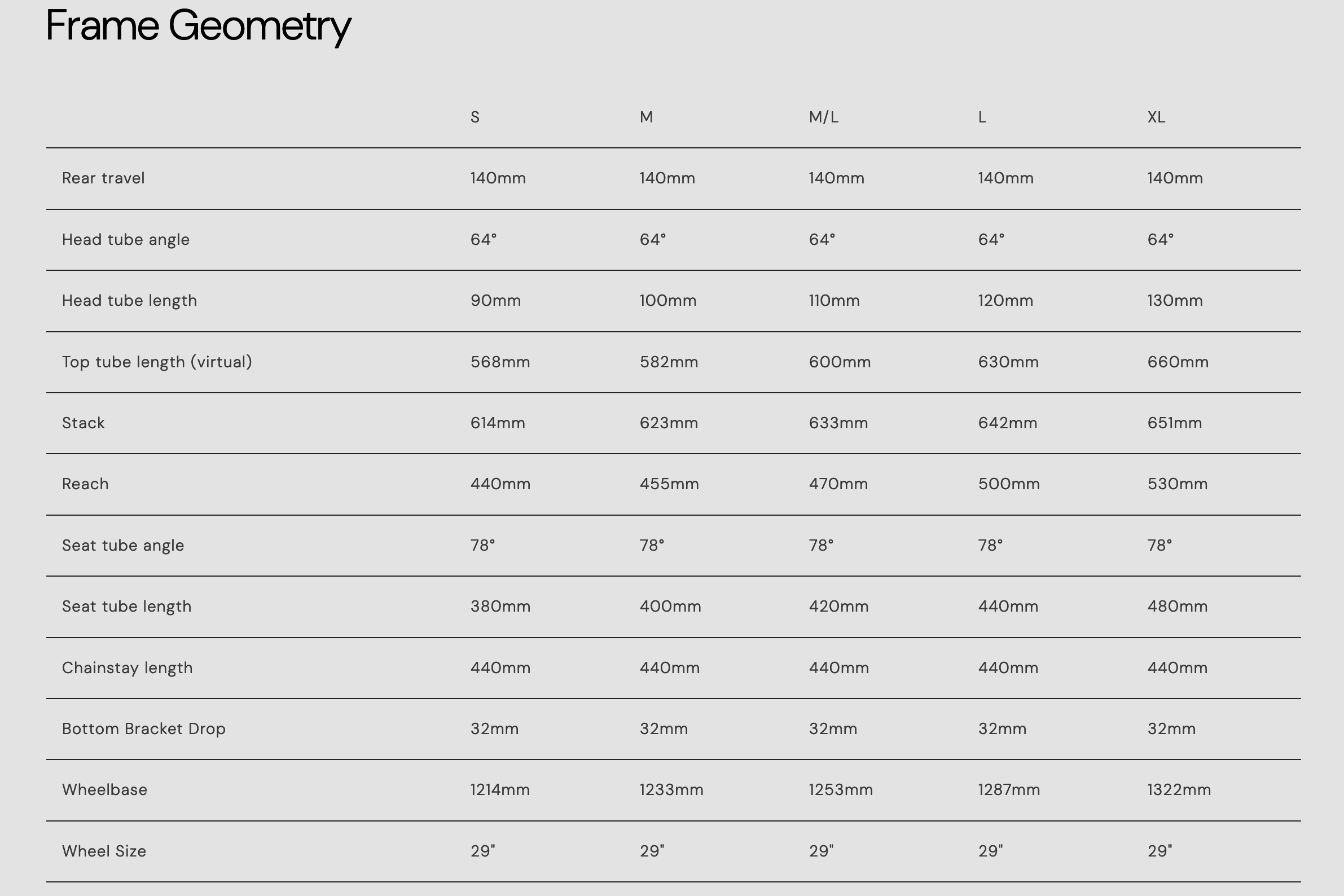
Geometry
Using the effective top tube length for sizing, I opted for the size XL as a 6’2″, 200 lb human with long legs and arms. The steep seat tube angle pitches the rider forward, over the front of the bike, so even this long-looking effective top tube ends up feeling much shorter. Since all of our climbs are on steep, technical singletrack, I like to feel balanced on the climbs and descents.
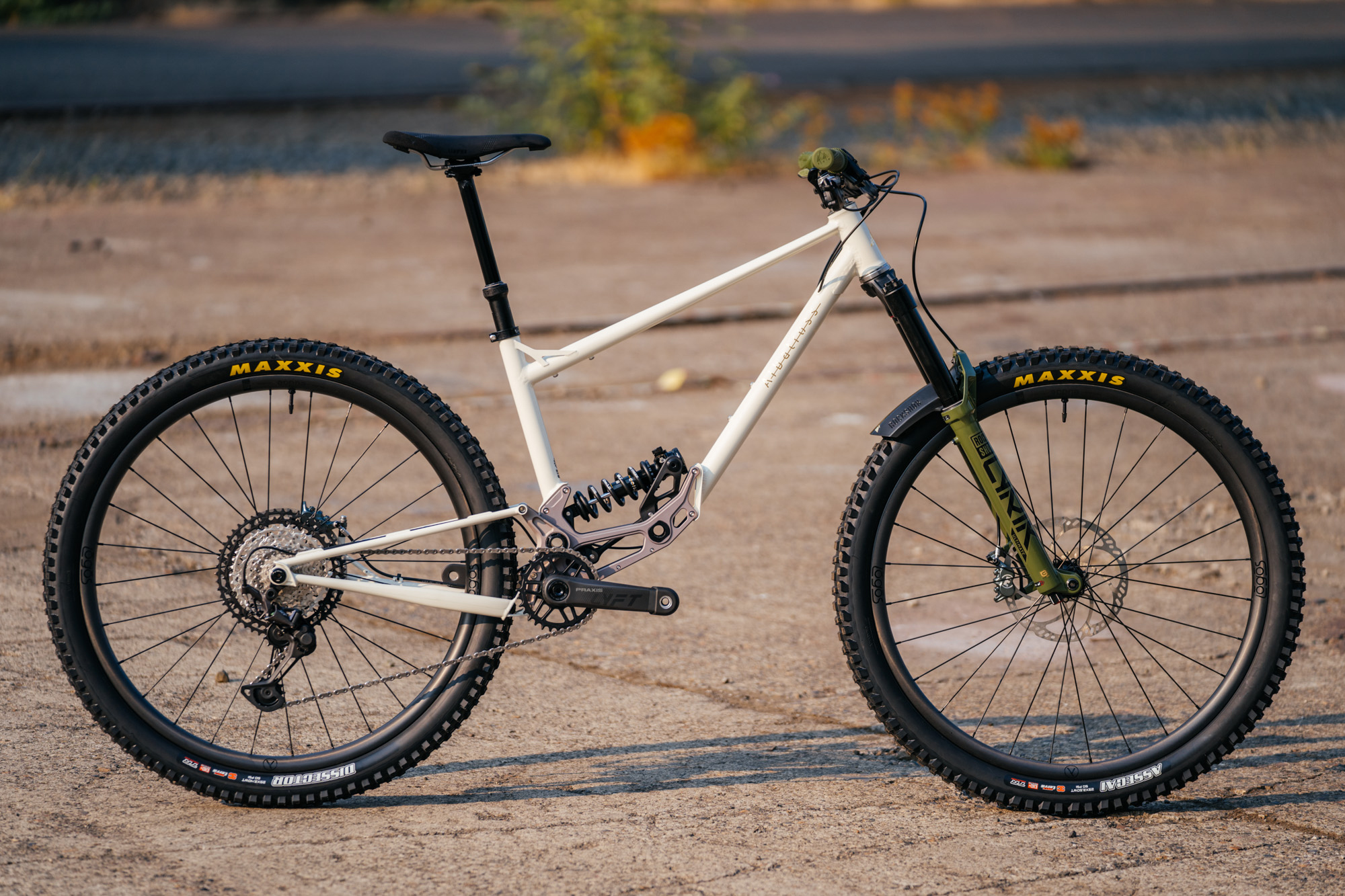
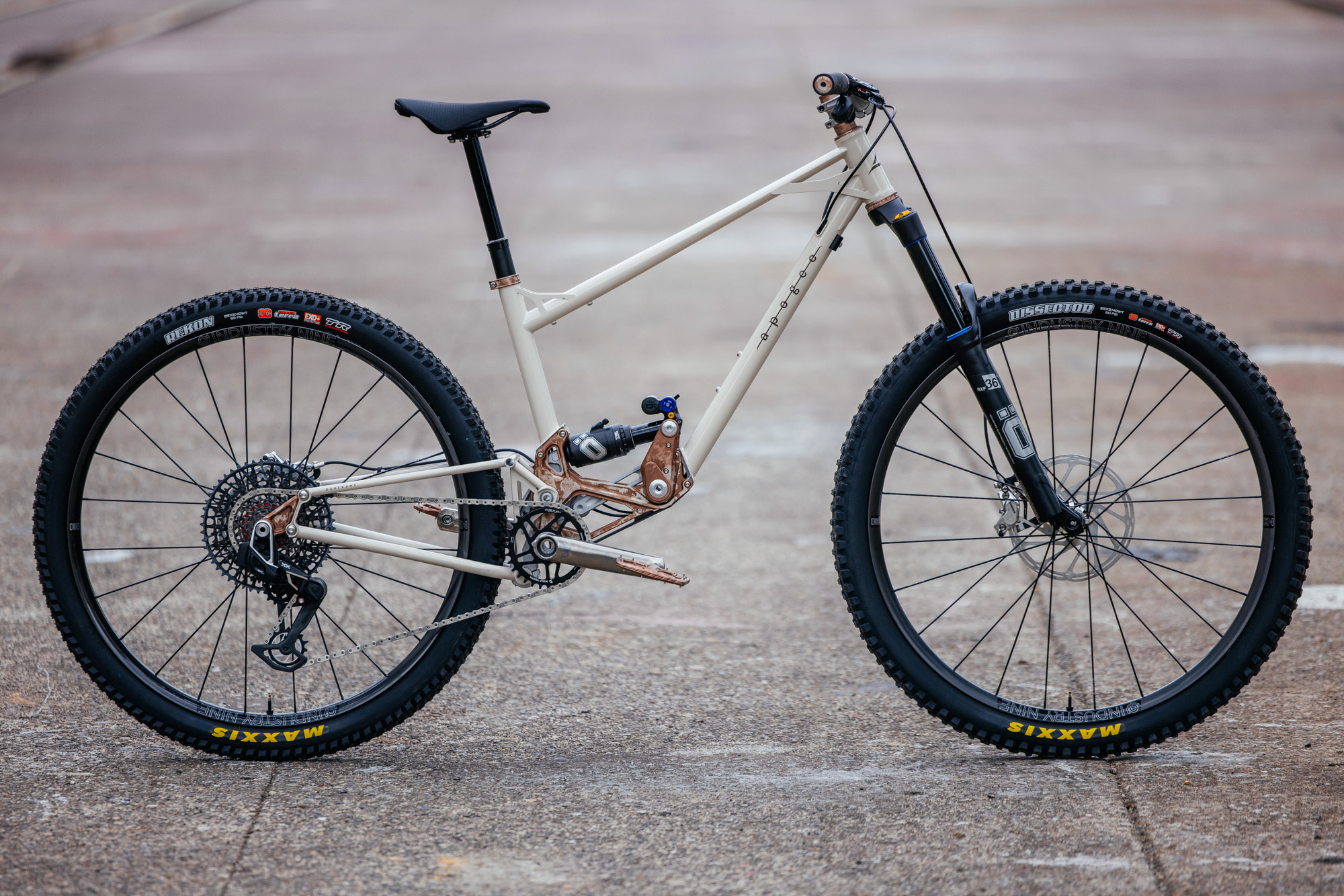
The Apogee One Prototype (then called Albatross), left, 2023. Right, the Apogee One production model, 2024
Frame Details and Evolution
The One is made up of a few elements. Its chassis is the DuoFrame, composed of a front triangle and a rear swingarm. This is then bolted onto the Free Float Module. Finally, the dropouts are bolted onto the rear swingarm. At the 2025 Made Bike Show, the Apogee team let it slip that they’re developing new dropouts that will allow some adjustment to the rear center length. Will told me:
“We designed the swingarm with modularity in mind and have a few options for dropouts that are ready to be released in the next few months.”
As of the current model, I have counted eight M5 bolts that attach the steel frame and swingarm to the FFM, plus four additional M8 bolts attaching the dropouts. Apogee provides torque specs for each of these bolts for when or if you need re-torque for service. During my review, I had no issues with bolts rattling loose or creaking, save for the rear brake caliper jostling loose.
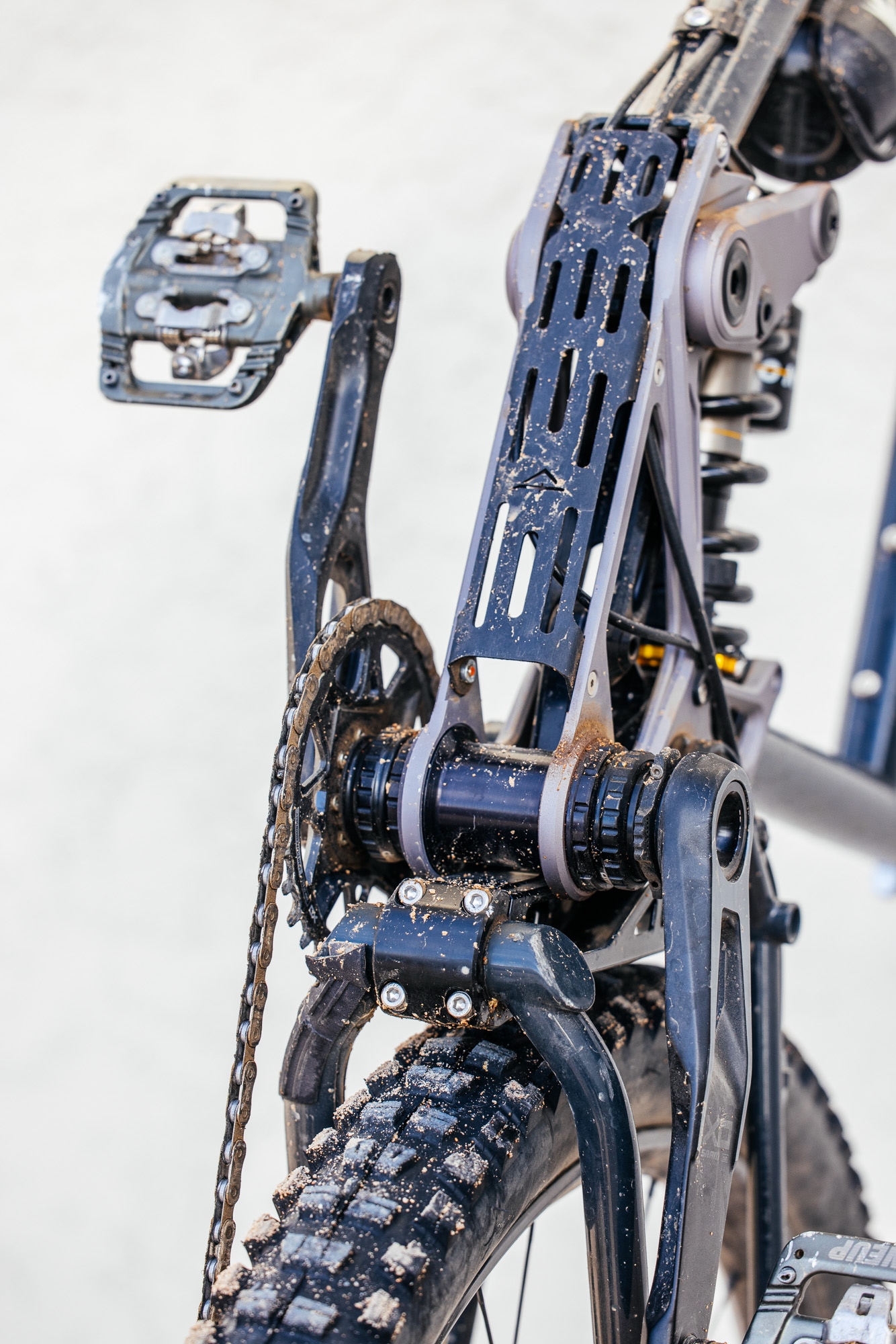
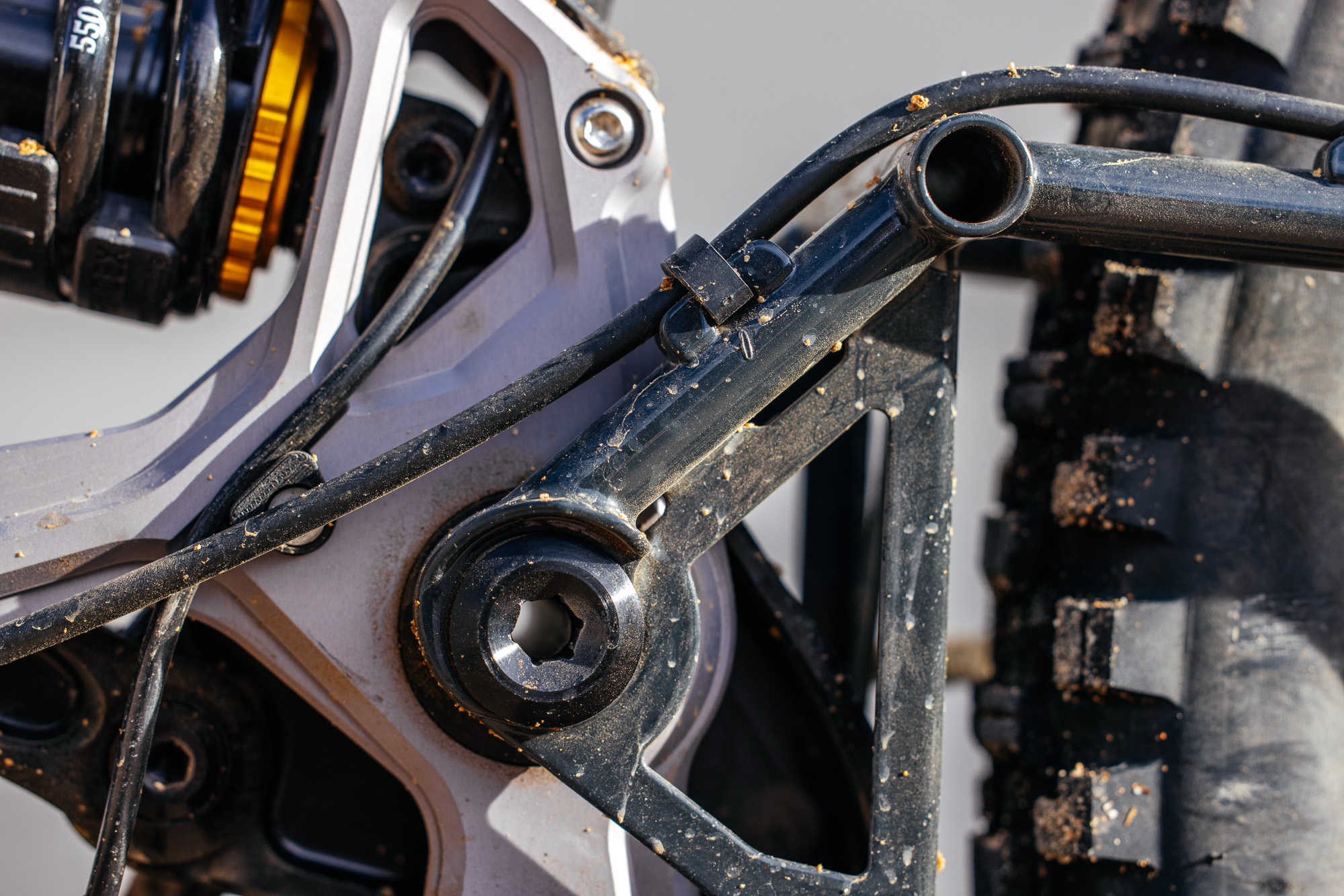
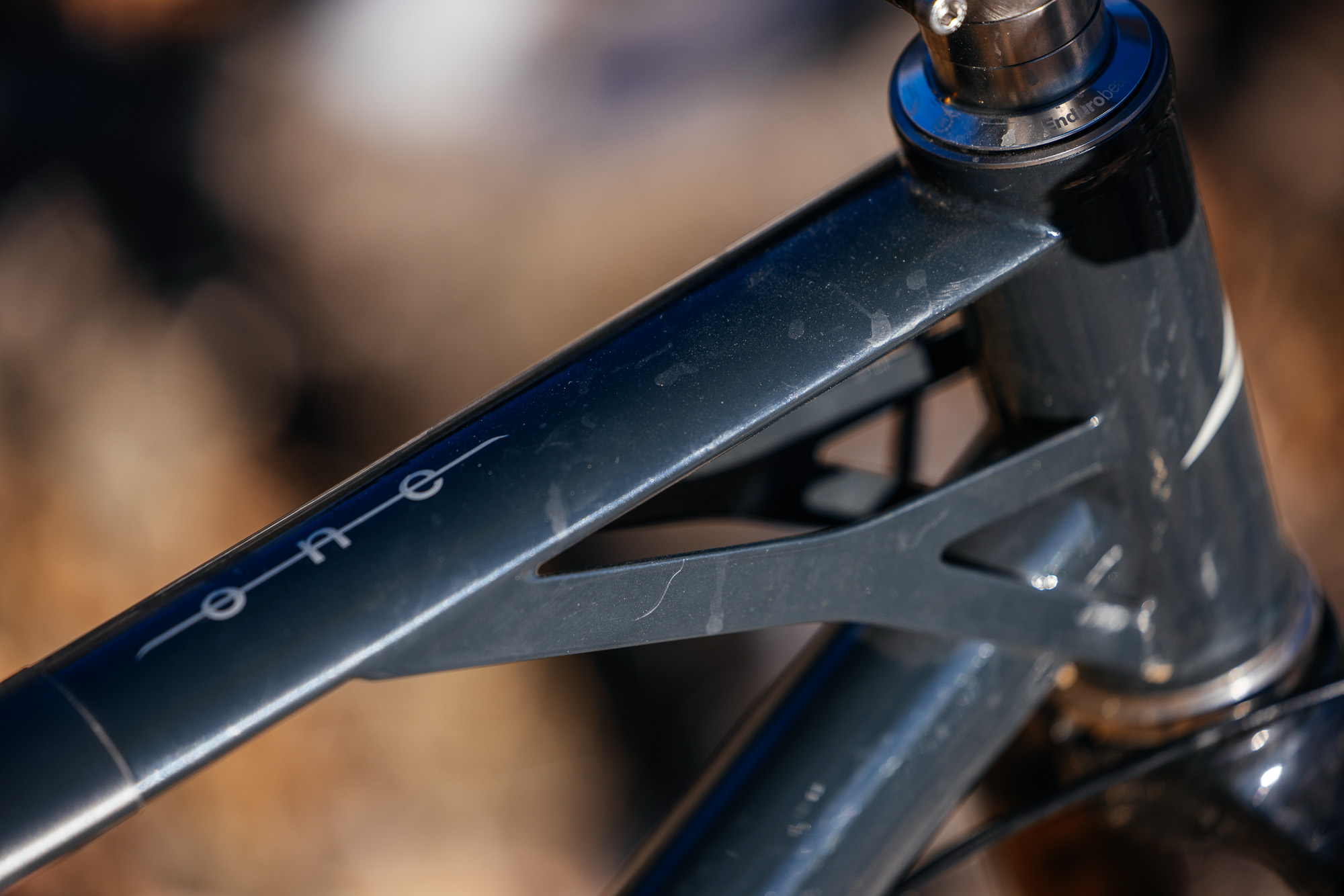
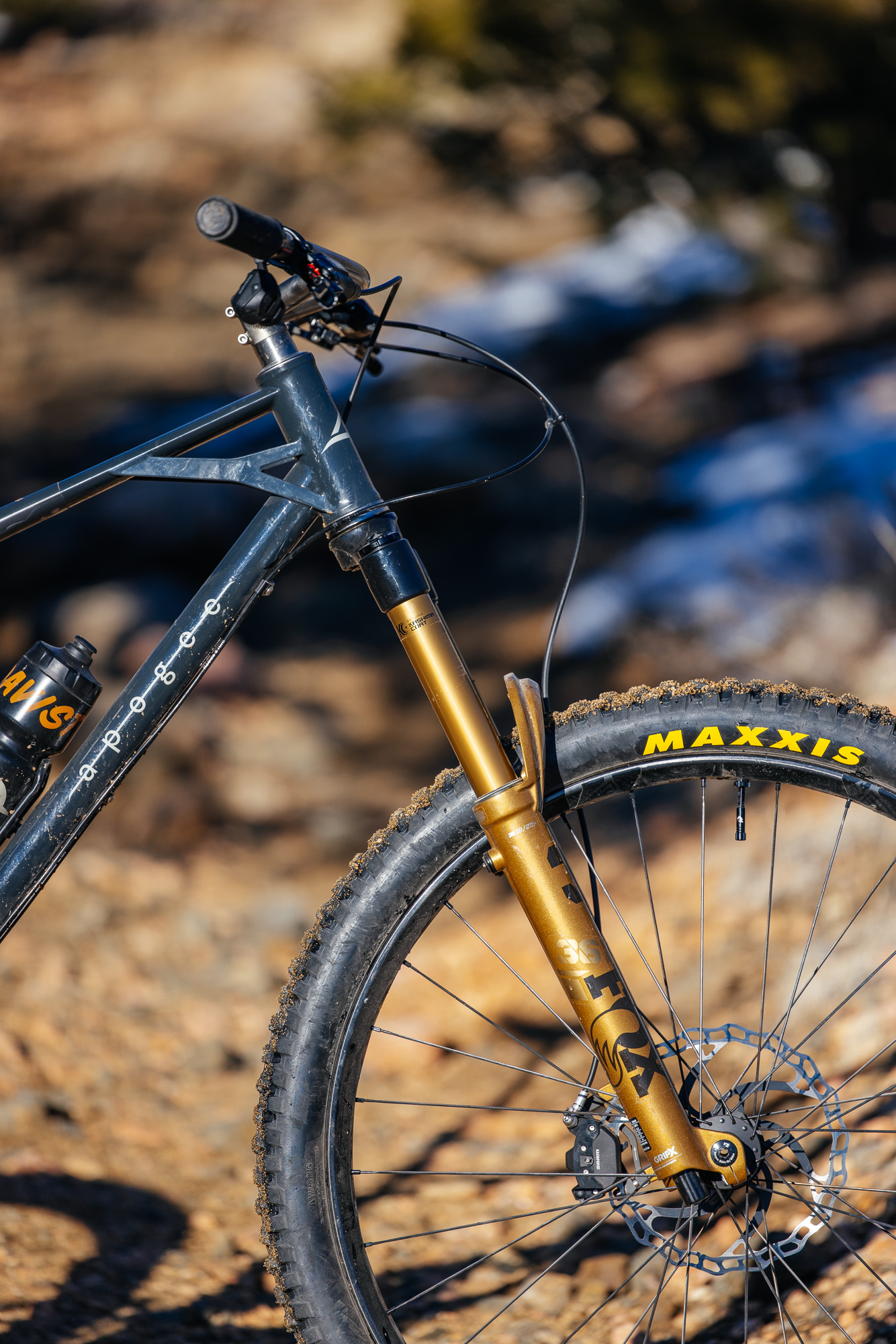
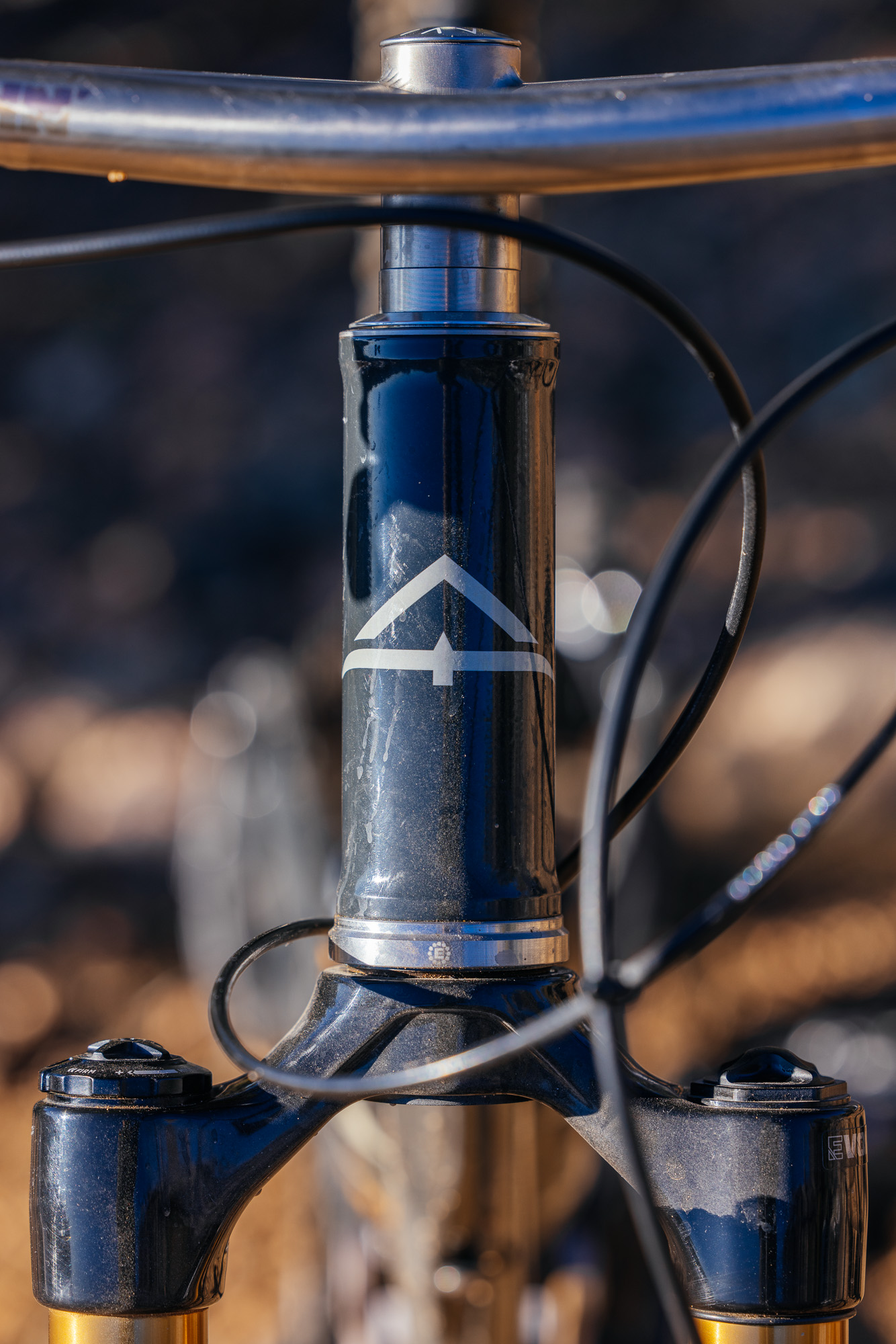
Looking at the head tube of the production model One, the plate gusset detail from the seat tube cluster has been added, along with a traditional gusset under the downtube. There’s also an internal routing port. Don’t worry, the internal routing on the One is a cinch thanks to the FFM’s design, relying on the open ends of tubes that enter the FFM and exiting along designated paths to their destination. The 242 mm travel dropper post I installed even pokes out of the bottom of the seat tube a wee bit, making installation a breeze.
Once again, Apogee’s owner manual has the cabling diagram for the One available for you to check out…
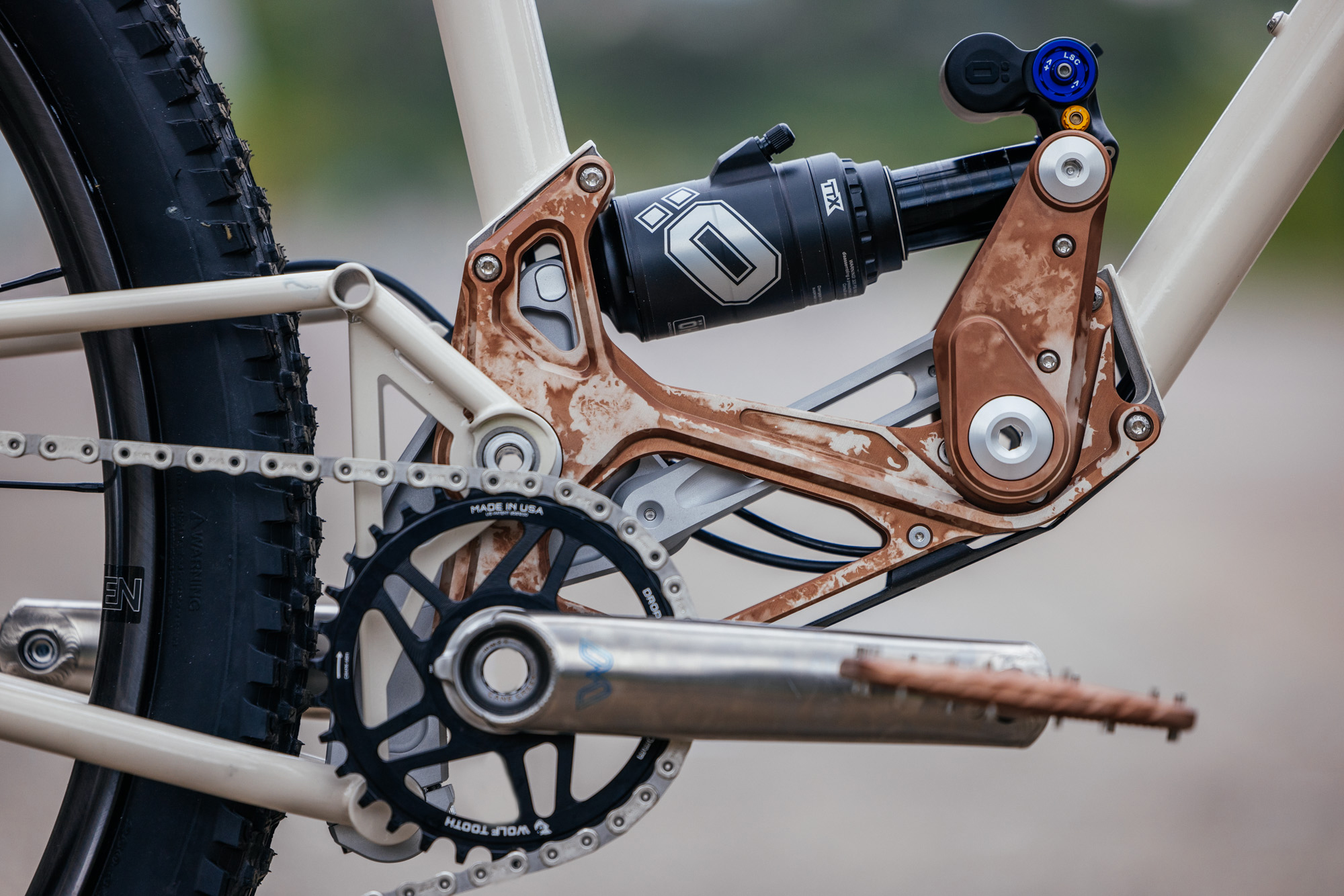
Free Float Module
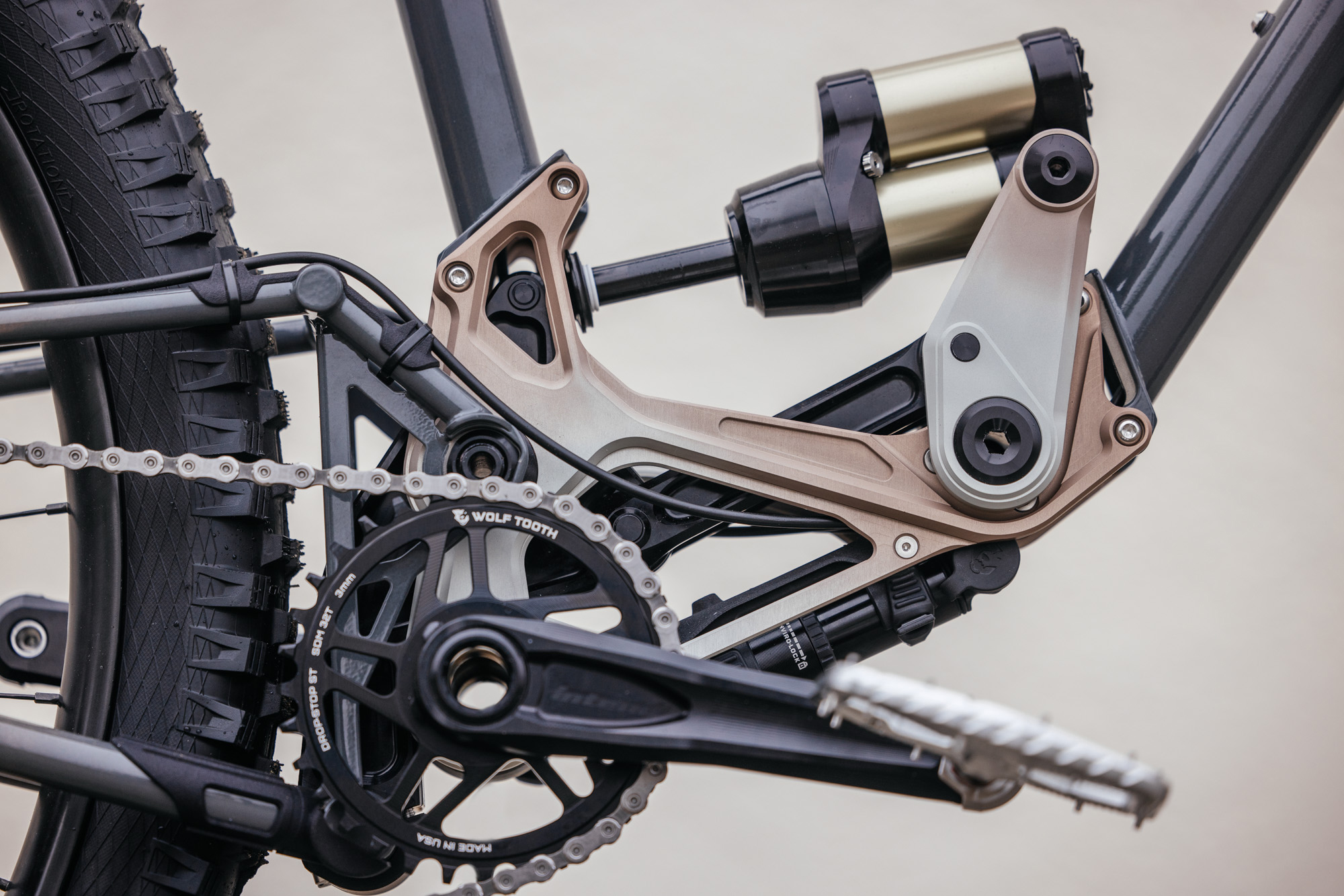
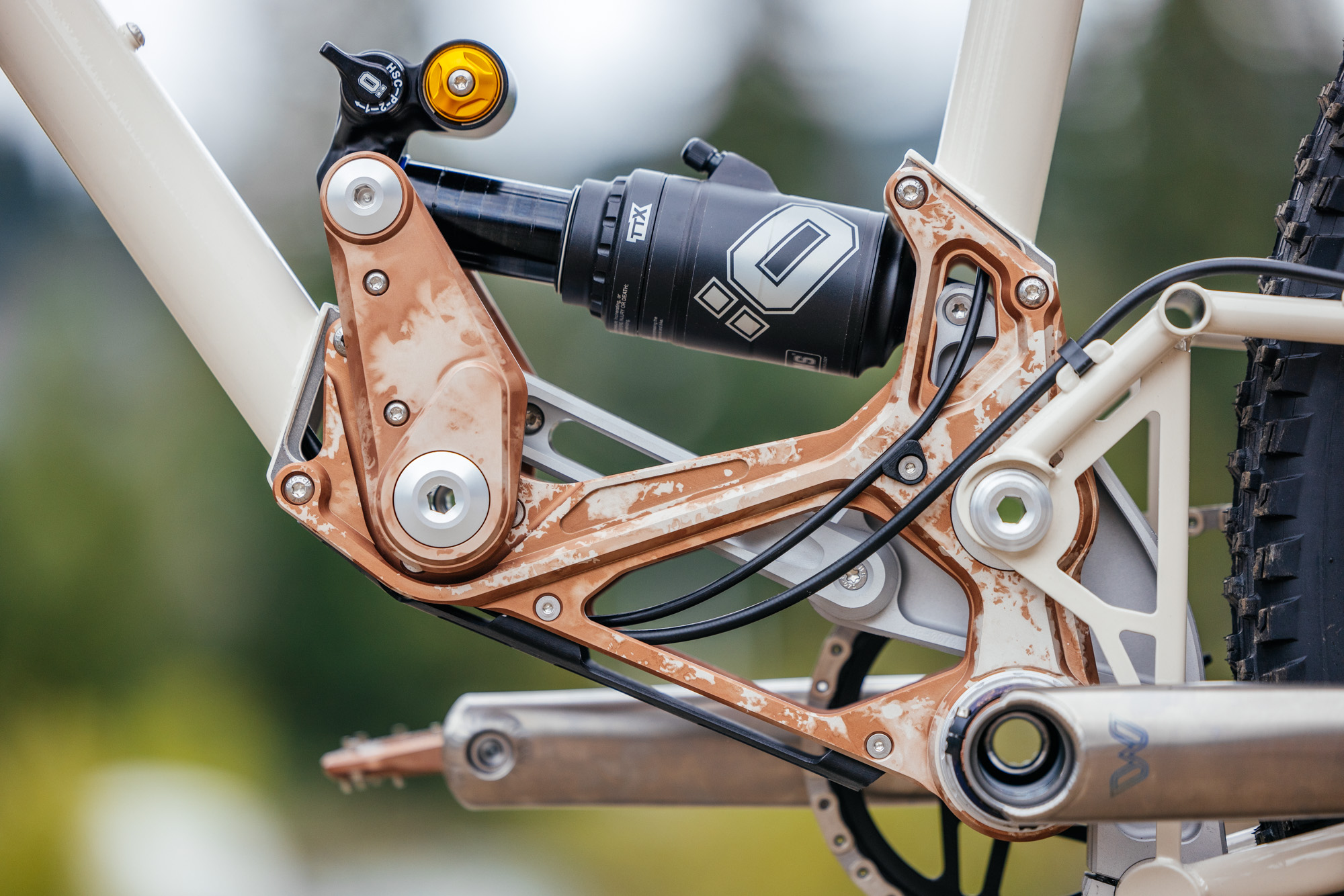
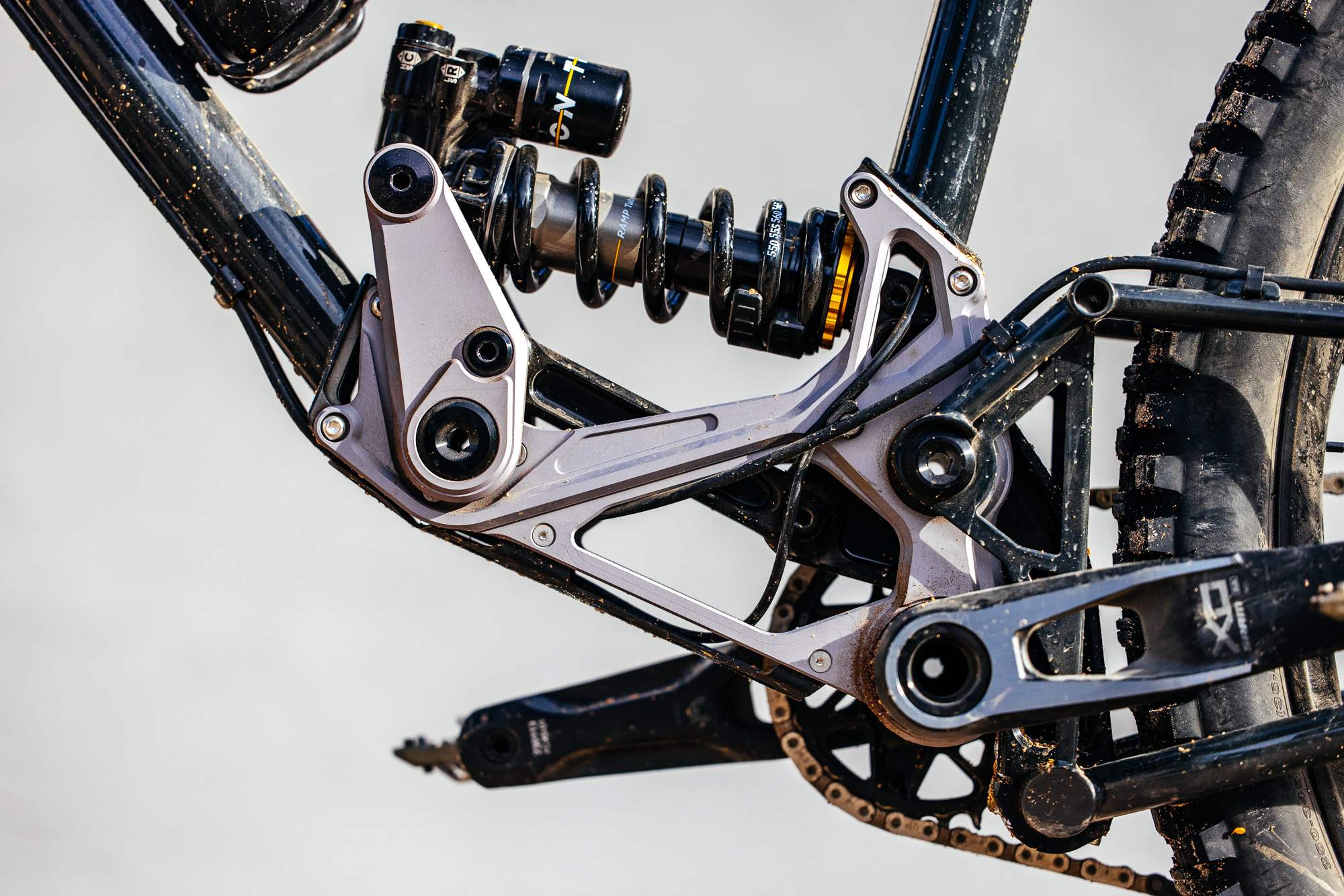
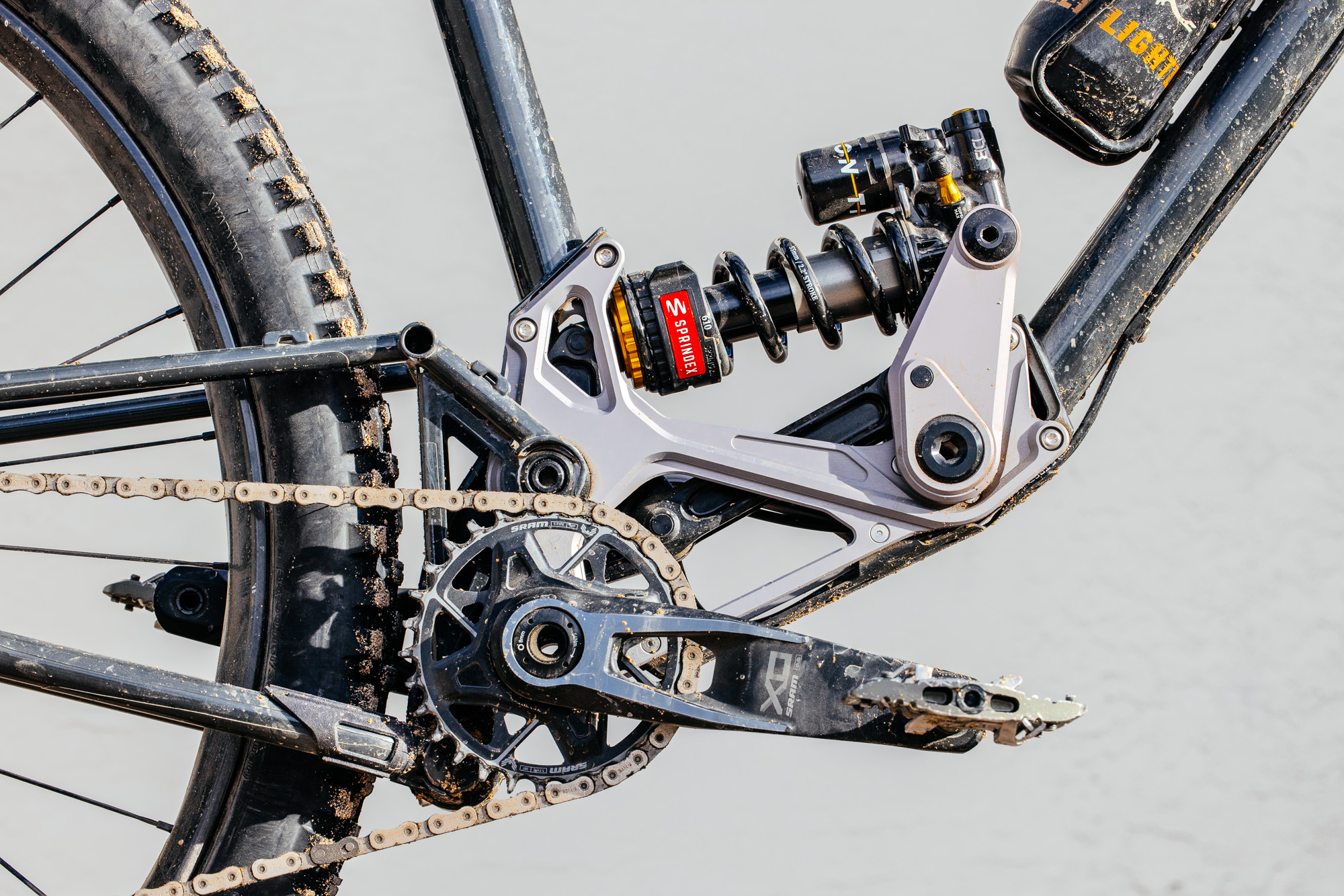
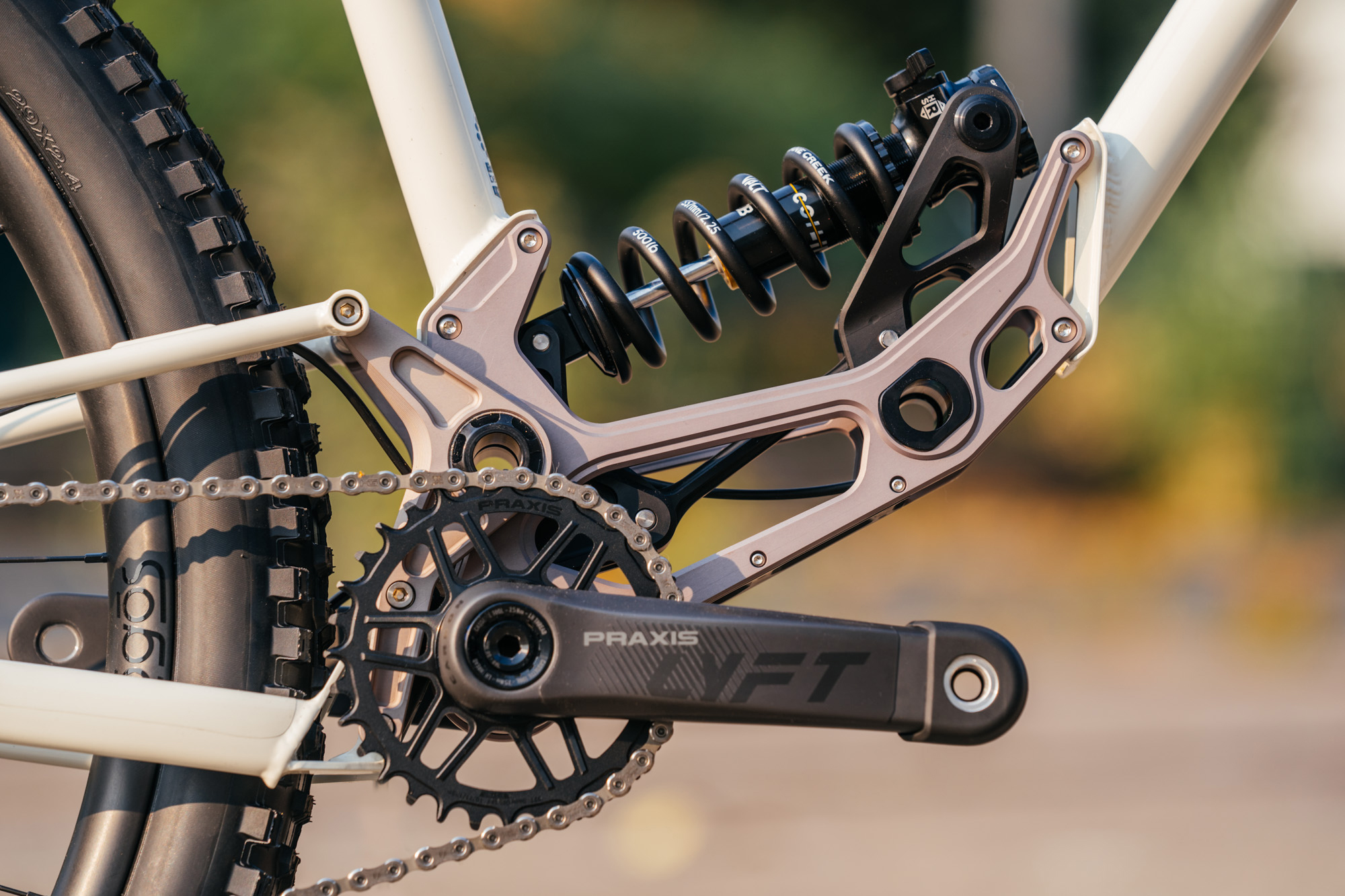
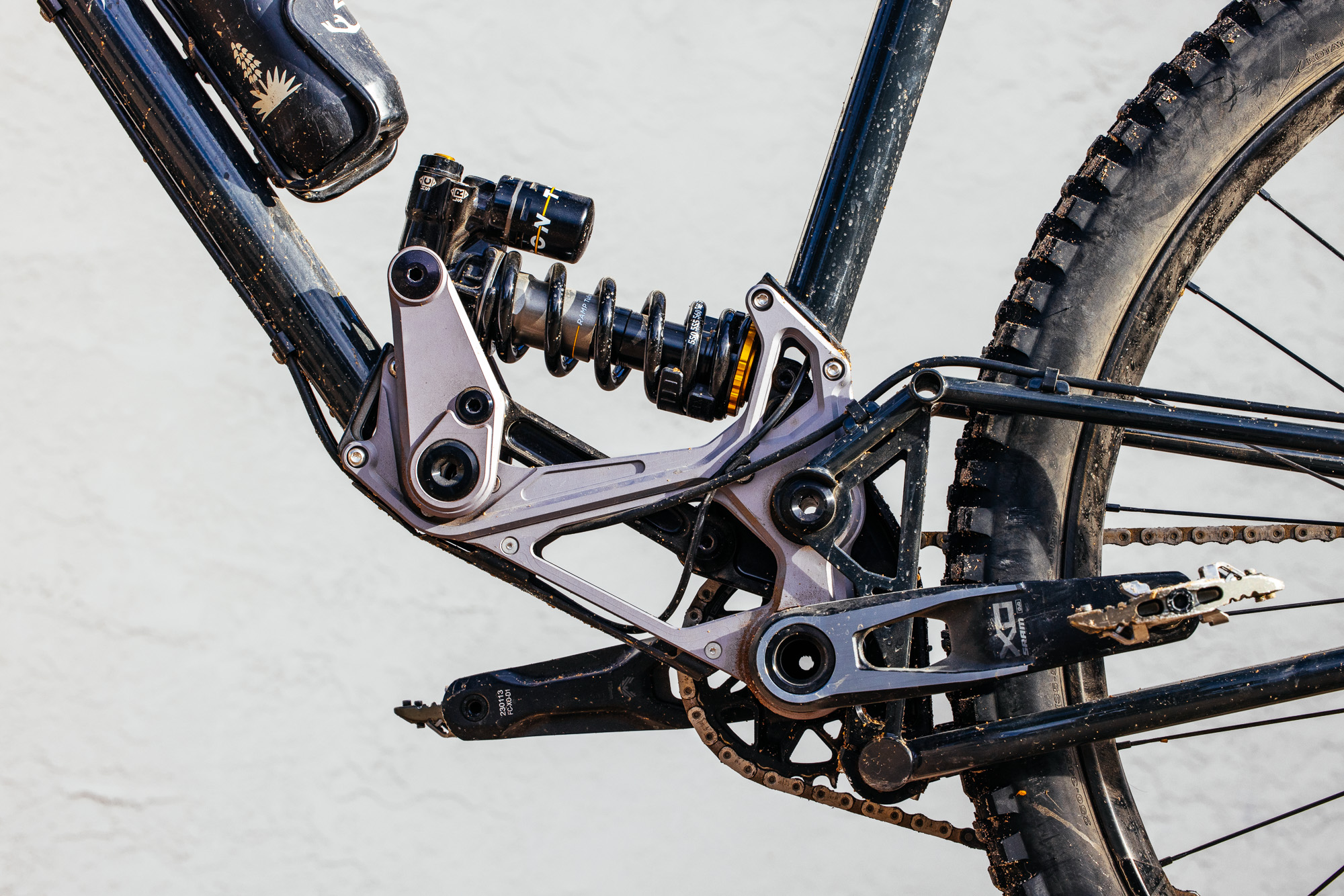
At the 2023 Made Bike Show, I spoke with Collin from Apogee about the decision to develop the brand’s Free Float Module. The FFM is a modified single-pivot linkage system that is self-contained within a CNC aluminum framework. The main pivot is above the bottom bracket, and a rocker drives the Trunnion shock, which is moved by rear-triangle wheel travel. The system is easily defined in the photo above, right, by the marbled-brown and silver anodizing of the FFM’s components.
As I ogled this system, Will went on to tell me that the FFM was inspired by Suzuki motorcycles and, like many innovations in cycling, seemed appropriate for a modern mountain bike.
Will expanded a bit for me in a recent conversation:
“The initial kinematic design was partially inspired by the Don Richardson-designed “Full-Floater” system produced by Suzuki in the early 1980s. At the time, nearly all motorcycles were suspended with a shock mounted between the frame and swingarm, similar to single-pivot MTBs. The “Full Floater” system used a rocker fixed to the main frame to compress the shock between the rocker and swingarm, resulting in a very responsive and simple system with only two mounting points on the frame itself. We liked the simplicity of the concept and developed our own suspension kinematic that compressed the shock between the rocker and the swingarm and mounted it in its own structural frame, resulting in the FFM that you see in the Apogee One.”
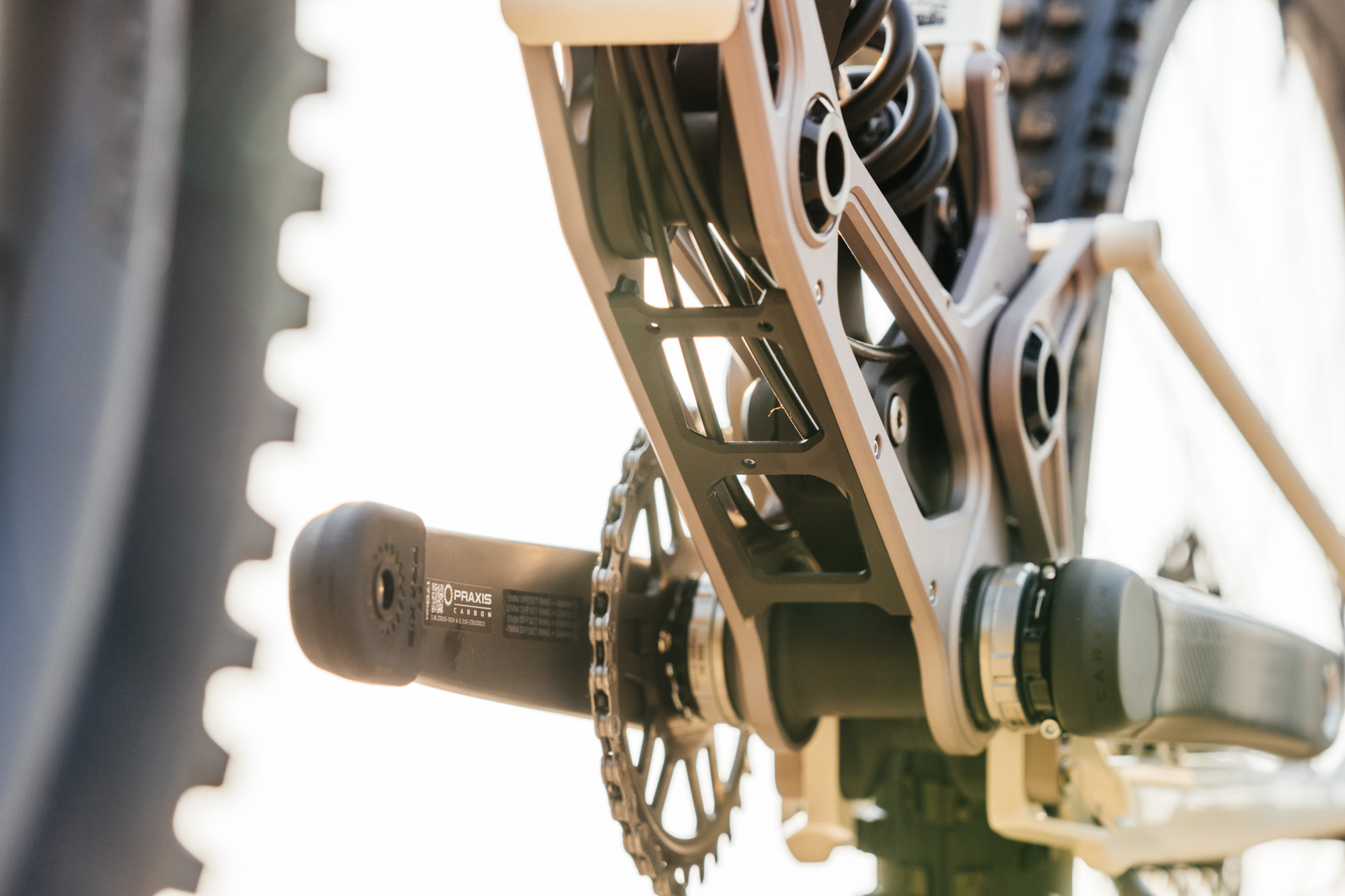
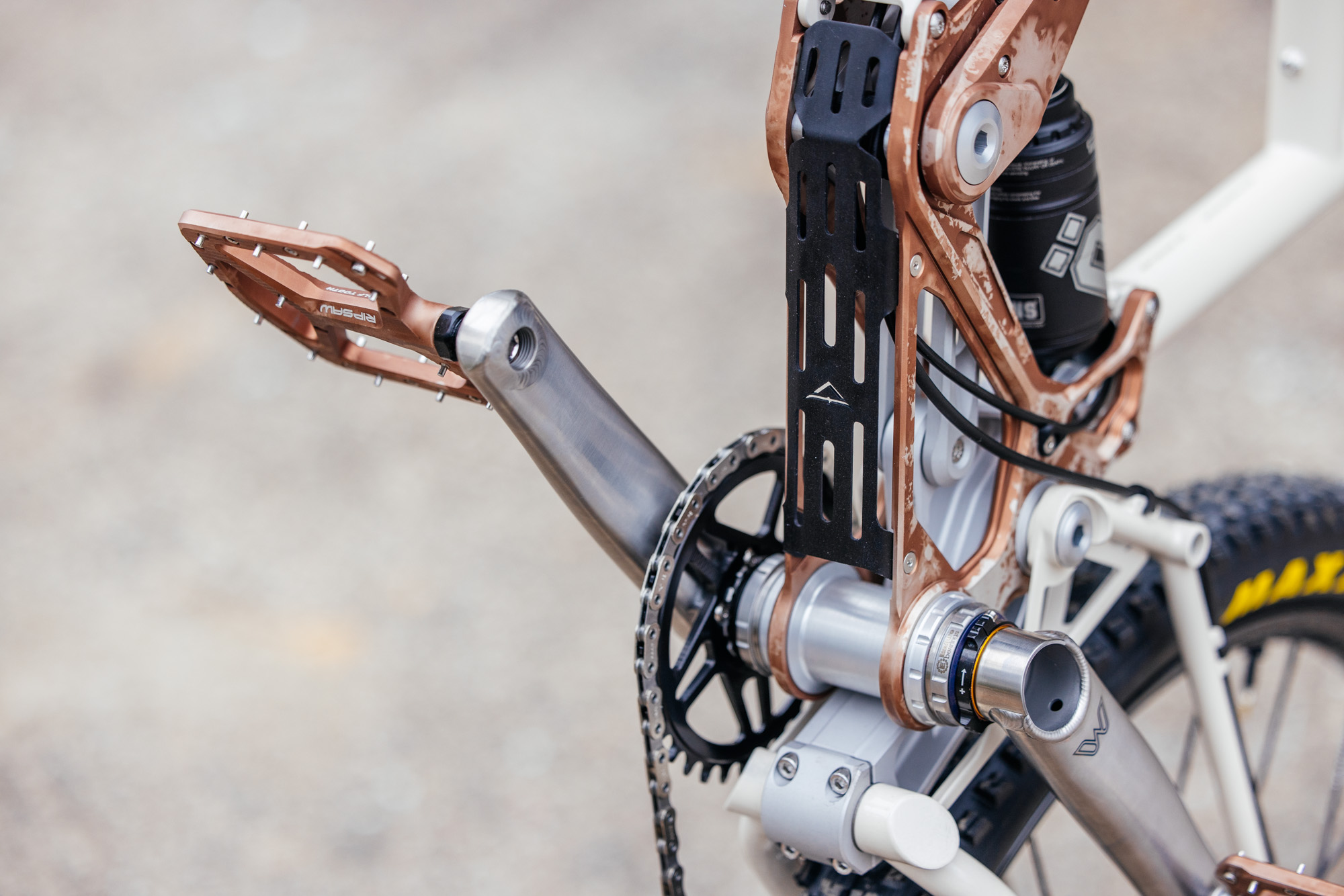
Having documentation of this design process is one of the reasons I love documenting framebuilder showcases. I love seeing how a bike like the One has changed in such a short amount of time. I love the new “skid plate” that is begging for a few tapped holes for a cargo cage.
From the prototypes to the production run, you can play quite the “Spot the Differences” game, particularly at the Free Float Module. On the current model, the FFM attaches to the rear swingarm using a removable faceplate like an inverted stem. The linkage from the FFM to the Trunnion shock is also on the outside of the module now, rather than inside.
Will expanded on this for me:
“That’s a great catch! We did make quite a few changes between the 2023 prototype we showed at MADE and the 2025 production bike. Between those two versions we refined the suspension kinematics, reduced the part count by 47%, and improved the already excellent serviceability. The 2023 version of the FFM proved the concept of modular suspension worked very well and gave us the confidence to polish and refine the design into what you see now!”
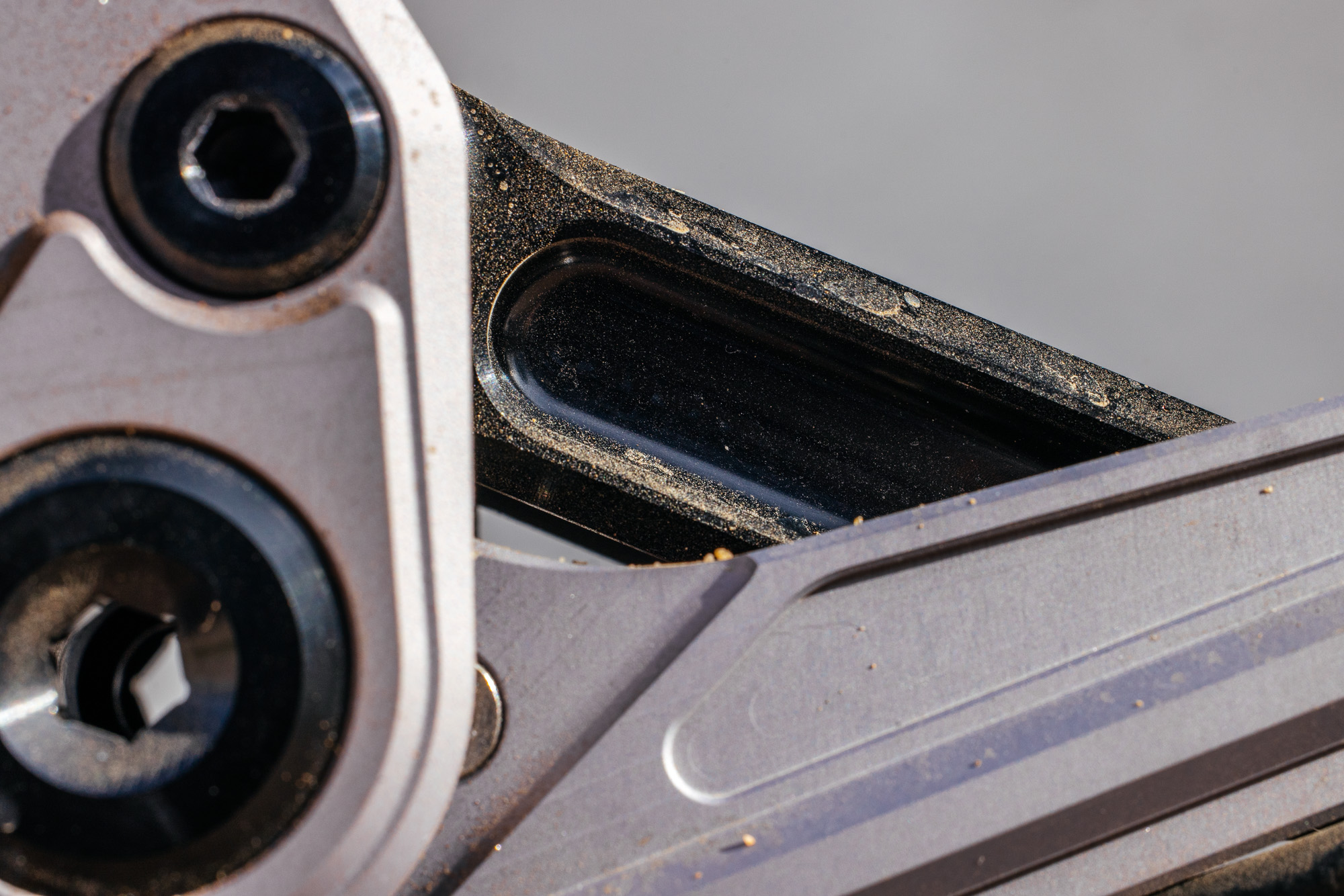
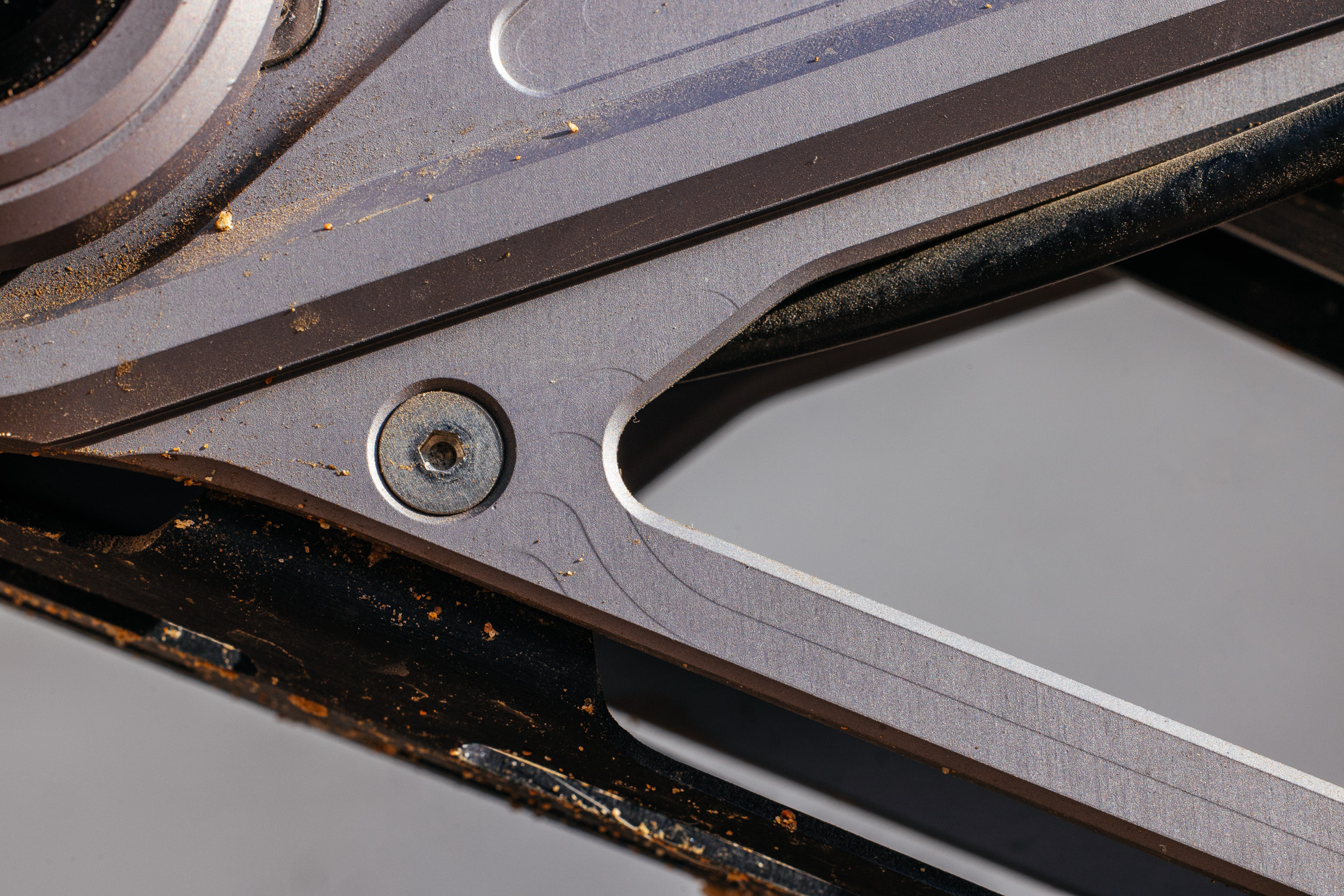
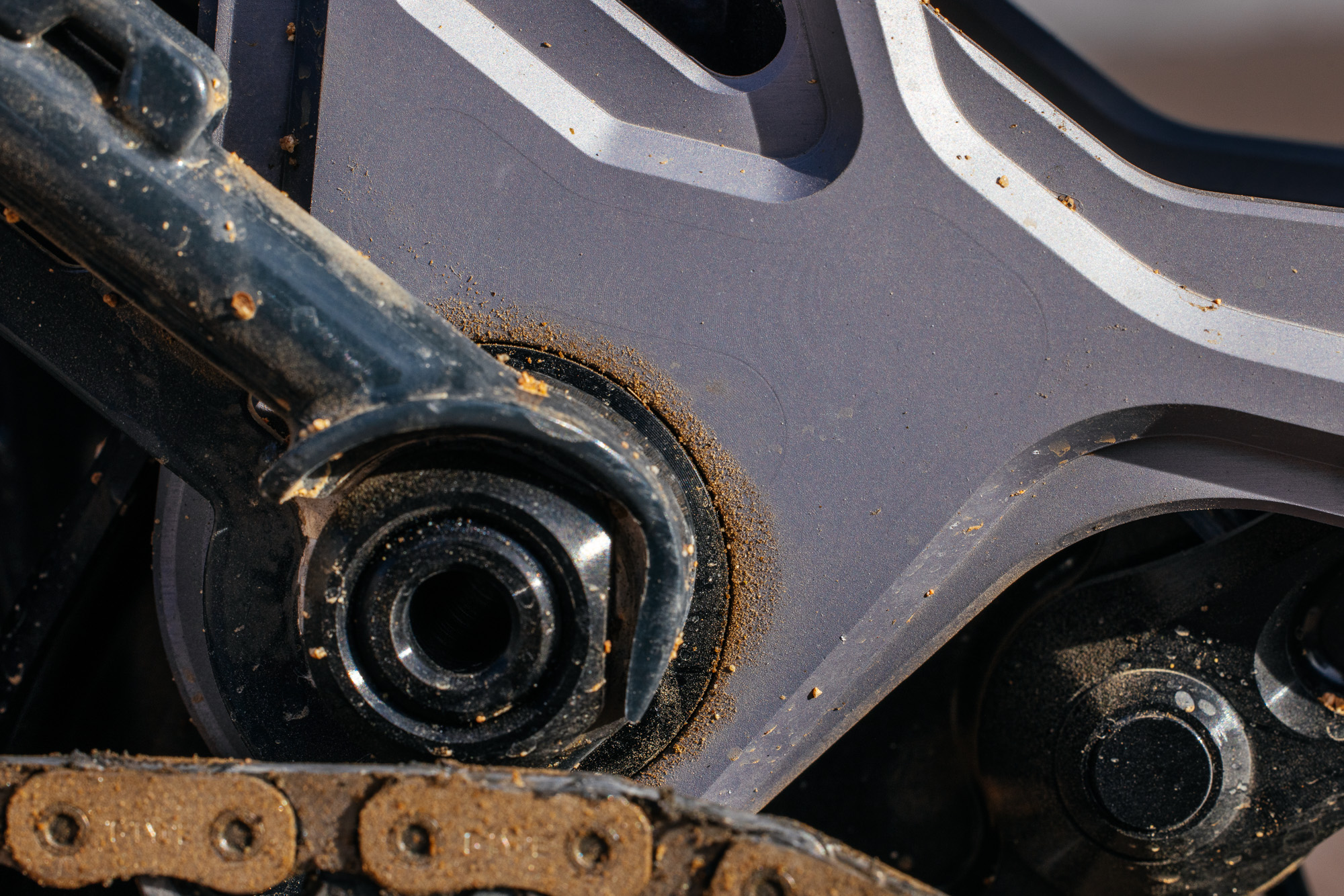
Do yourself a favor and spend a few minutes poring over the details of the FFM in the gallery. This module on its own is a beautiful work of engineering and one of the most stunning integrations of CNC tech in a modern bike. The subtle linework in the paths and finishing is absurd in the best way possible.
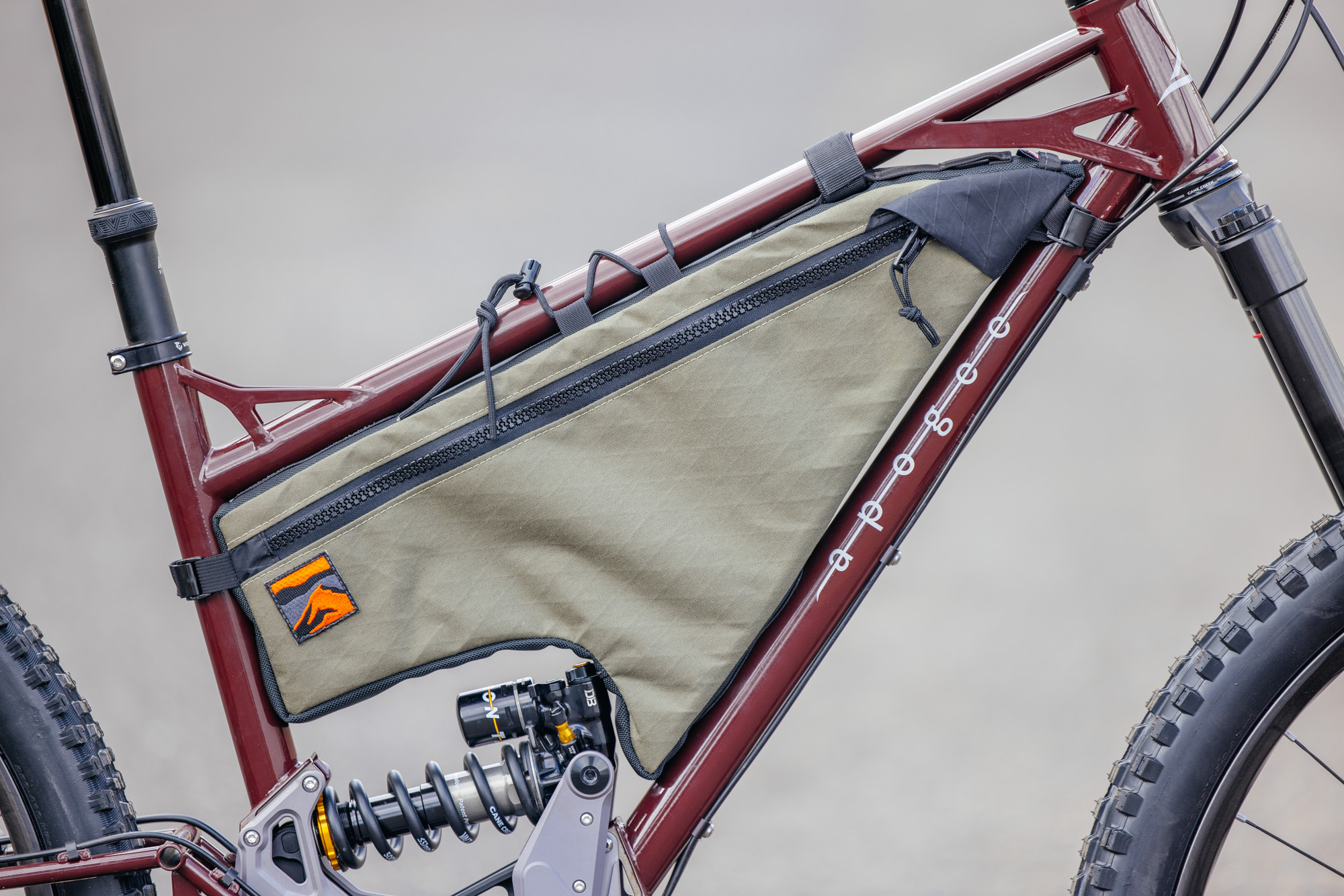
Placing the linkage low on the moto chassis frees up space for the motor and gas tank. Taking inspiration from this, the Free Float Module rests low on the bike, at the bottom bracket. It is then bolted onto the DuoFrame front and rear triangles. This achieves a few things. For us nerds at The Radavist, we see a big frame bag space – check out how good that Rockgeist frame bag looks on this Apogee One I shot in 2024 – but perhaps for Apogee’s target audience, it keeps the majority of the weight as low as possible.
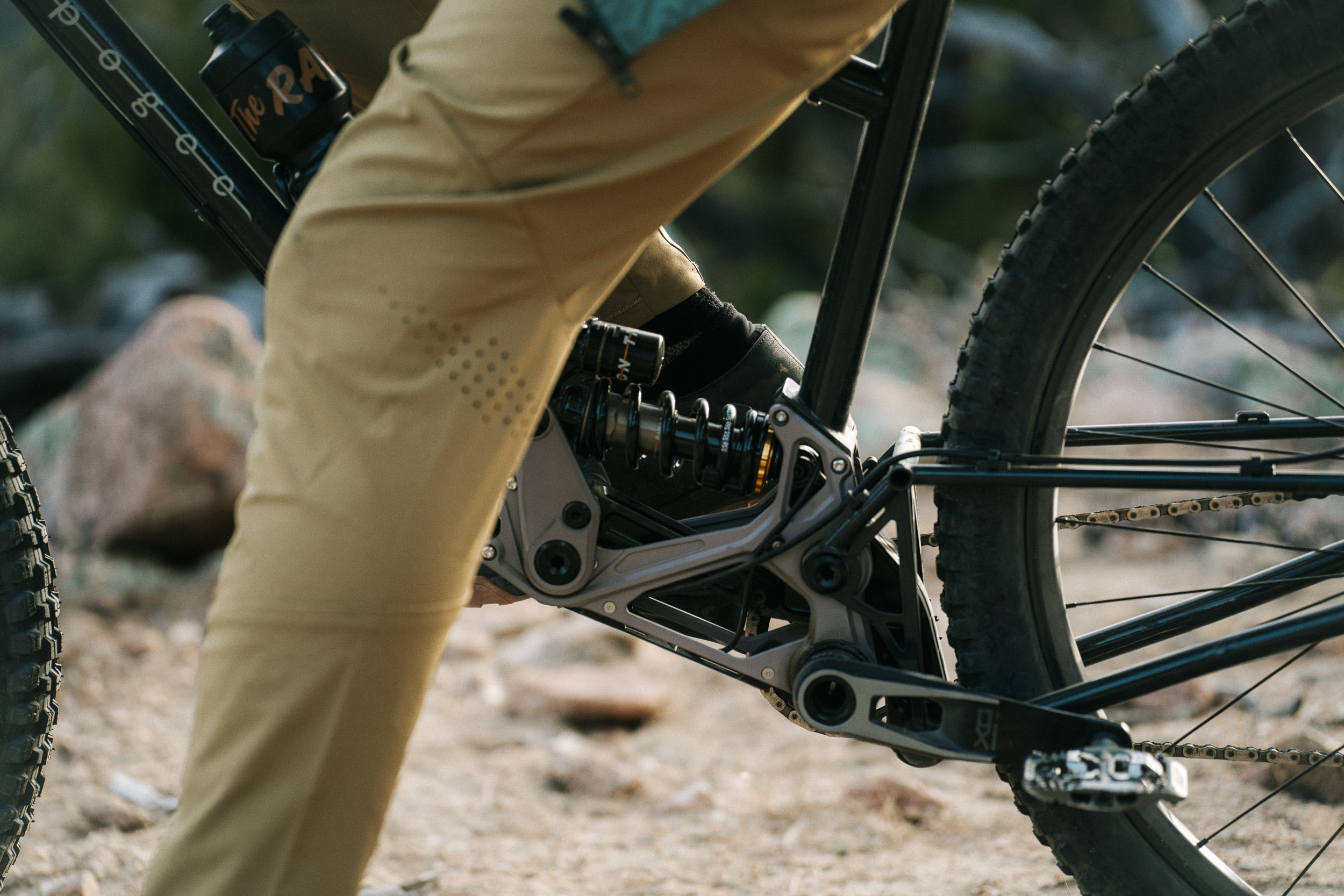
Lower Center of Gravity
In my opinion, it’s not how much the bike weighs; it’s where the weight is mostly located that matters. The lower the better. My Apogee One was specced with a Cane Creek Tigon coil shock. Coil shocks can be stout and are often a few pounds, sometimes weighing twice that of an air shock. Depending on where the shock is located, this can create a lot of concentrated frame weight. By placing the coil shock and the FFM at the bottom bracket, Apogee put the bike’s heft as low as possible.
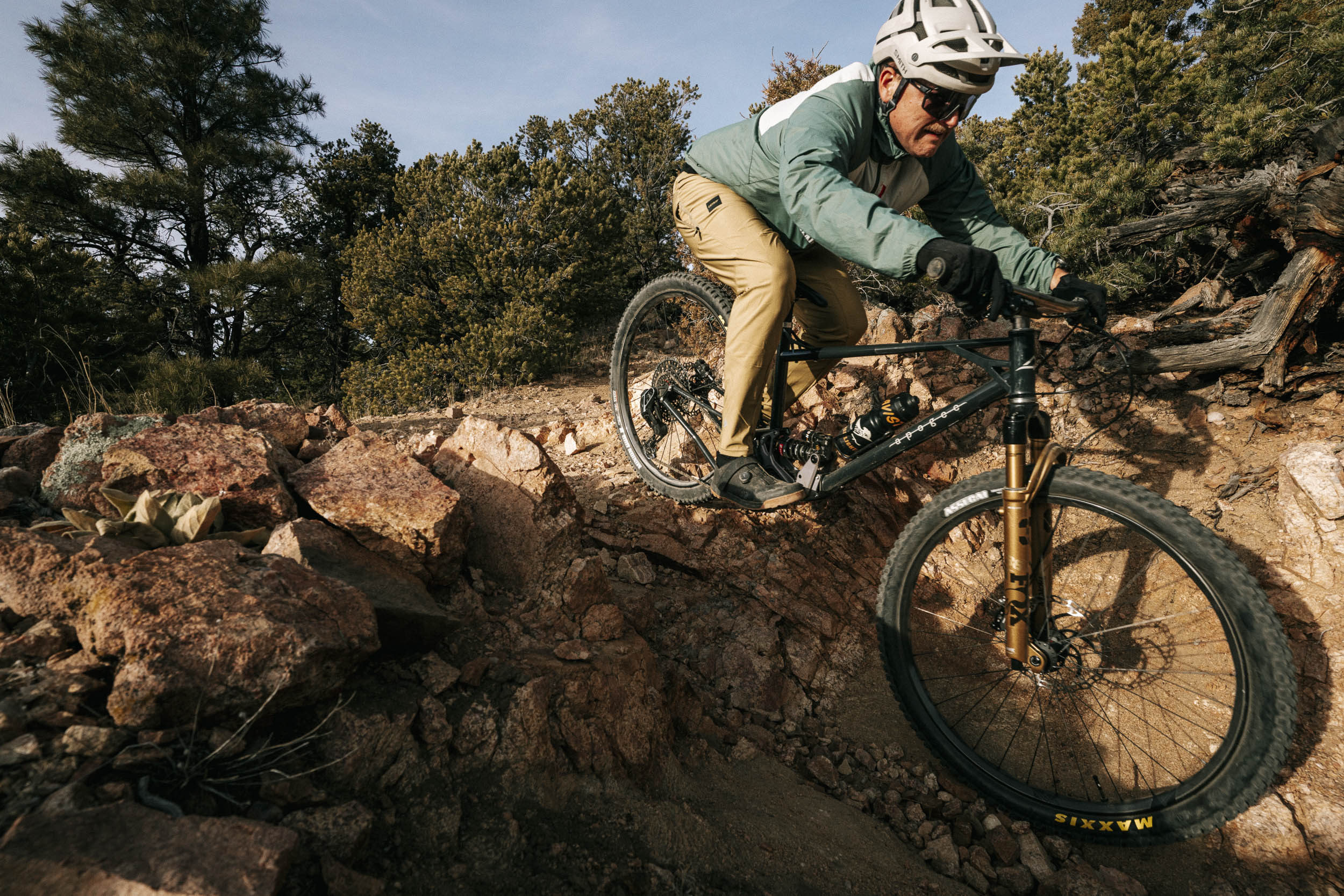
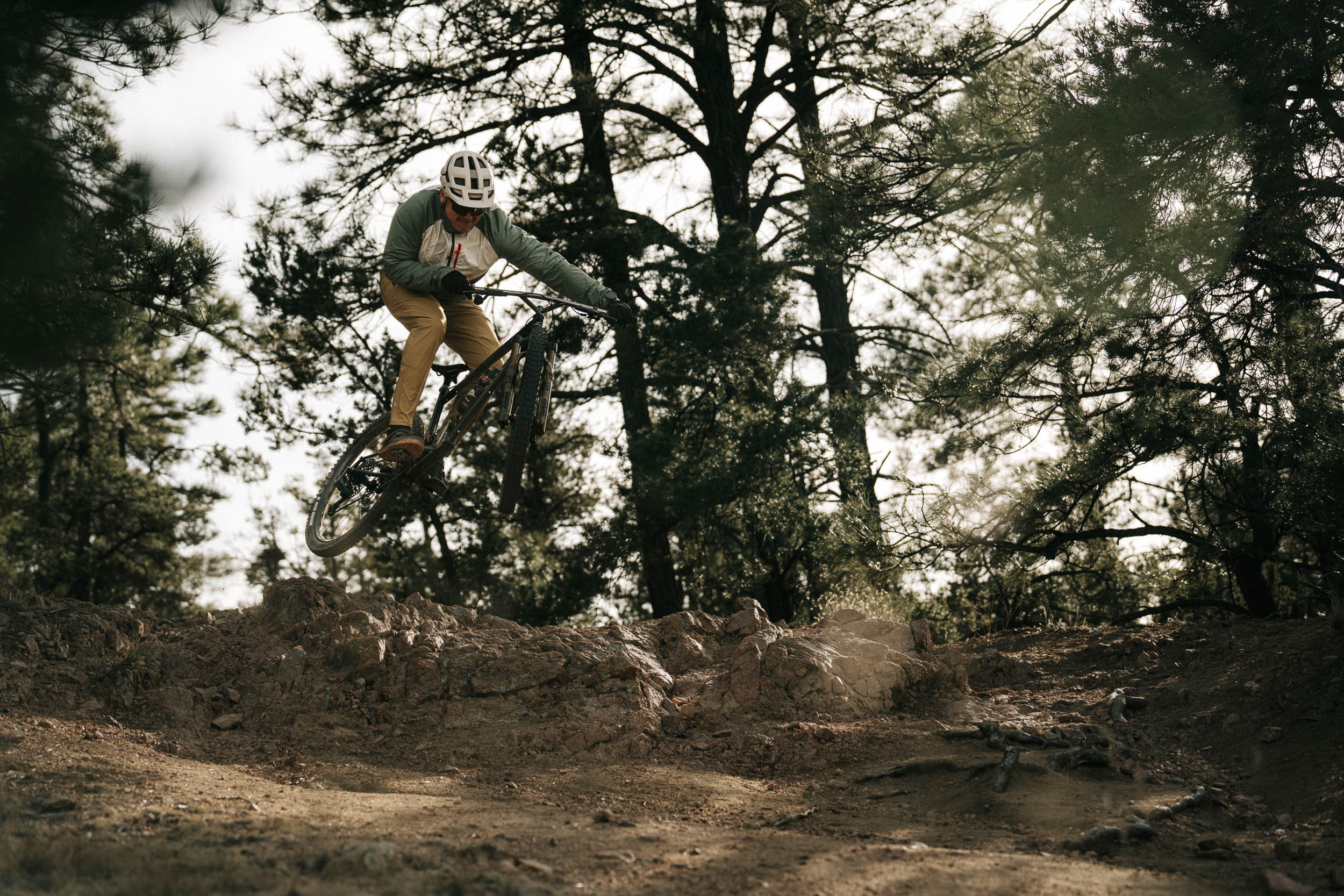
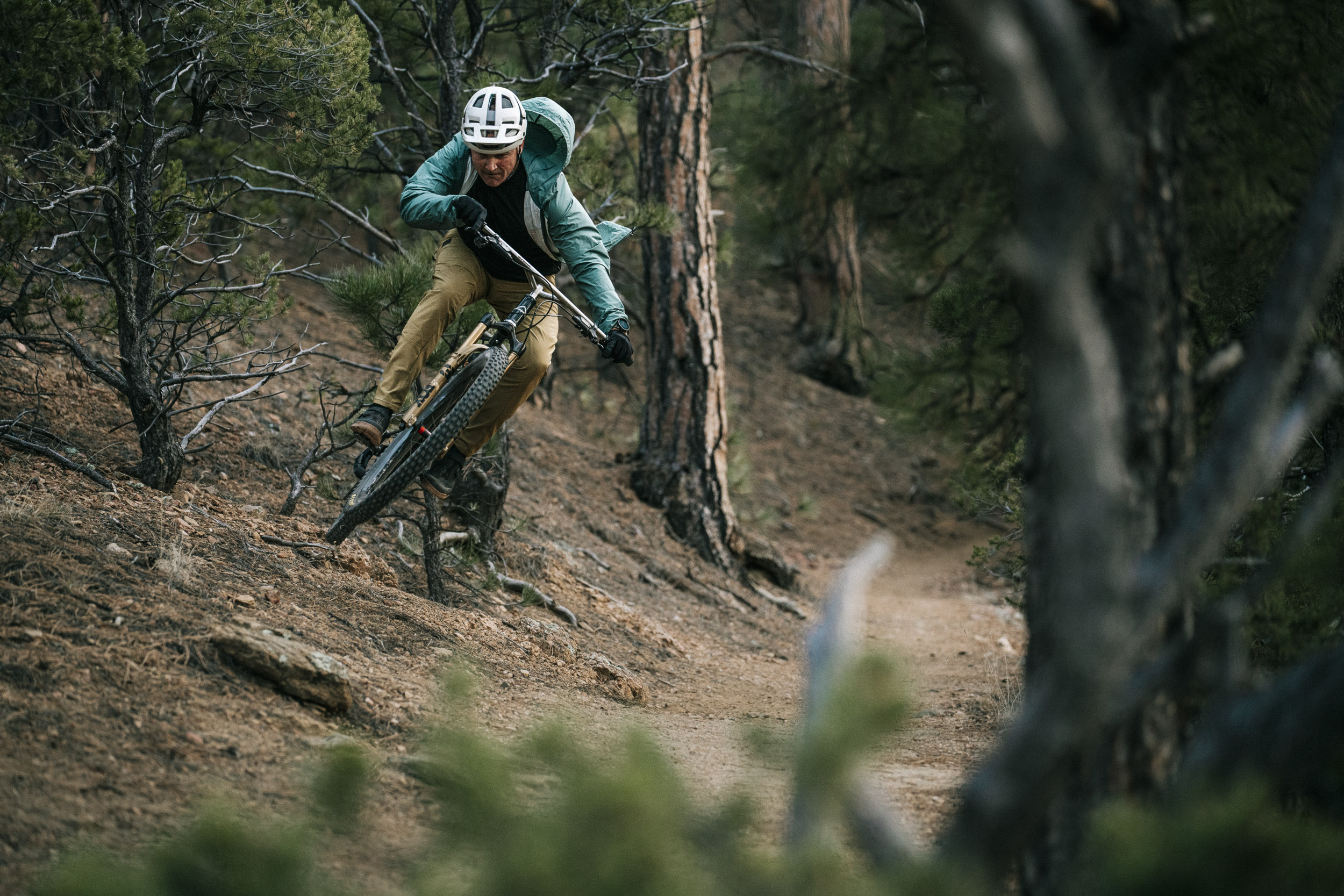
Apogee One’s trail personality is a full-on gravity bully bruiser, and I really believe it is due to this low center of gravity. The One is engaged on your feet. It’s planted and likes to be pointed downhill, allowing it to plow. Using the physical heft of the FFM for pre-loading jumps and tire-tearing, high-speed cornering while descending is unlike any other bike I’ve ridden in the space.
Frame Flex
Perhaps the thing I like most about steel full-suspension bikes is how a shock can fundamentally shift the rear triangle’s perceived flex. Versus bikes with aluminum swingarms, which have a more noticeable stiffness, regardless of the shock type. Putting a coil shock on my Murmur considerably makes the bike more supportive feeling in flat corners and more aloft and active. Comparing the One with a coil shock to either my Murmur or my FlareMax, its ride quality feels more like the FlareMax (which is also a modified single pivot), but the frame flex feels similar to my Murmur with a coil.
Bikes with aluminum rear swingarms, like the Cotic, Chromag, and Sour, often ride much stiffer in the rear. Compared to bikes with a steel rear swingarm and smaller-diameter tubes, like my Murmur. This all has to do with engineering and design. Having spent a lot of time on the Murmur, with its spindly rear swingarm, the bike has a rear end that flicks and tracks through our chunky terrain. The One is in this camp, even though visually you’d think it would be super stiff in the rear end due to the FFM. Nope. This baby has some shimmy.
Stiffness is Overrated
I wouldn’t call the bike a noodle, and in fact, it was actually stiffer than I had imagined it to be, particularly at the front end. By flattening the top tube, again like the FlareMax, and gusseting the head tube, the One has a precise and intentional feel at the front end, while allowing the rear end of the bike to track and flex as needed. This is very noticeable both climbing up technical trails and shifting your bodyweight, wiggling through some rock fuckery. And it’s surprisingly comfy while descending into chutes where your body and bike weight slides and scralps across loose chunder and immediately finds purchase as it meets a banked wall or chute.
For being such a bruiser, I never felt beaten up riding the One.
There are riders who prefer a stiff bike, and I am not one of them. I like a bike to be flickable and fun as I gallop down trail, hitting side booters, and feeling the bike respond. Stiff bikes feel dead to me, but I understand why people want them, particularly those who like to ride in bike parks and enjoy sending massive gaps and jumps. I prefer primitive singletrack and like to actively use as much of the trail as possible. While I’m not the fastest climber, I prefer singletrack climbs with techy features.
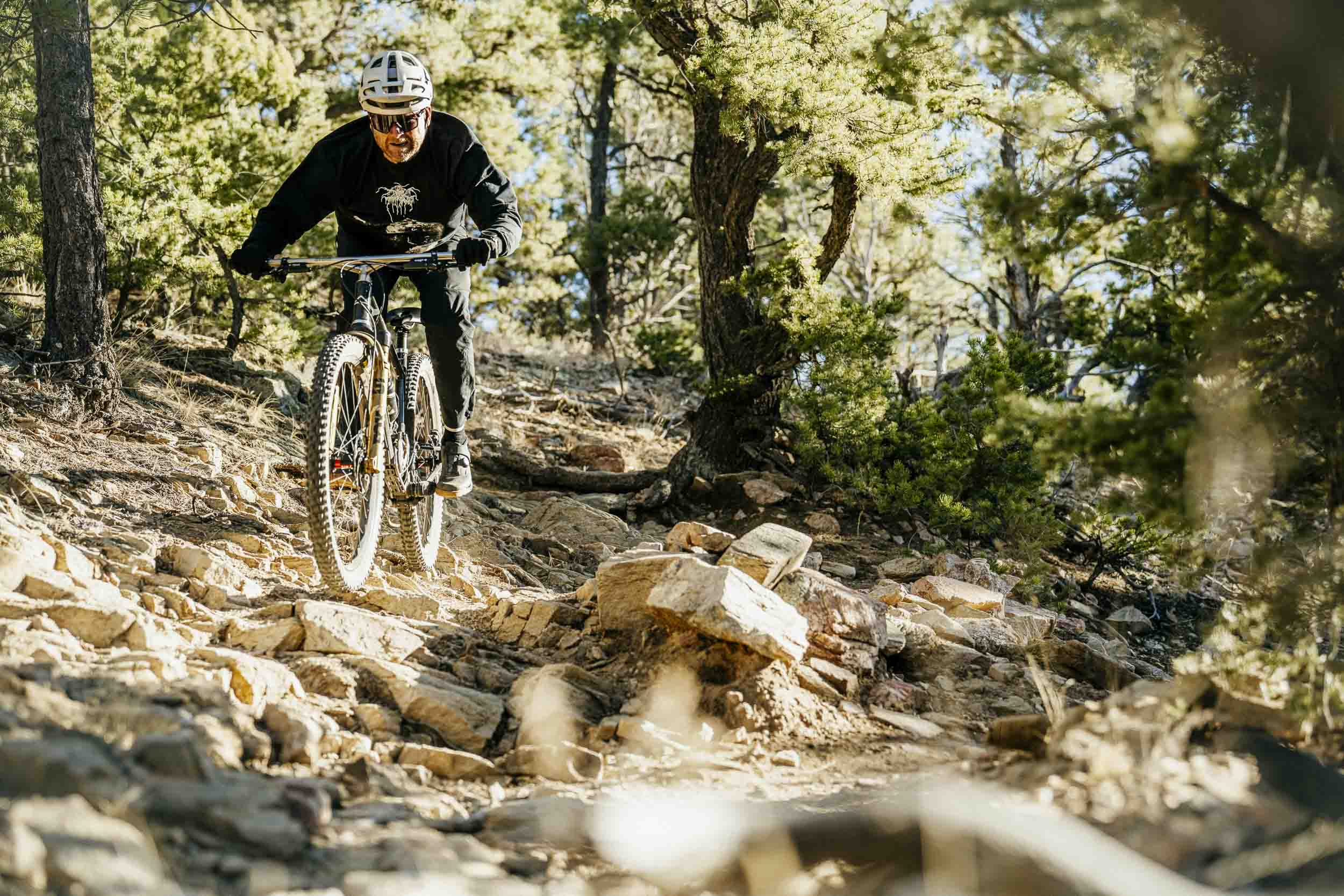
As such, a frame with some flex feels more alive and engaged underfoot. I should note that the sensation you feel as your feet maintain one line along with the front of the bike, while the rear end is skipping, or sliding behind you, can feel strange at first, but with so much experience riding bikes like this, it’s become the norm for me, so any bike that doesn’t behave in this manner feels obtuse and unnecessarily rigid. Someone once described the sensation as surfing a flex tail board, and that makes a lot of sense.
This stuff is super subjective, but it’s what makes bikes like the One so unique in the market and why I resonated with it so much. Particularly while climbing.
Riding the Apogee One: Ascending
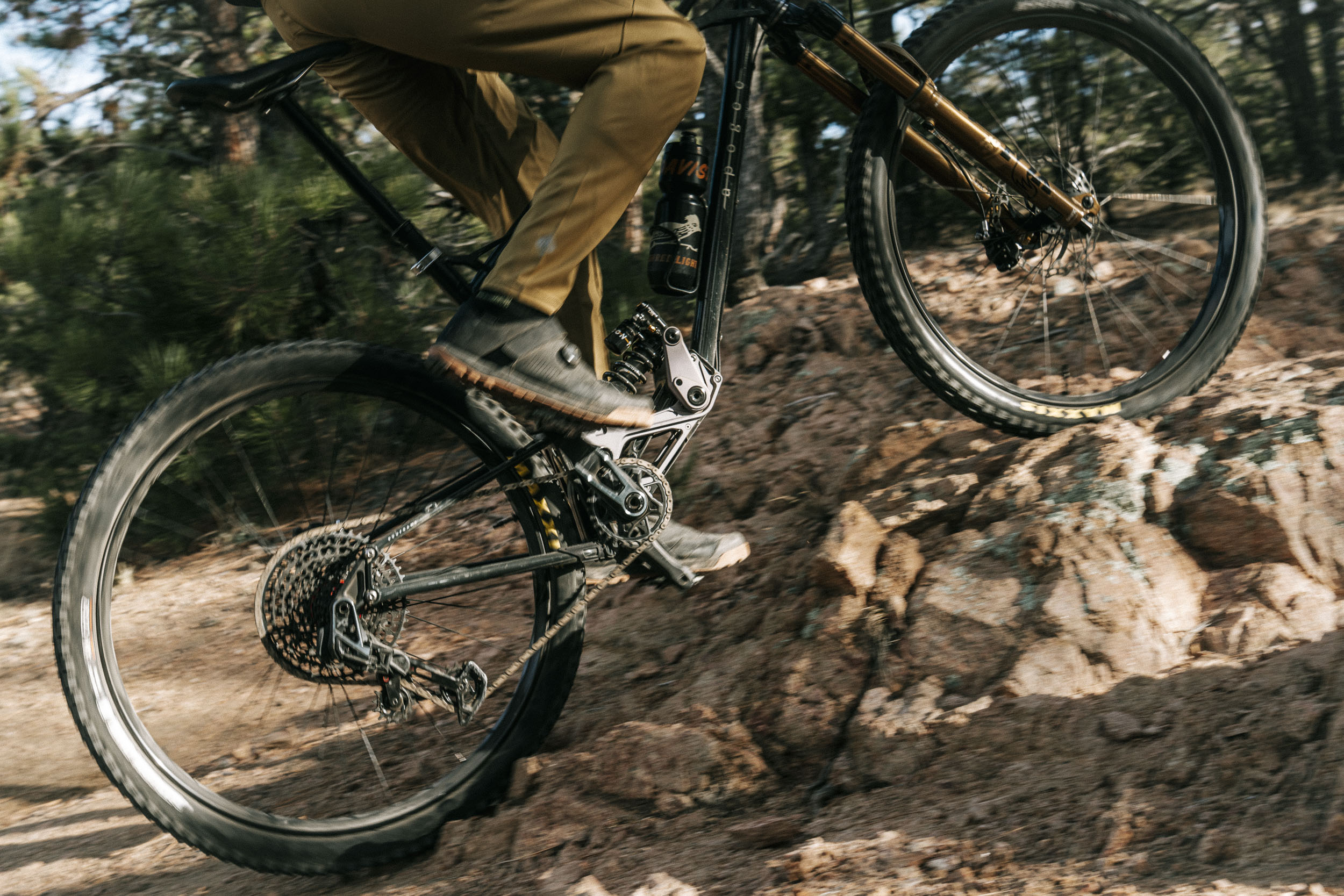
For me, mountain biking is as much about the climbing as it is the descending, honing tech skills in both directions. I like when bikes take the edge off the terrain just enough to allow you to absorb the environment you are traversing. The One’s Trunnion-mounted shock and single-pivot design offer a comfortable, smooth-as-silk climbing demeanor as the rear wheel envelops the trail’s undulating terrain. All it takes is a slight shift in body weight to move the traction where you need it. Going up a steep rocky outcropping, simply slide forward on the saddle and dig in.
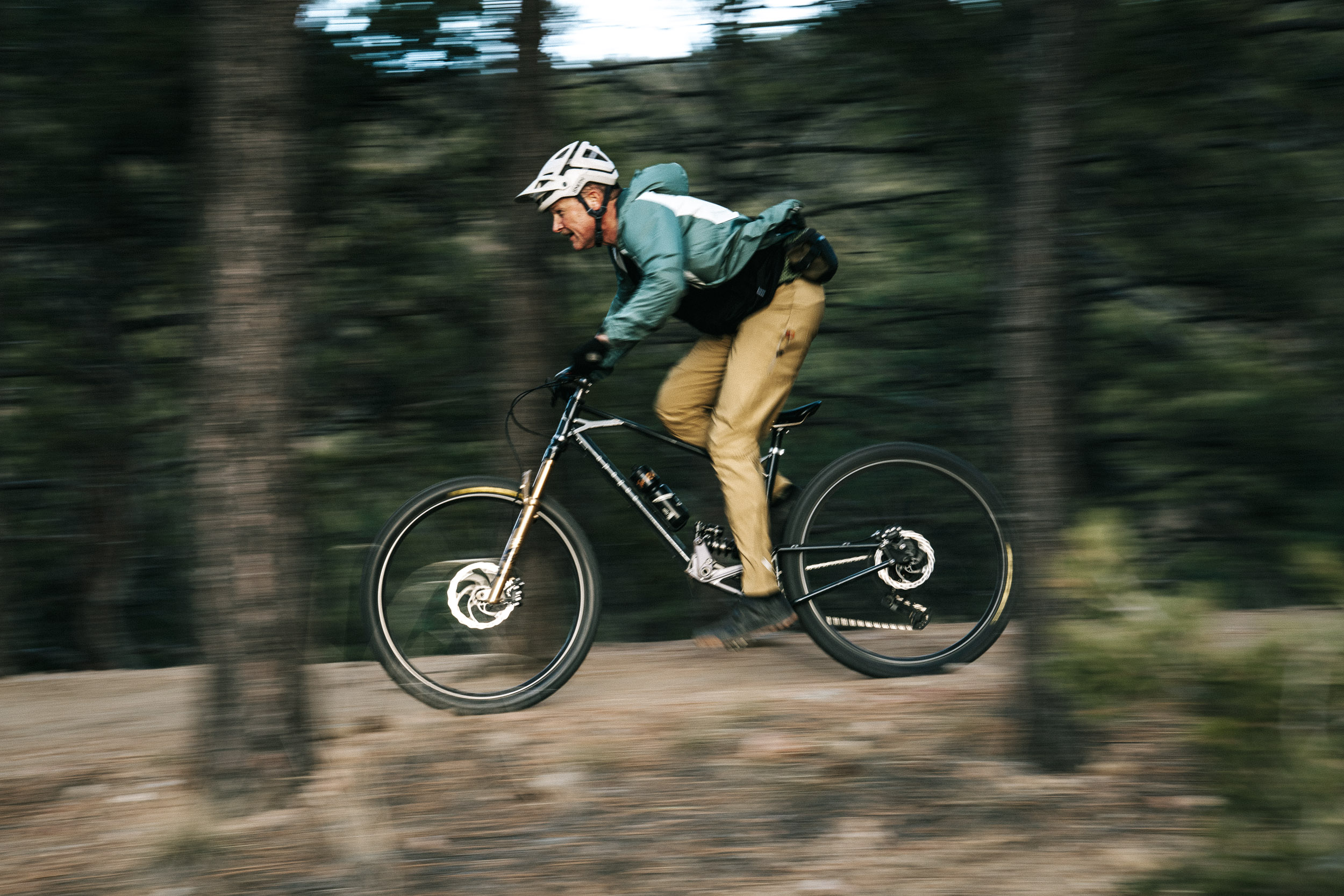
Going up my favorite climb on my first ride aboard the Apogee, my notes mention that the bike feels more engaged than I imagined it to. Its low bottom bracket, steep seat tube, and slack head tube put you over the front end, while resting within the chassis, not on top of it. The One lacks excessive pedal bob, and it’s far from feeling like you’re dragging an anchor behind you on the trail. It’s weird to say this, but it kind of disappears. Yes, a 36 lb bike feels like it disappears.
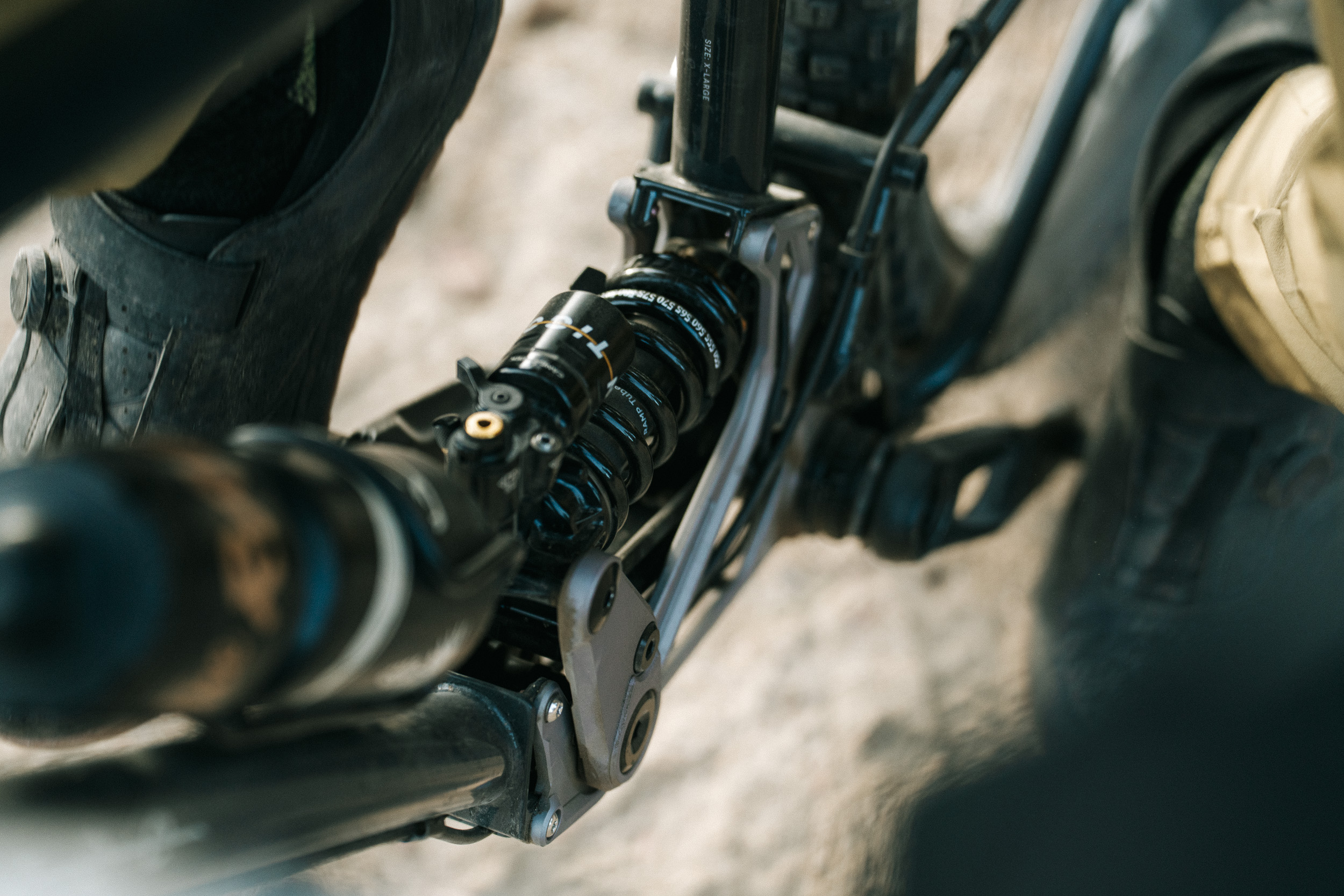
I’ve found single pivots to be playful and light-footed, versus Horst links, which can feel like Velcro on the climbs and descents. The One’s setup is somewhere in between. It’s a very “zone out” climbing position, but there’s plenty of zippy snappiness on call when you need it. It helps that I don’t lock-out my shocks while climbing, too. Coming up to a few rocky steps, the bike snapped right into position where I wanted it to and lifted up as I snatched the rear wheel off the ground into notches or atop rocks.
Apogee really nailed it with the One, finding a balance of sure-footed stability and easy-to-ramp-up flickability when you’ve got to dig deep to get up and over a tech section.
Descending
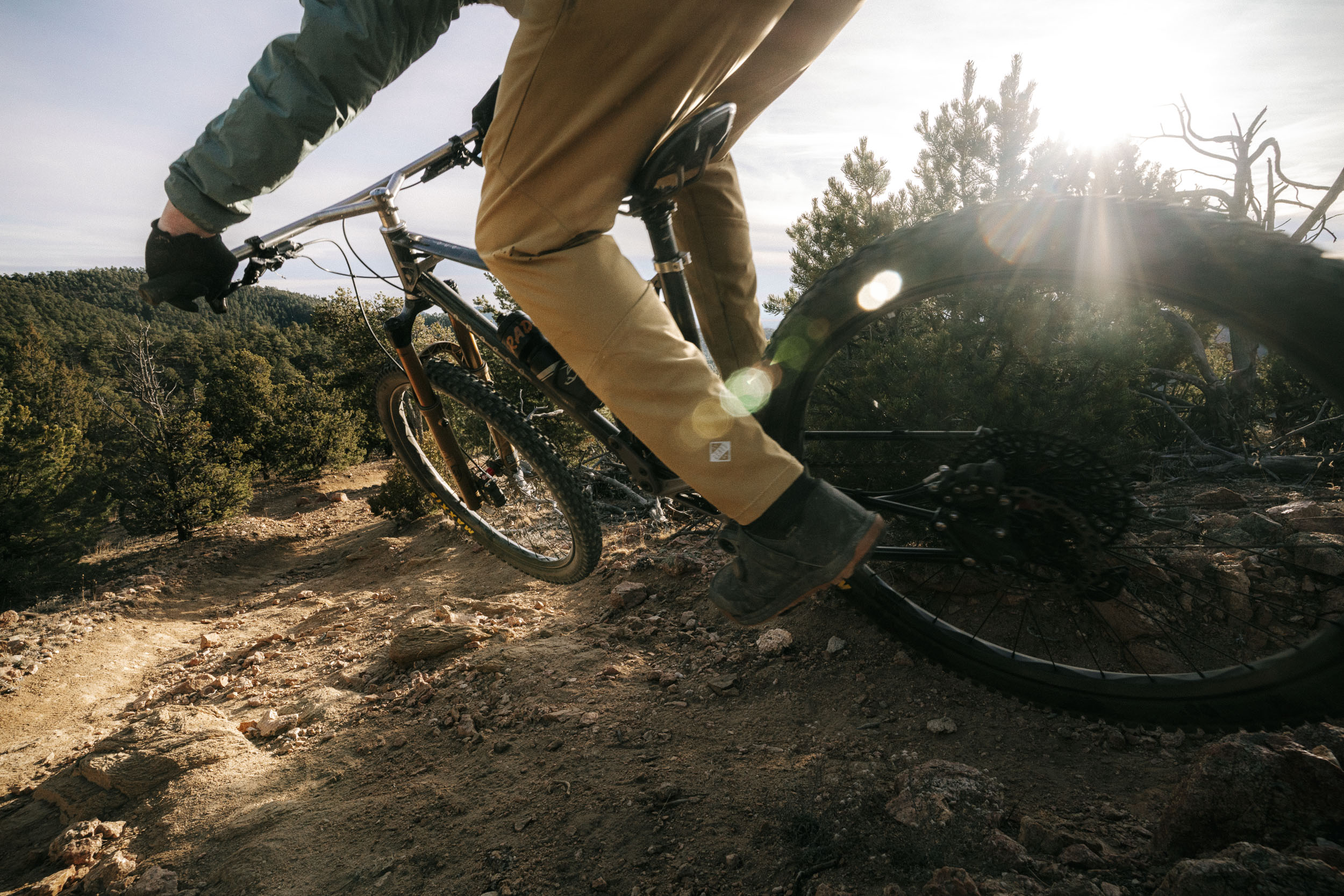
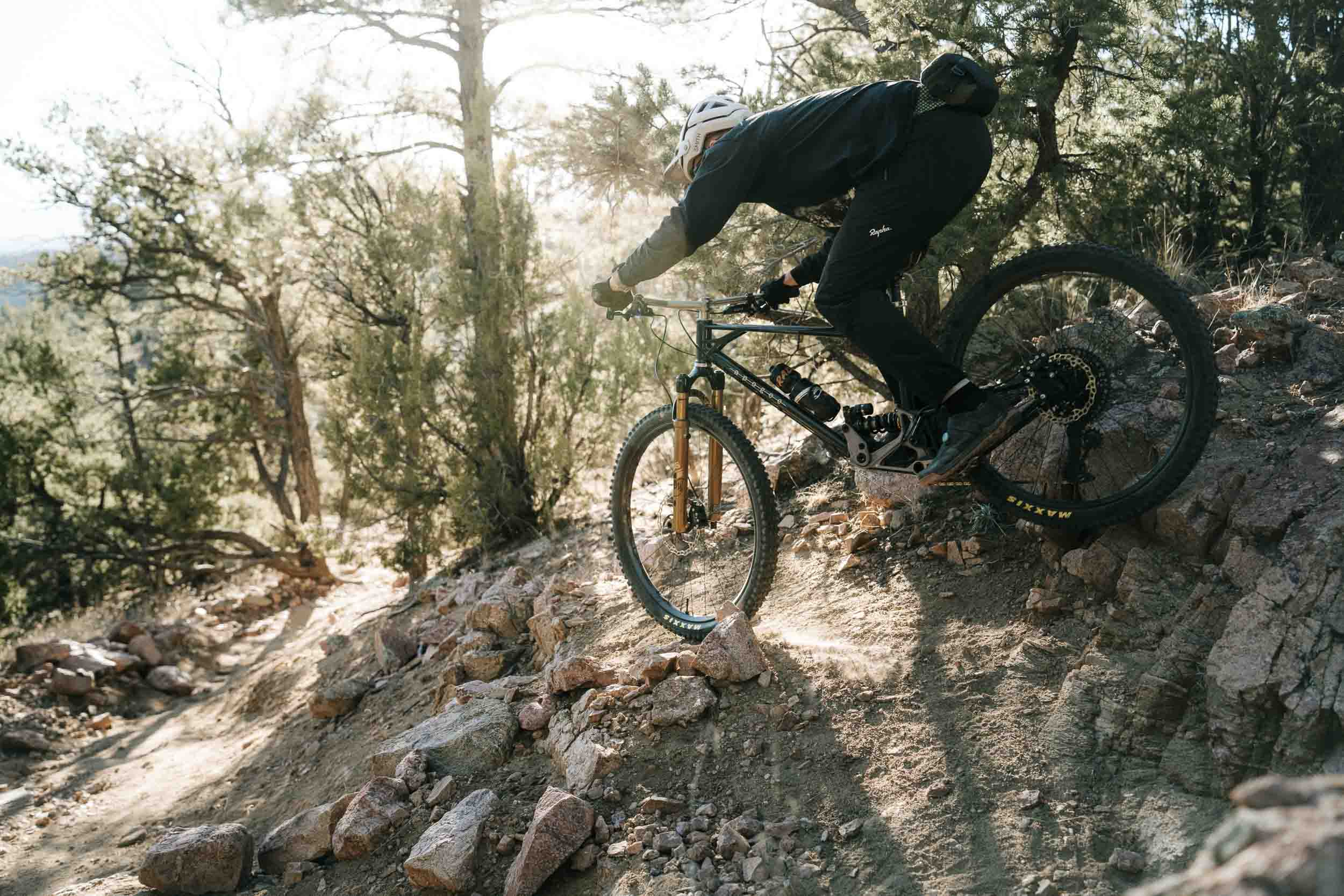
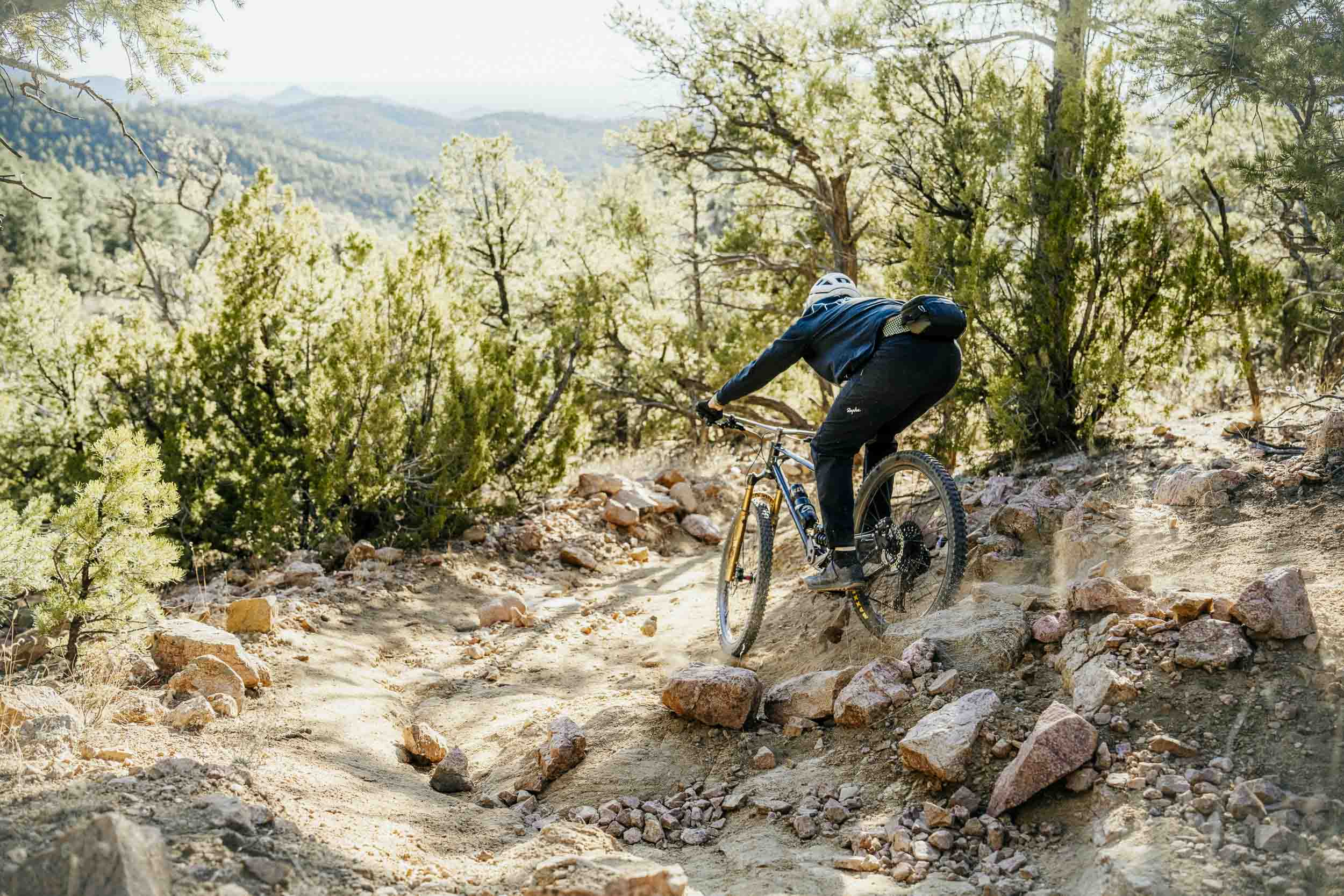
For many people, mountain biking is all about descending, and the good news is, this bike is a fucking bruiser once you point it downhill. Here’s where the geometry, the low center of gravity, frame flex, and suspension kinematics all come together for an express elevator to hell, going down! When riding a 140/160 bike, it’s easy to feel extra confident in its capabilities and traction, but the travel, along with the aforementioned traits, is what puts the One in a class of its own.
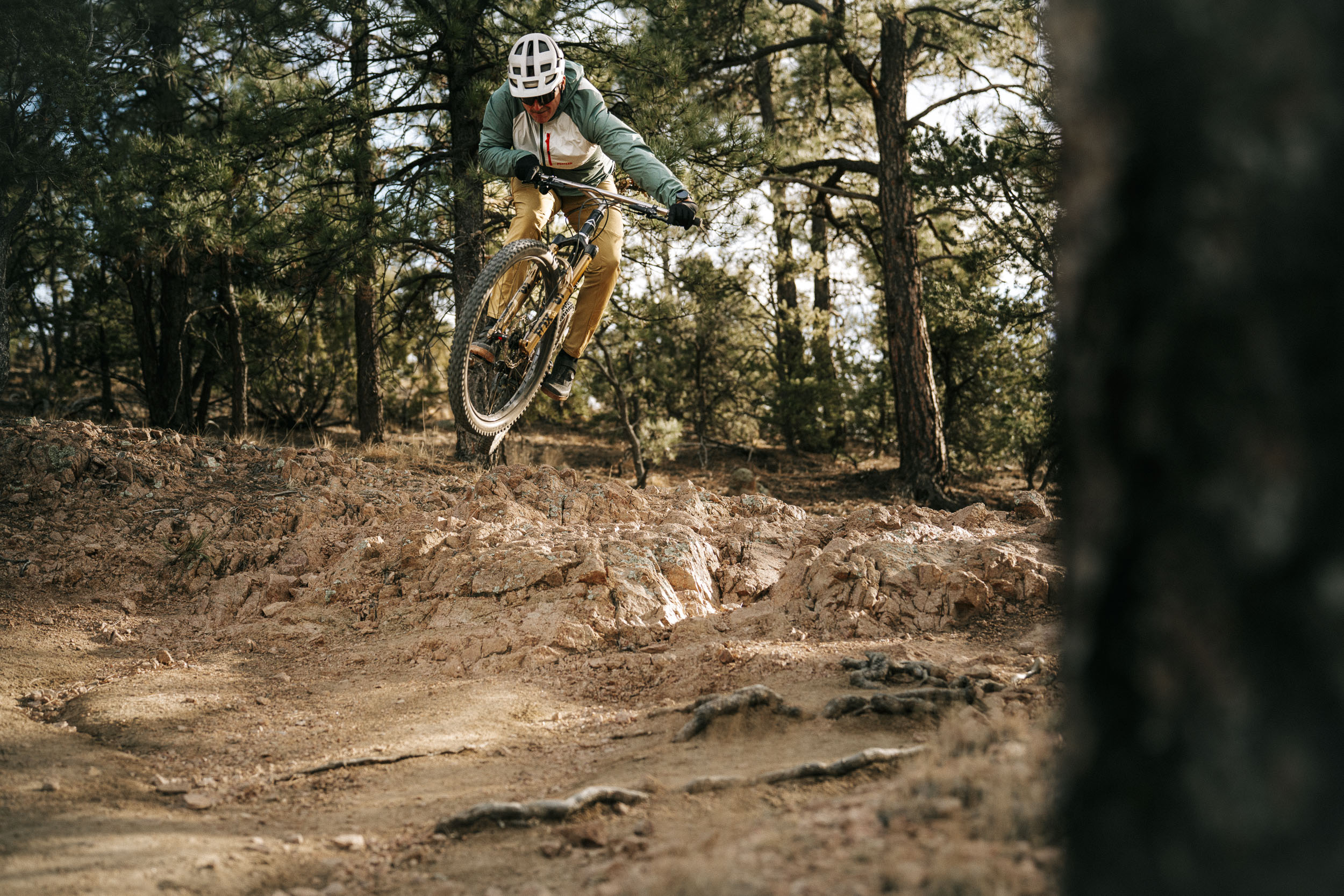
A 64º head angle with a 160 mm fork strikes a winning combination of comfort and speed, while honing the rough edges of a mis-calculated jump or line choice, giving lots of forgiveness in those instances. I’m glad I overforked it to 160 mm from where it was delivered to me at 150 mm. It really came alive with some extra leg up front. Plus, it’s so much fun to just huck it into everything.
The One now feels like a trophy truck, best wielded at top speeds, with ample grip at hand. It has established a new paradigm for me in steel full-suspension bikes, and I can’t get over how good it feels to bash through some of my favorite rock gardens or send that gap I’ve been eyeing.
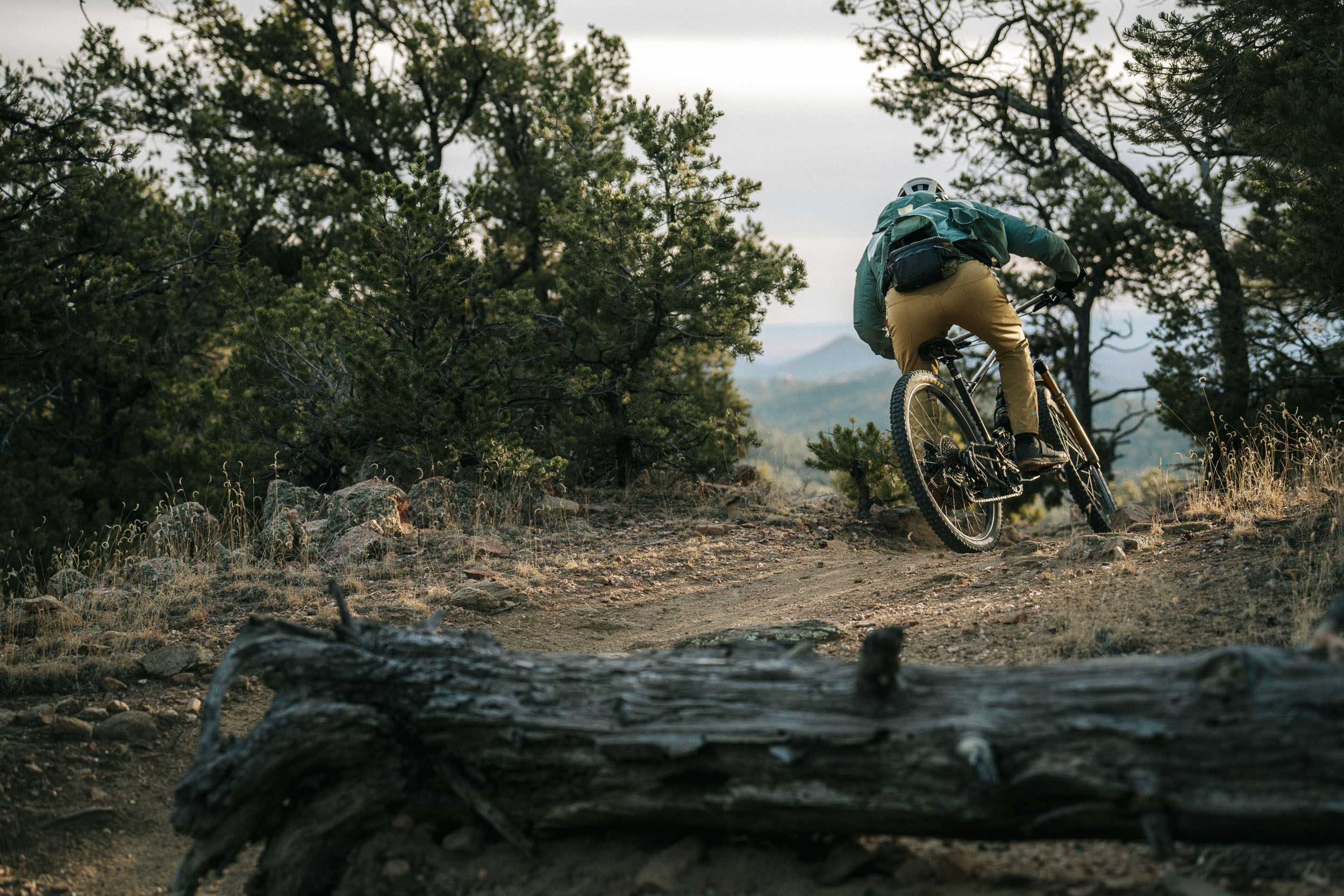
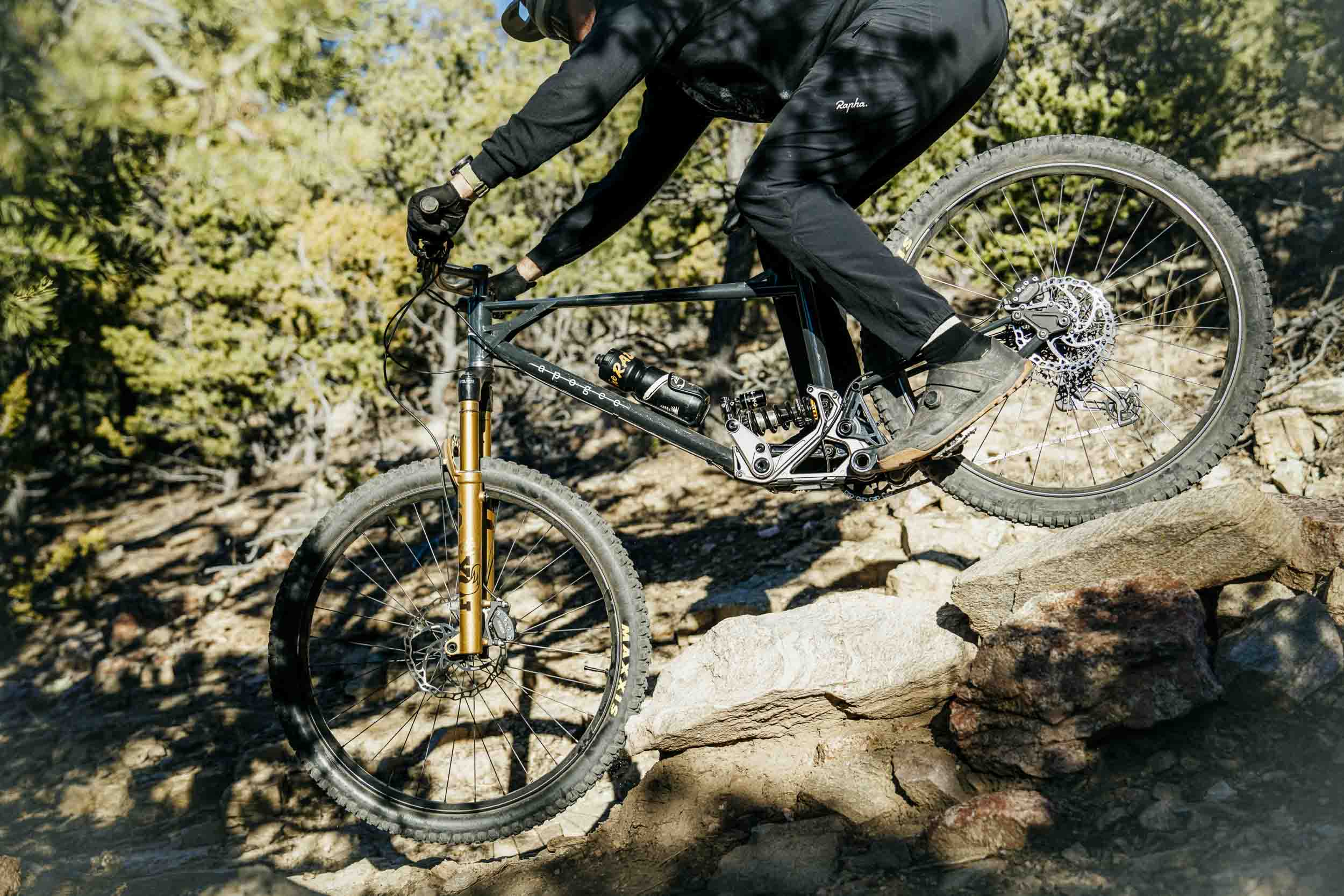
Kinematically, the bike felt best to me set up with a supple-feeling fork and an active rear coil shock. Some of this comes from my riding style and terrain, but also a response to the stiffness of the front triangle. Keeping the rear end of the bike poppy and more playful let me control it as it skipped and slid across the trail. Once everything was set up to my liking, it just kind of disappeared under me. One time, quite literally even!
Bruiser
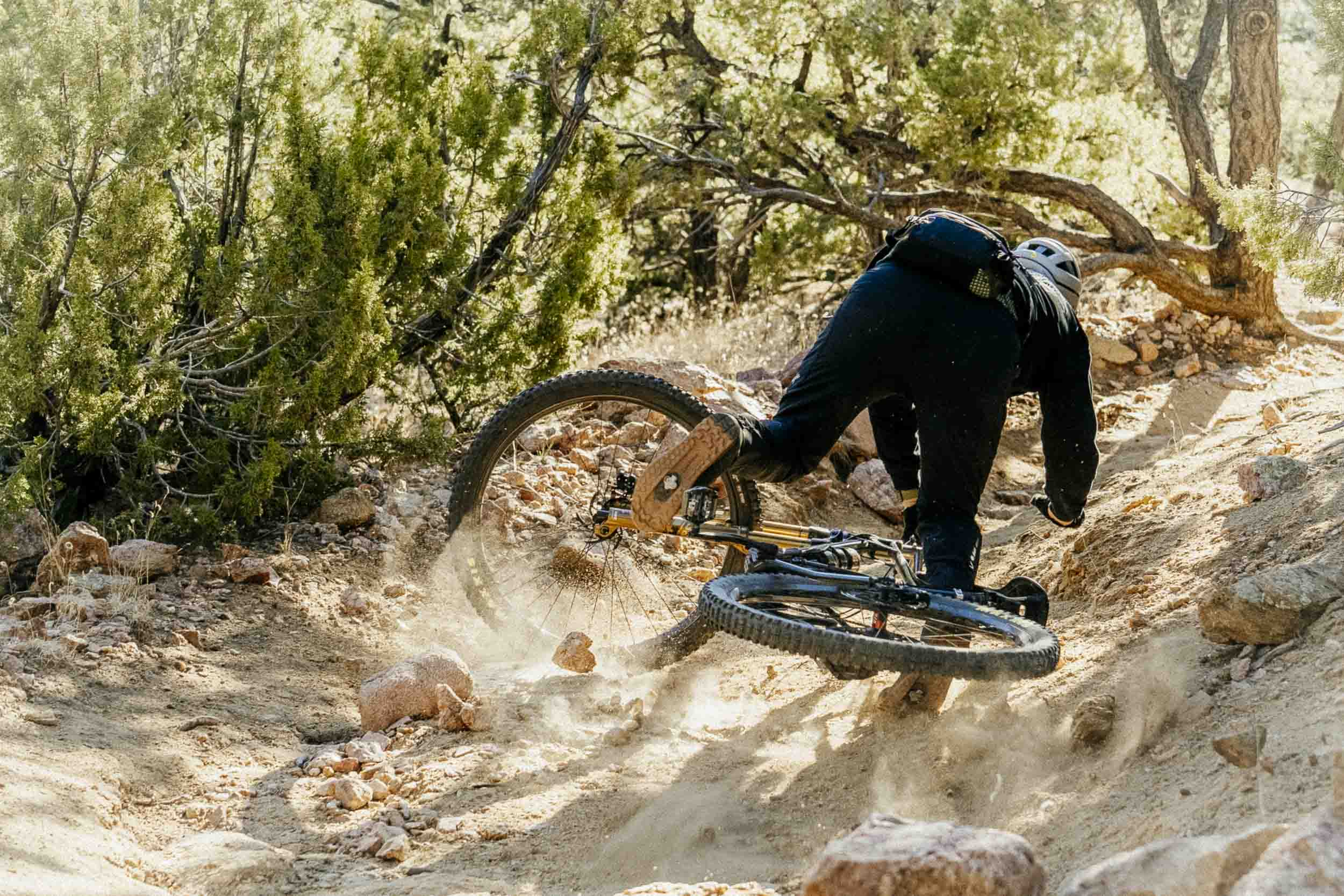
Unfortunately, this flow state descending does cause a certain level of comfort. Comfort that can be ripped out from under like a magic carpet snagging on a passing branch. During the first riding photoshoot of the One, I lost traction on the front wheel and slid out going Mach 10 on a line I ride every single day without thinking. While I escaped with mostly a bruised ego, I did knock some ribs pretty hard, sidelining me for a few weeks. Otherwise, I was completely unscathed, save for some scratches on my shoulder. Even the bike was ok after bouncing down the trail. Man, I know I called the One a bruiser, but this is too on the nose!
Slowly but surely, I got back out on the bike and wrapped up the riding photos the day before our winter snowfall came, closing down the trails for the season.
Wishes
No bike is perfect in the eyes of any rider. Instead, it’s a series of compromises, hoping to deliver on the designer’s intent. I’ve got a few notes after walking away from this review period, and I’d like to share them. The first being, I’d love to see builder collaborations come from the Free Float Module. I reached out to Collin and Will to ask if they’d ever consider selling the FFM on its own, wondering what other builders might bolt onto this unique suspension linkage package. Collin chimed in with,
“For selling the FFM to other builders, it’s something we’ve explored but have not given it a super-focused pursuit. We worked with Baum, for example, to produce an awesome Ti build at Spoken this past year. I think it could be a good path for us in the future, ideally with a few select builders. Frankly, we got so excited about building the whole bike that we lost focus on the 3rd party route.”
Which makes total sense. How cool would it be to see a Moné front triangle with those thiccc, fat fillets and raw clear coat? Or a titanium Firefly bolted up to it? The possibilities are endless in the framebuilder space. Just think about how Ministry’s rear swingarm has made the rounds, landing on so many frames since its release into the OE marketplace.
Another wish (please, please!) I have is to see this platform in a 120/130 package. How cool would that be? While the trail/enduro package is heaps of fun, I think the 140/150 travel might be too much for some people. A 120/130 Downcountry build spec would be killer. Turns out, Apogee has just that in the works!
“In developing the final version of the FFM, we did prototype a shorter travel version, and we’re excited about the possibility, as many of our team love short travel MTBs. With the 140 mm version in production, we are now in the early stages of developing a short travel upgrade kit, so stay tuned!”
TL;DR
What I will say here is that the two-year anticipation of getting to ride an Apogee on my home turf was well worth the wait. This is a phenomenal bike that looks and performs unlike anything I’ve ridden in the handmade frame space before.
The Apogee One represents a wholly new approach to both frame design and domestic fabrication, integrating the Tig-welded DuoFrame with the CNC-manufactured Free Float Module. Yes, it is a boutique, niche offering with a high price tag; however, the One is one of the most distinctive-looking and performing models to enter the metal full-suspension market.
While its travel might be too much for some people and their riding terrain, the longer travel is deceptive on the uphills, climbing in a balanced and thoughtful manner, while encouraging a whole lot of potential on the descents. The frame’s front end is stiff, and the rear swingarm has a good amount of flex, but it all behaves in a balanced, predictable mien when paired with the Free Float Module’s low center of gravity and the right suspension setup.
When you buy an Apogee One, you’re supporting US framebuilding innovation and are rewarded with one hell of a bike.
We don’t hand out our Radavist awards lightly. The Apogee One surpassed my expectations.
Pros
- Innovative and dead sexy design with the Free Float Module
- Steel DuoFrame – frame and rear swingarm
- Flexy rear end maintains traction
- Modular dropouts
- FFM location offers a low center of gravity
- Bike plows
- Climbing “in” the frame is smooth sailing
- Descends like a bat out of hell
- Various finish offerings
- Lots of travel
- Made in the USA
Cons
- Expensive
- Heavy
- Lots of bolts to possibly loosen up
- The rear end is flexy and might be a new sensation for some riders
- No shorter travel version available (yet)
Roll on over to see more on the One at Apogee Bikes. Many, many thanks to Kyle Klain for killing it with the riding photos!